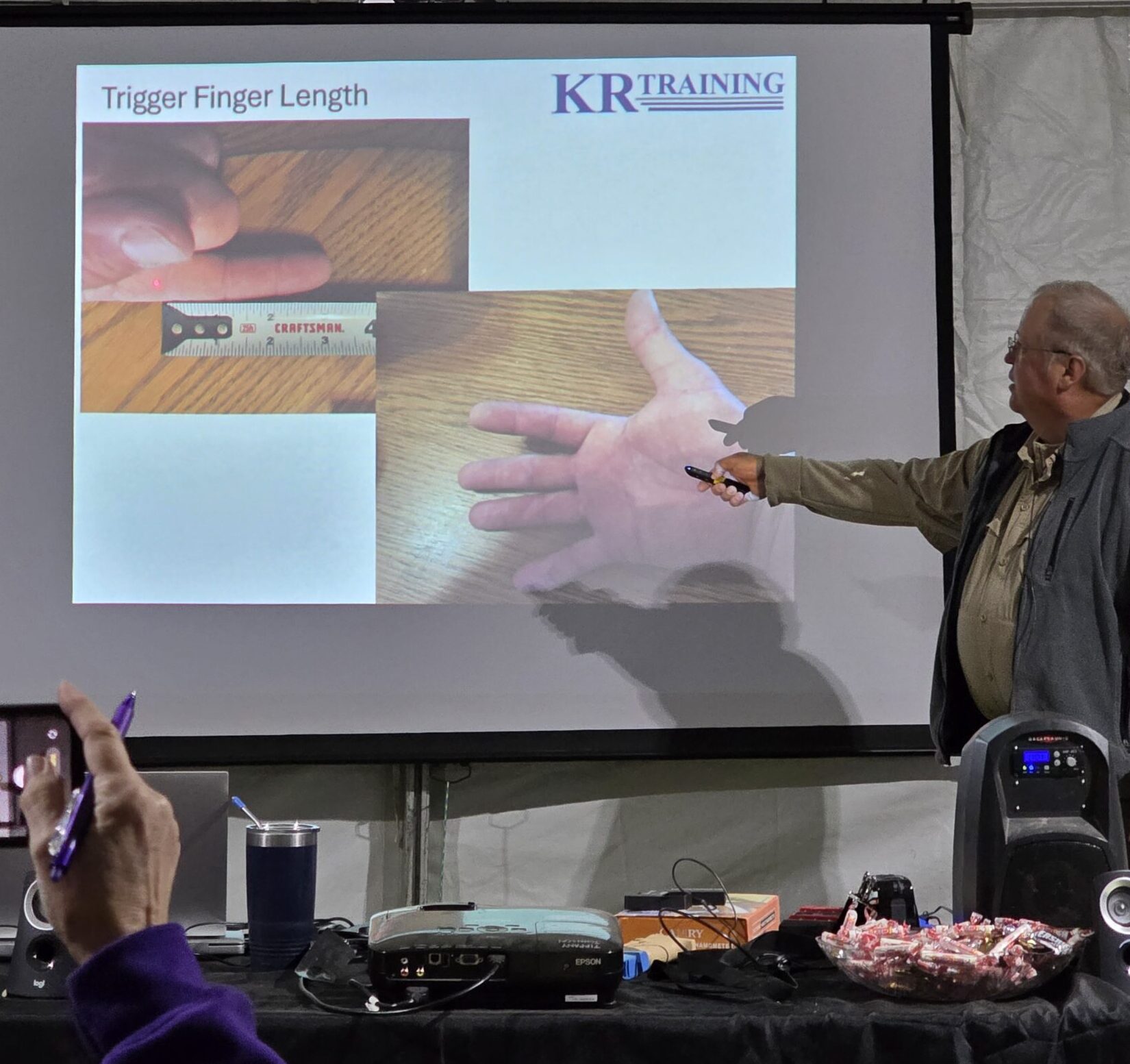
At the 2026 Rangemaster Tactical Conference, I gave a 2 hour presentation on “The hand and the handgun” discussing handgun ergonomics, gun fit, grip strength and related issues. It was very well received and shared some insights I’ve had over the past few years.
My central thesis, based on decades of experience and applying science (vs “feels”) to the issue, is that gun fit is widely misunderstood or completely neglected in the handgun buying process, and the impact of poor gun fit on shooting capability mostly ignored. Those coming from the military/law enforcement background taught in an environment where everyone was stronger/fitter than the average population, with more grip strength than average, and equipment was mandated. Those that could not perform to standards because of equipment issues were washed out, often without the instructors understanding why the individuals were struggling – leaving the instructors ill equipped to assist or advise private sector/armed citizen students with small hands, short fingers and limited grip strength.
In an earlier era, the single stack 1911 pistol, with its skinnier frame and shorter trigger reach, actually fit more shooters better than the “everyone must have a Glock 19” approach that followed the end of the 1911 era in training. It’s only been in the past 5 years that the skinny double stack polymer guns, starting with the SIG 365 family, now including the Glock 43X/48, Hellcat Pro, Shield X, and similar guns have provided practical solutions.
Because the average gun buyer doesn’t understand gun fit, and doesn’t understand grip technique, and is unrealistically paranoid about “printing”, subcompact guns with frames chopped so that only 3 of the 4 fingers of the support hand can grip the frame are popular. Marketing people will point out that the gun comes with one flush fit mag (useless for anything but pocket carry and suboptimal gripping) and one useful mag with a pinky shelf, that allows a proper 4 fingered grip when it is inserted. Unfortunately, without a Rogers Tap-Rack-Training aid in an empty magazine preventing the gun from locking back each time the slide is racked, dry fire practice with the 3 finger framed gun is impossible, and since retail gun stores don’t sell the TRT devices, and most gun retailers don’t know what they are or why they are useful, the typically 3 finger frame gun buyer has no understanding of why the short framed gun is a bad choice. Similarly, since the typical 3-finger frame gun buyer never practices reloads under time pressure, the problem of trying to avoid crushing the floating pinky finger when quickly changing magazines is never experienced. Until the recent crop of narrow but 4-fingers-long pistols were introduced, serious shooters with small hands and short fingers had very few viable options.
Gun Fit – the U and general hand alignment
Novices are told to find a gun that “feels good in their hand” with no guidance as to what that means or even what features to look for. “Feels good in the hand” needs to be banished to the same penalty box as “slow is smooth, smooth is fast”.
The first thing I do is assess student grip strength, using a grip strength meter or the Captains of Crush grippers, including the Zenith 50/70 lb models as well as the 80/100/140 lb models. Typical male grip strength is between 60-80 pounds; typical female strength is 50-70 lbs. Top tier shooters typically have max grip strength of 100 lbs or more — but they only use 70% of that when gripping the pistol.
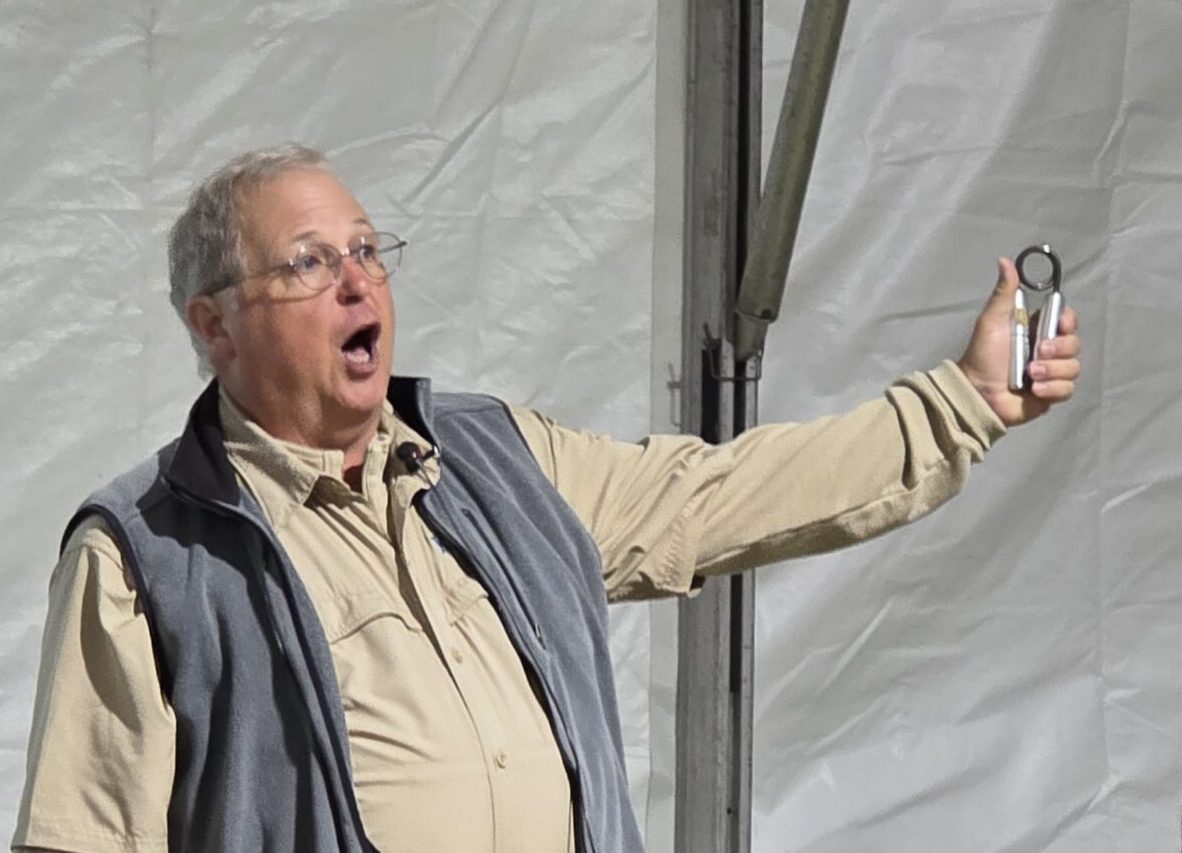
This leads to advice about “don’t death grip the gun” and similar – that makes perfect sense and works great for the 100 lb grip strength fit male, and produces bad results for the less strong. Unfortunately the physics of the mass of the gun and recoil generated by a 9mm cartridge is the same for everyone…making the value of minimum acceptable grip pressure on the pistol the same for everyone regardless of grip strength. 70% of 60 is not the same as 70% of 100.
Grip strength measured by using the full hand, with all 4 fingers wrapped around the thing being gripped, and the thumb down produces the maximum grip pressure.
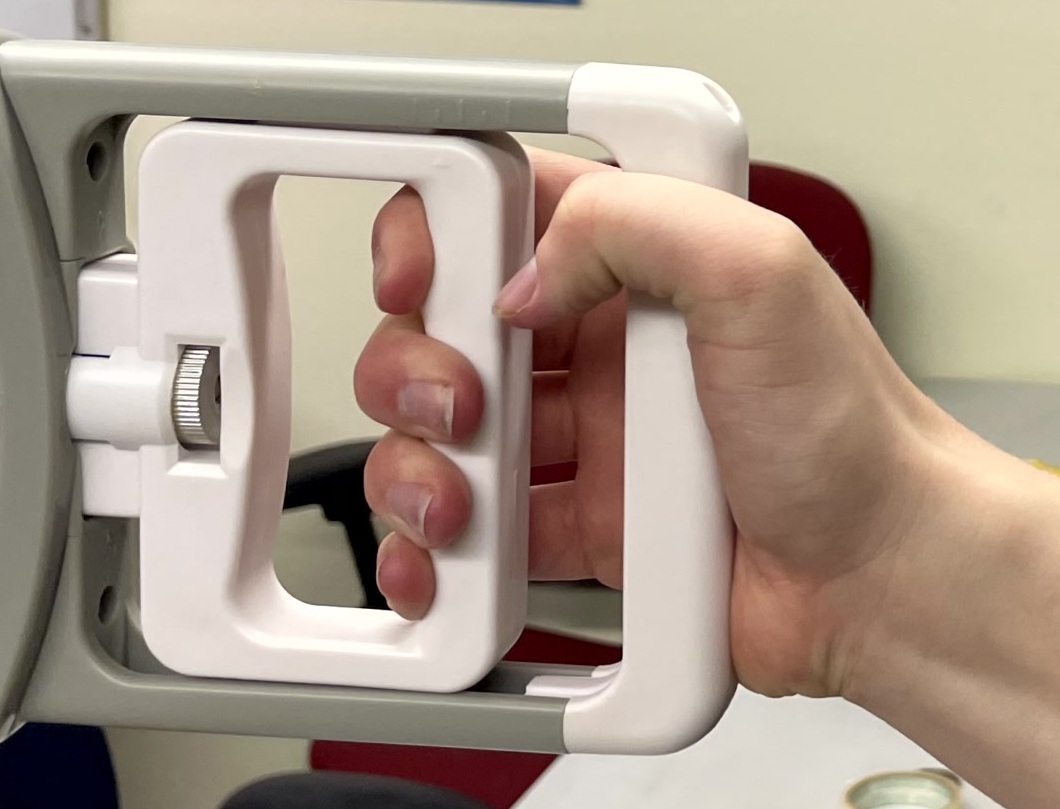
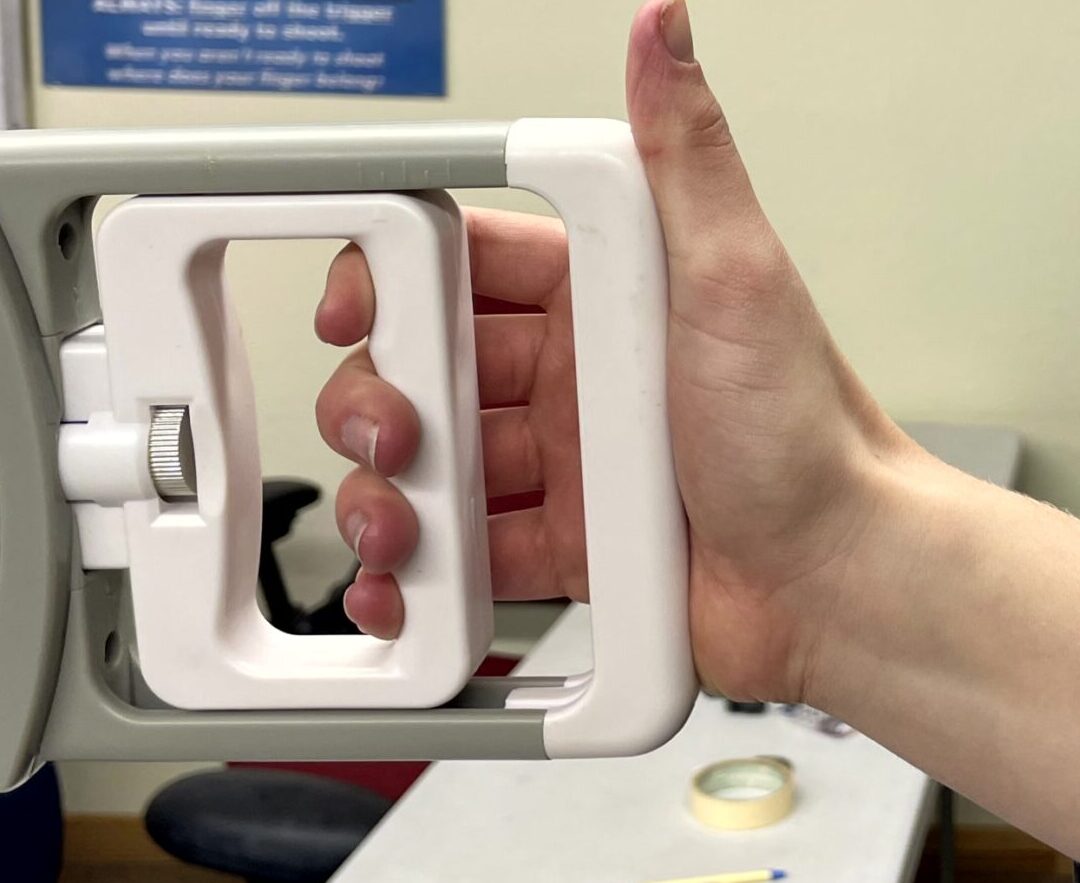
Stick the thumb up and only measure the grip strength of the 4 fingers gives a lower reading, and only putting the fingertips on the gripper or measuring device will return an even lower result.
This is where gun fit matters.
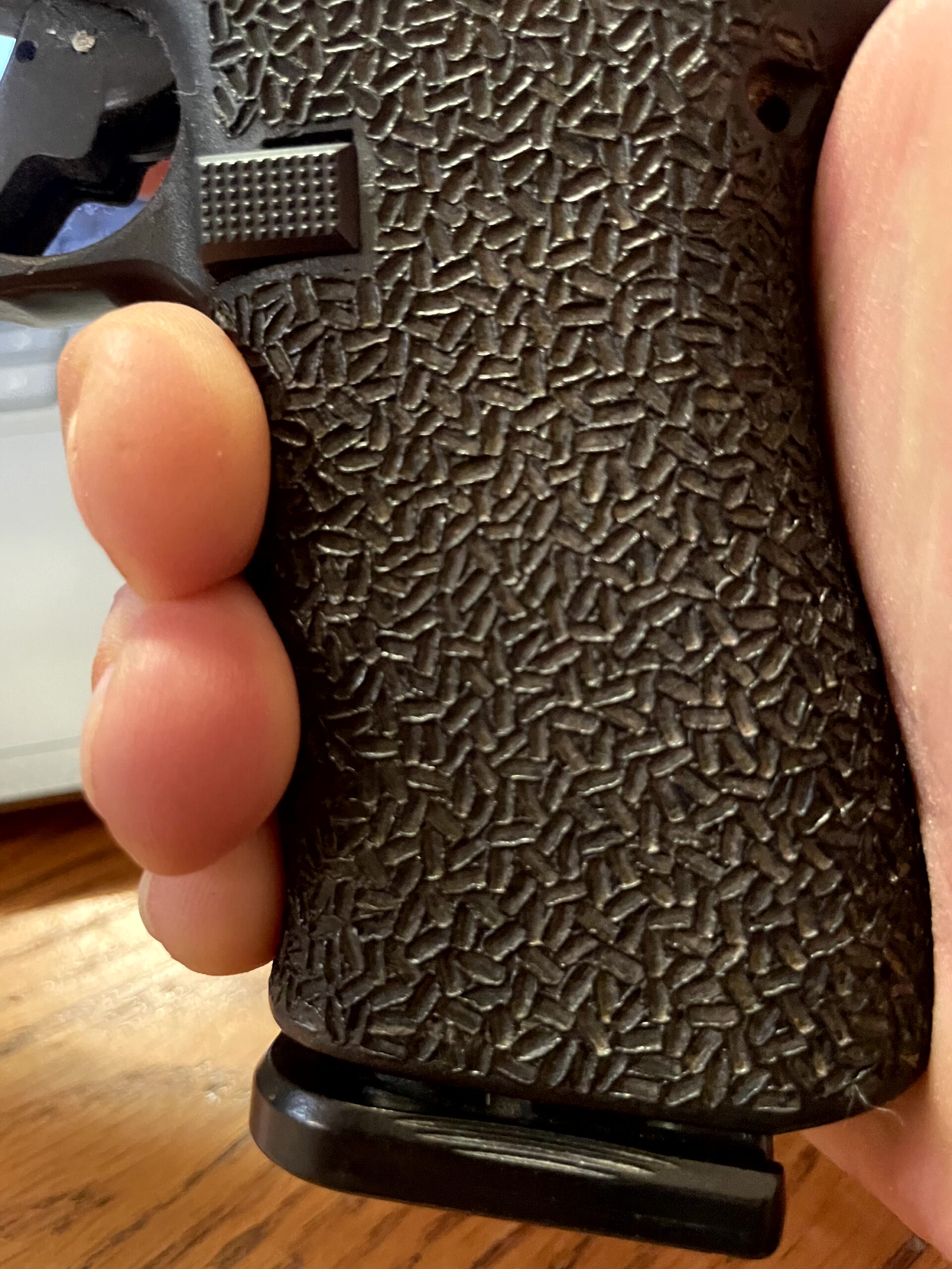
When a novice shooter picks up a gun, the first thing they pay attention to is how far the three fingers wrap around the front strap. When the frame is too wide or fat for the shooter, their grip looks like this:
Then they twist the gun in their hand so it “feels good” and it looks like this.
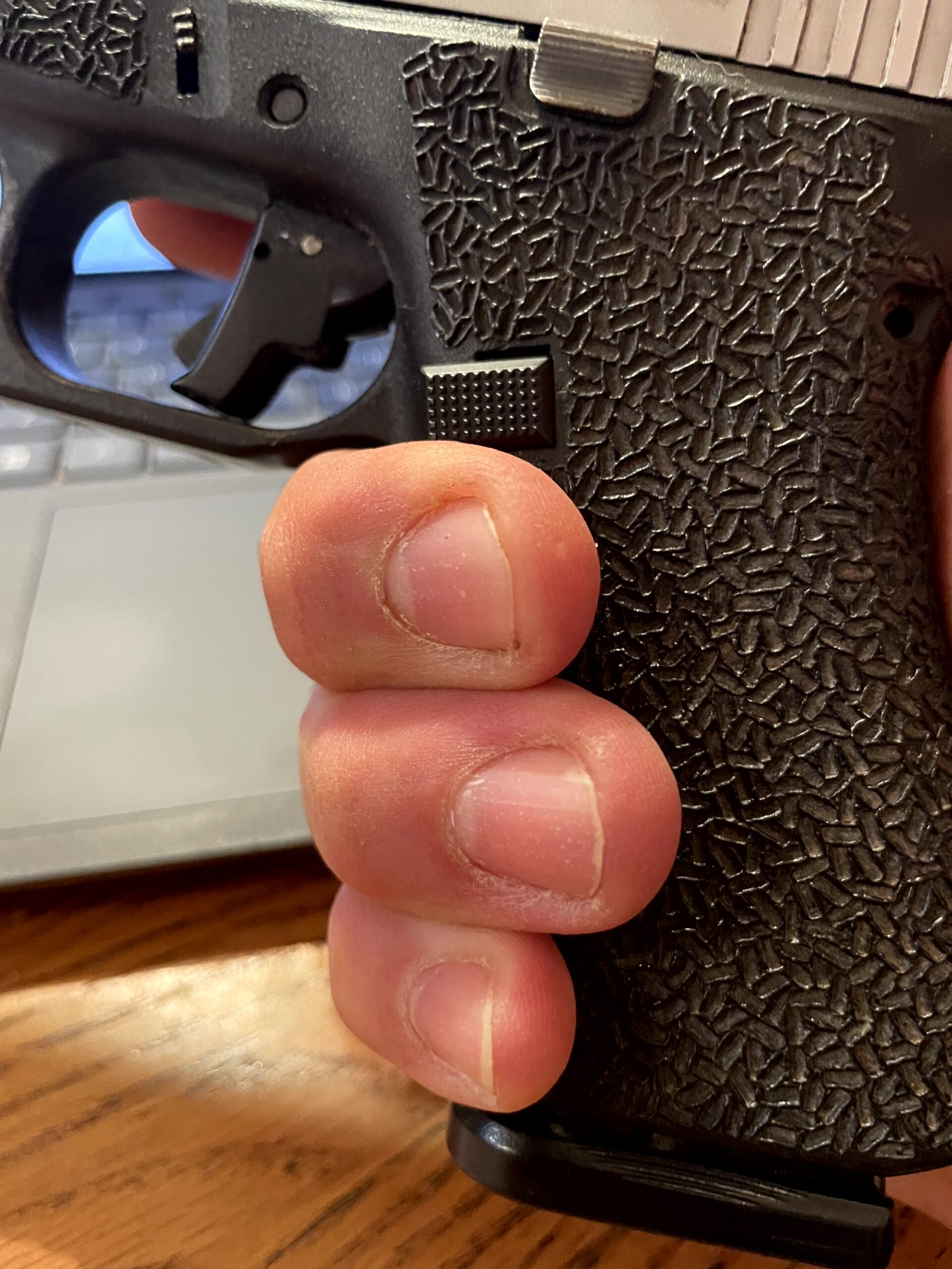
This second grip puts the gun in the “U” that the three fingers make, and allows for better gripping, using the available grip strength in the hand.
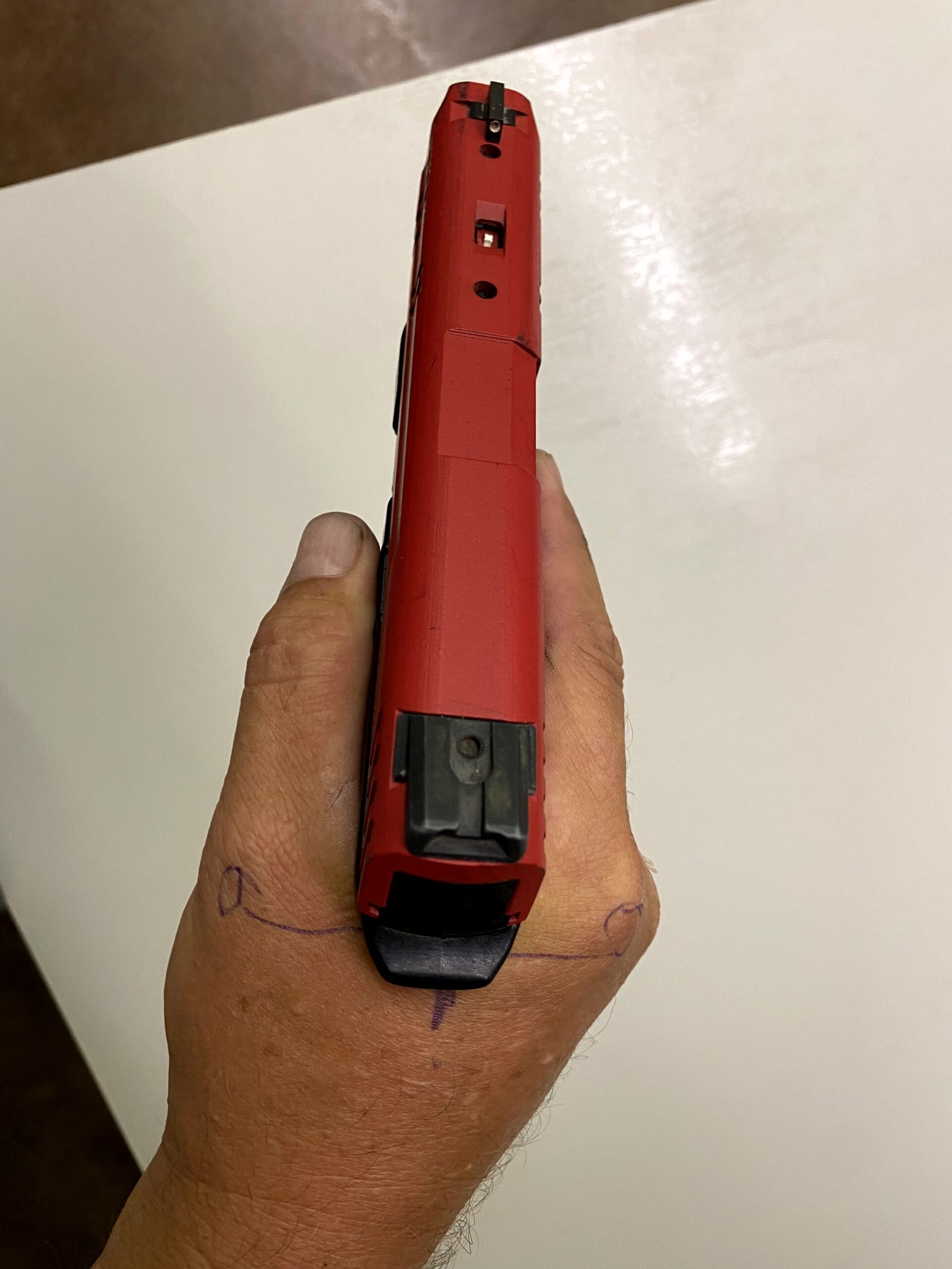
When the hand is small, though, it twists the gun out of alignment with the rest of the hand and the structure of the body. In this picture I’ve circled the knuckles and drawn a line between them, with a bisecting line showing where the gun should align with the web of the hand for ideal natural pointing.
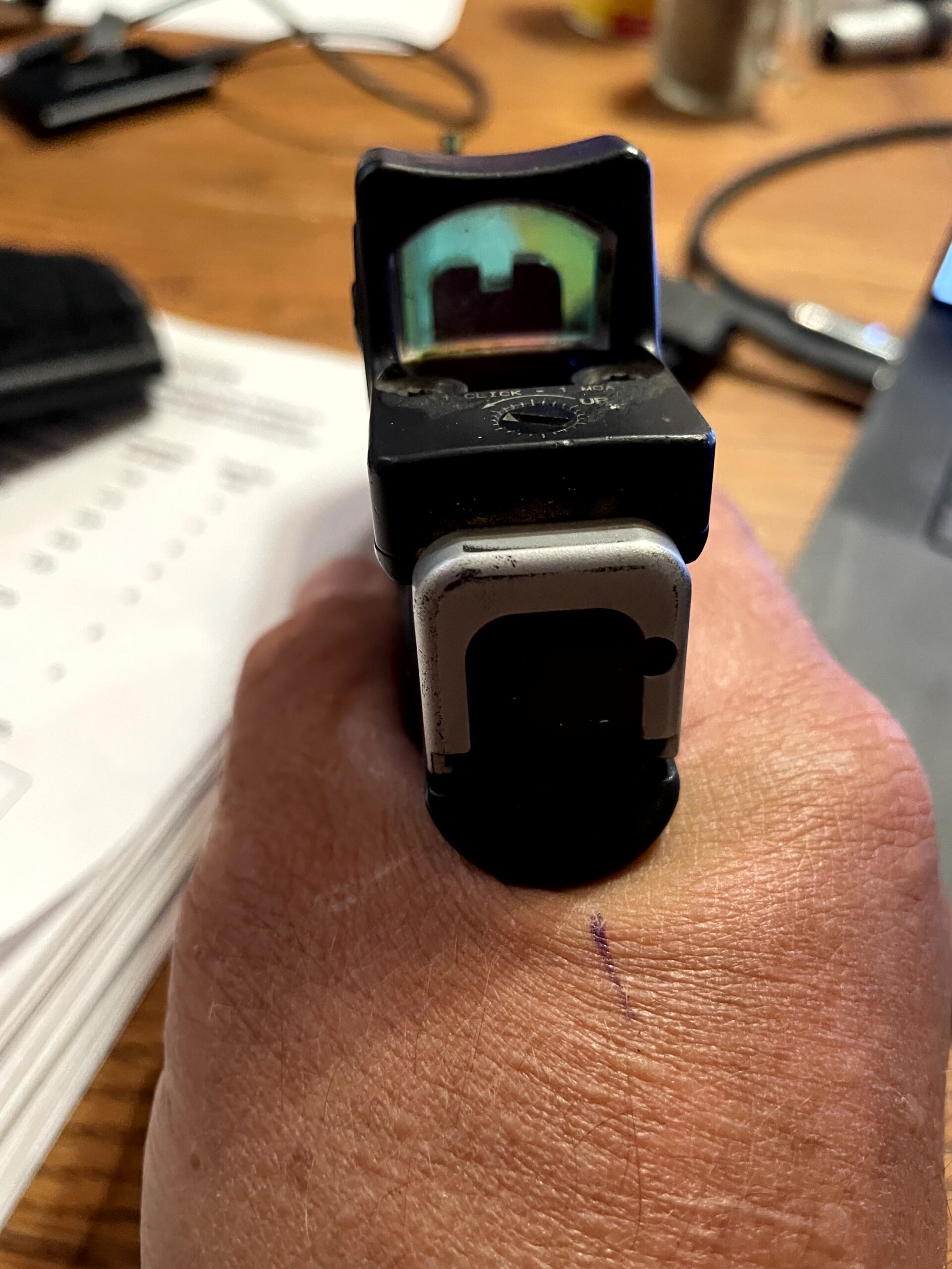
Having the gun line up properly with the hand can also making finding the dot easier on guns with optics.
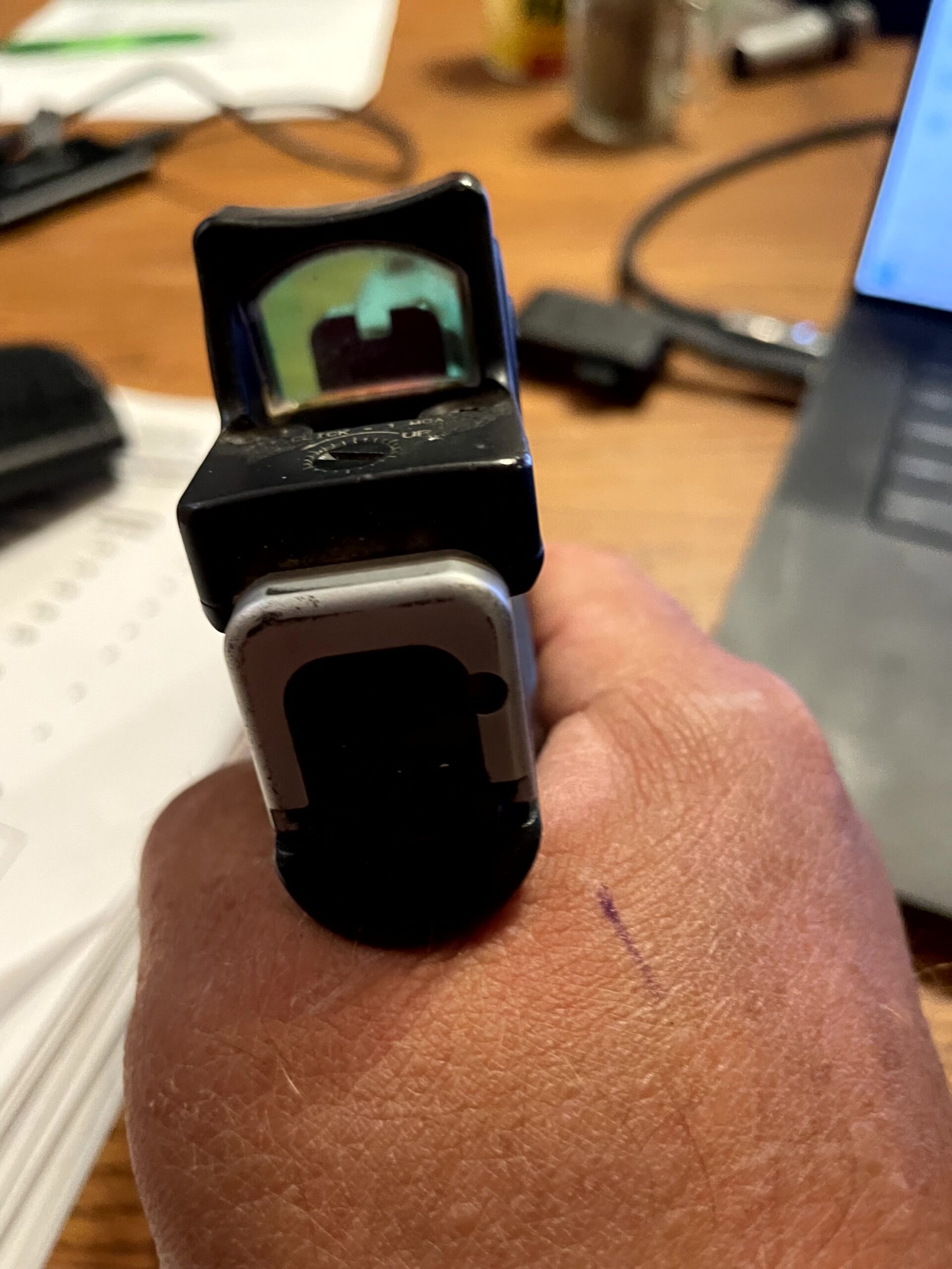
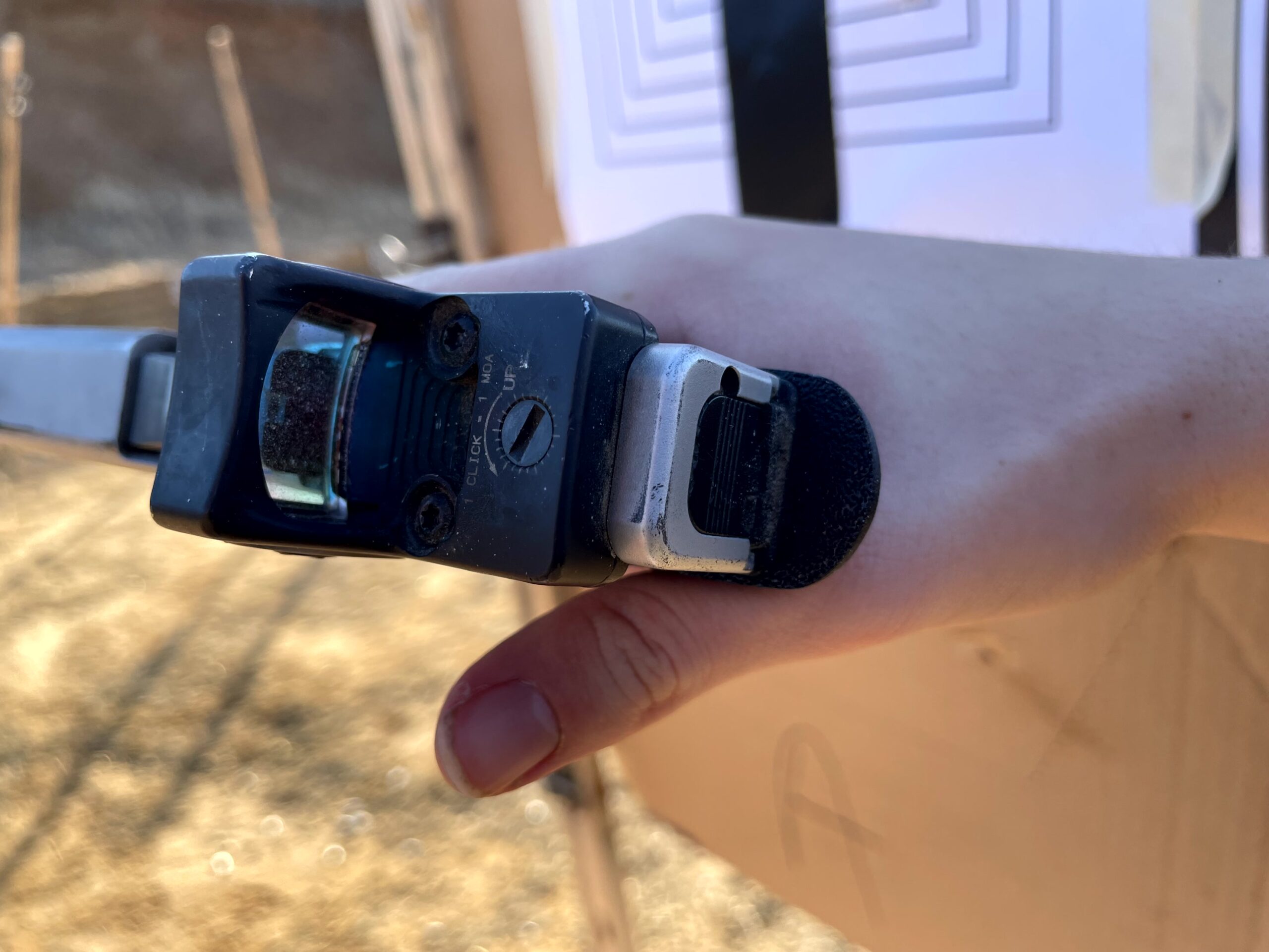
When the gun is twisted in the hand due to front strap grip problems, it looks more like this.
Trigger Reach
Even if the gun lines up with the hand when the U is properly wrapped around the front strap for optimal gripping, trigger finger length can be a problem. Optimal is that the middle joint of the trigger finger does not lay or rub against the frame, and the center of the fingerprint can touch the trigger. This allows the trigger to be pressed straight to the rear without trigger finger movement exerting any side to side pressure on the frame.
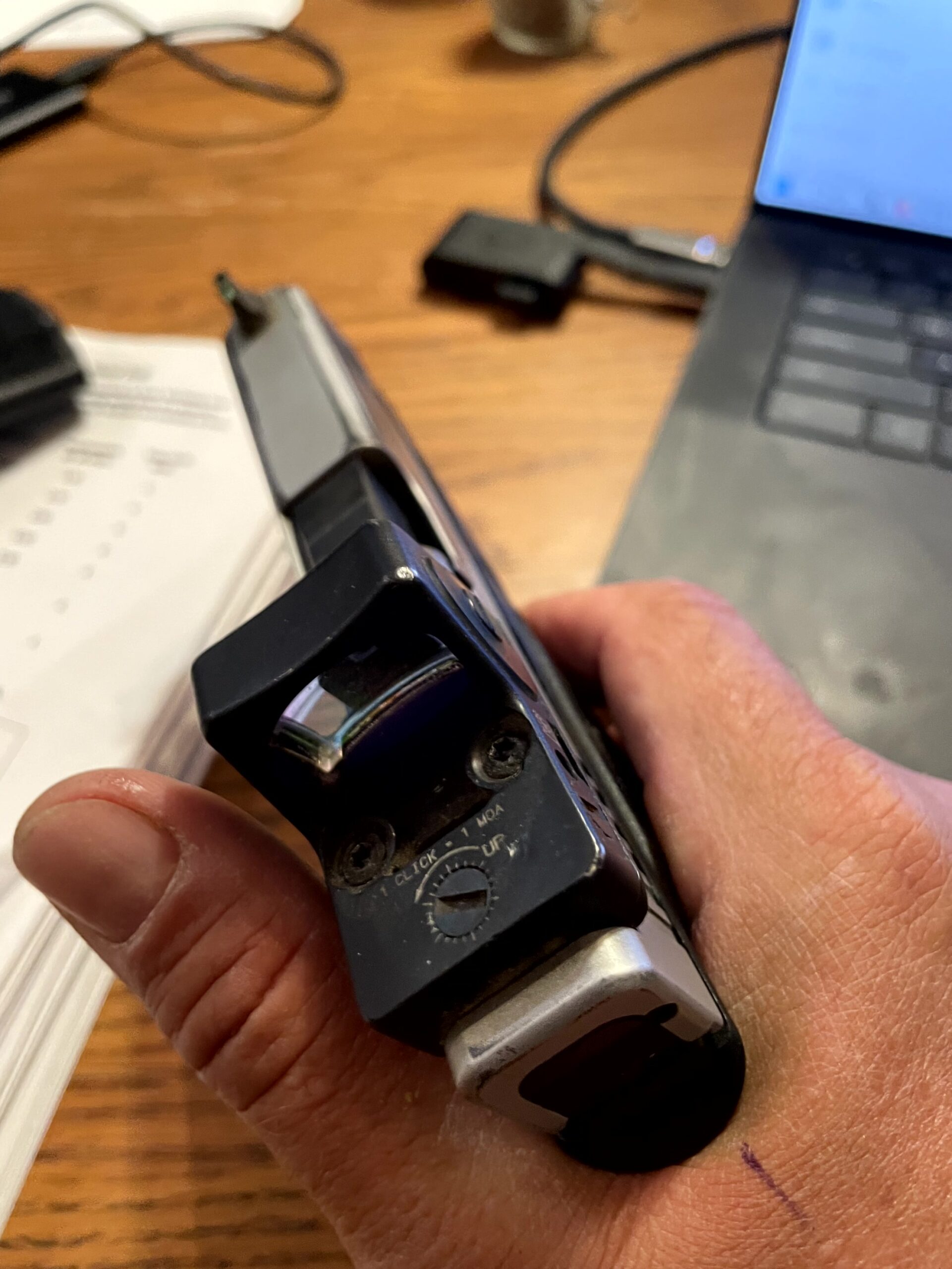
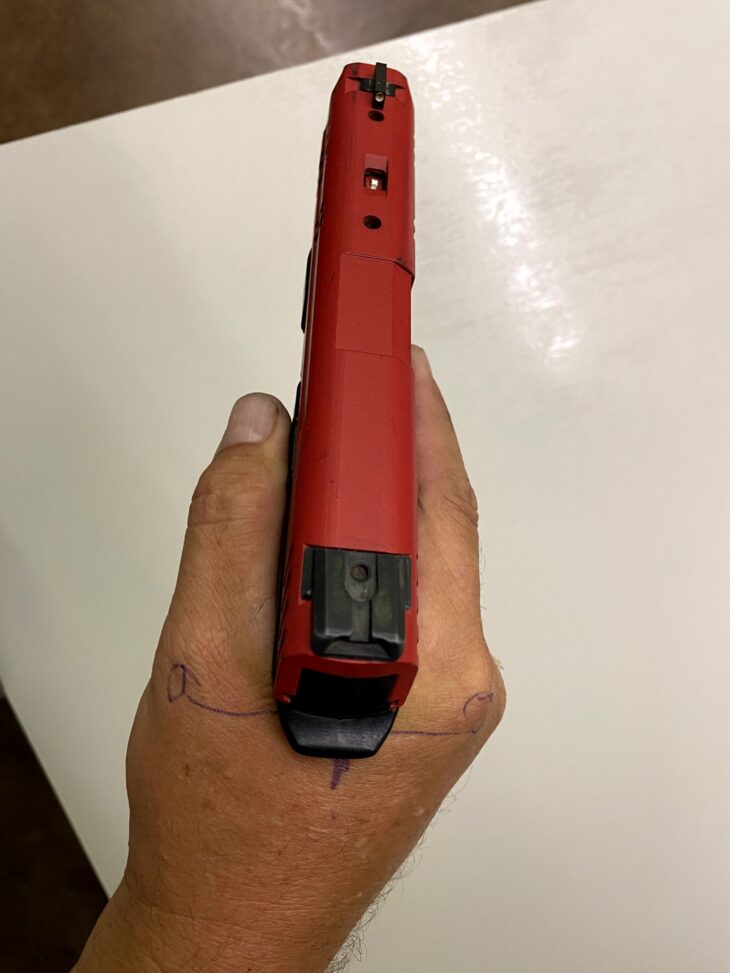
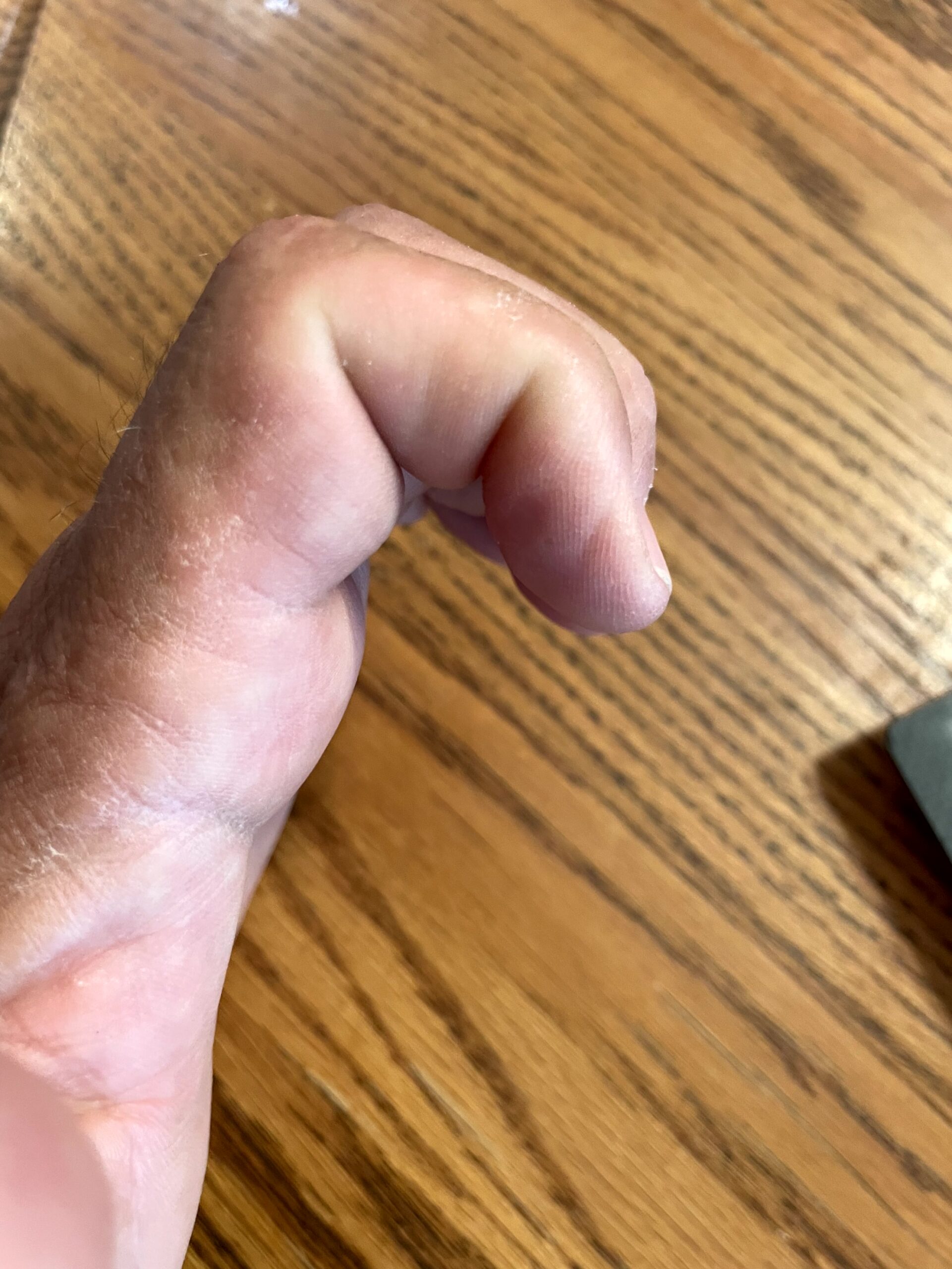
The extreme case is the double action pistol with its long trigger reach. In this picture, I have sufficient front strap grip, but my short trigger finger cannot curl around the double action trigger. My finger is laying beside it, leaving me the only solution of twisting the gun in my hand to get proper leverage on the trigger.
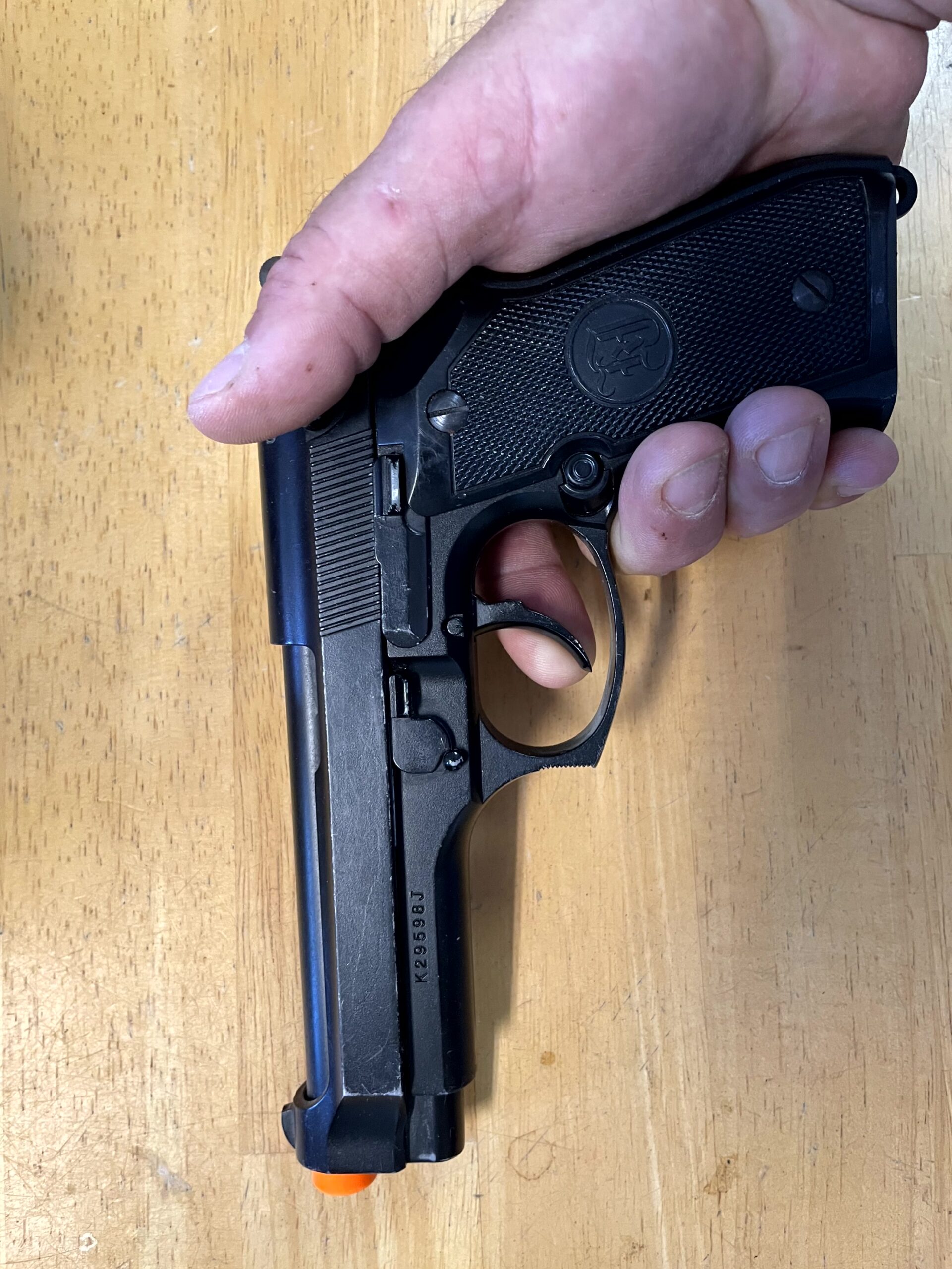
In my basic pistol classes I provide loaner guns to half (or more) of the students. The quick assessment includes a measurement of grip strength and trigger finger length. The trigger finger should be measured from where the finger connects to the palm to the tip.
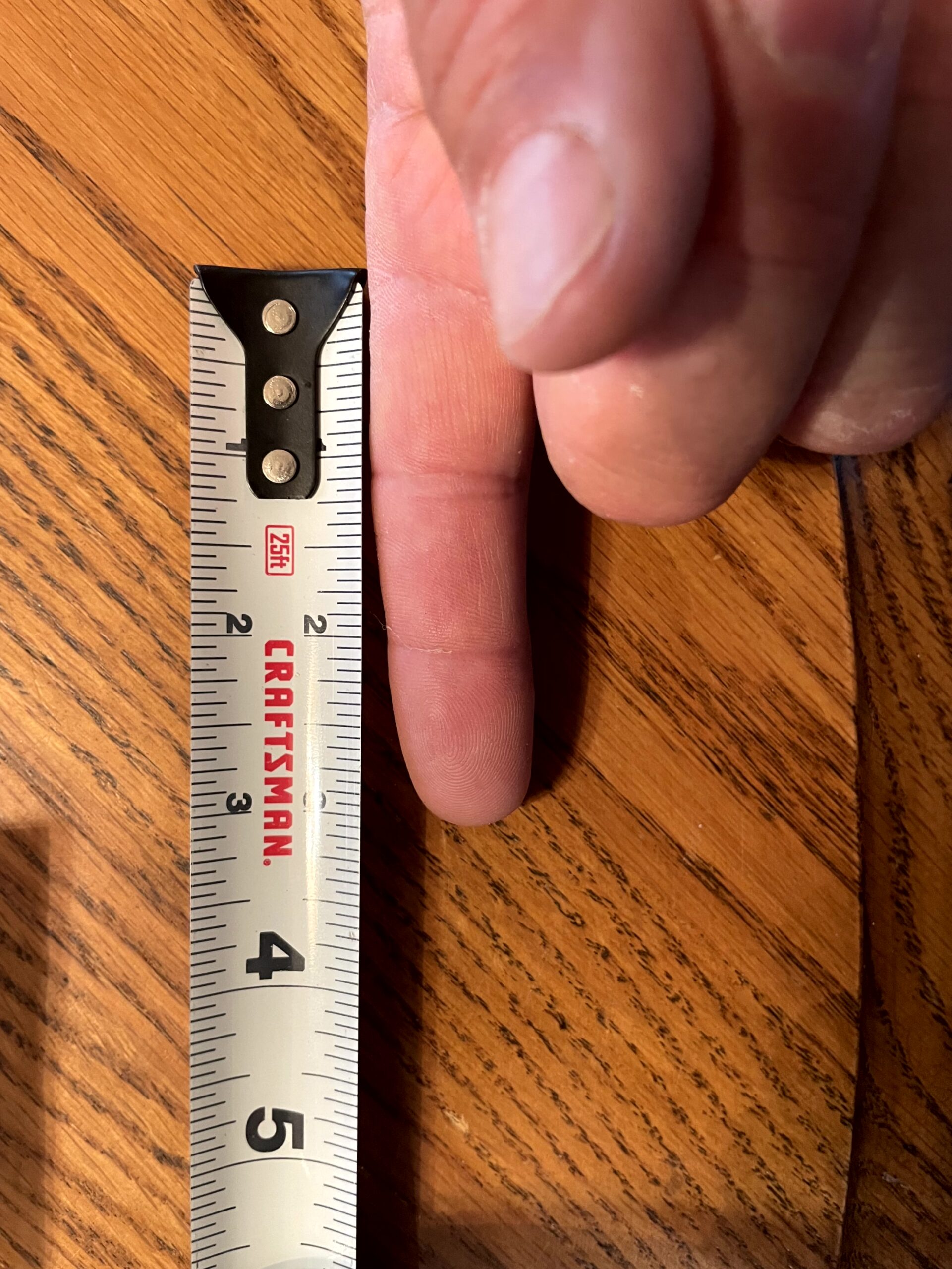
From this I break down trigger finger length into 4 categories with associated gun models:
XL – 3.50″ or longer – any gun
L – 3.25-3.50 – Glock 17/19 or similar
M – 3.00-3.25 – Glock 48, Hellcat Pro, Shield X, SIG 365, 1911
S – less than 3.00 – EZ 380, Springfield EMP, S&W Shield, Glock 42, S&W Bodyguard and others
Most of the “Small” guns end up being single stack .380s, because the shorter cartridge length of the .380 results in a shorter trigger reach. I see a LOT of students show up for class with Glock 19 sized guns who really need the medium sized guns due to hand size.
Thumbs
Although the “thumbs forward” grip is by far the most popular grip technique taught by modern trainers, thumbs up and thumbs down techniques are also taught. All 3 variants (up, down, and forward) can work fine for those with sufficient grip strength. Most people, when told to “grip harder”, instinctively push down with their thumbs. In a thumbs-forward grip this pushes the support hand lower and lower down the pistol with each shot. Those most likely to do this are people with limited grip strength (less than 60 pounds). For those shooters, switching to a thumbs down grip solves the “thumb pushing” problem and decreases the amount of muzzle flip that occurs when the gun recoils. We documented this in a slow motion video using a shooter with 65-70 lbs of grip strength.
Compensators
Back in the 1980’s, compensators on pistols were the New Cool Thing, particularly with USPSA competitors running .38 super loads at pressures that exceed SAAMI specs, which was required to get the .38 super load to meet the “Major” power factor standard (which was 185,000, not today’s 165,000). In the 1990’s, as everyone in USPSA put a frame mounted optic on their pistol, .38 super major loads began using lighter bullets pushed to very high (1400+ fps) velocities, because the compensator would essentially negate all muzzle flip, allowing extremely rapid follow up shots and never losing sight of the dot in recoil. During that time, tactical trainers, military and law enforcement all opposed the idea of compensated pistols for duty and defensive use.
Compensators have returned to the gun industry as the New Cool Thing, now on guns primarily marketed for defense and duty use. Compensated guns are not allowed at all in IDPA competition, and are only allowed in USPSA Open division. Private sector trainers and social media influencers, particularly those obsessed with split times and superfast Bill drills have mainstreamed the idea of shooting a compensated gun. Those with sufficient grip strength may not see significant change in their shooting performance by running a compensated gun. This week I had a private lesson student with 100+ lbs of grip strength in each hand running a stock Glock 19 with iron sights, hitting .20 splits into A-Zones on USPSA targets at 7 yards using the stock trigger and iron sights. Would a compensator have gotten his splits into the sub .20s? Maybe. Does the difference between a 0.15 split and 0.20 split matter anywhere but on match day or for bragging rights on social media? Probably not.
When we investigated the value of a compensator as a recoil reduction tool for compact/subcompact pistols configured for every day carry, not open carry range toy use, in the hands of our test subject with small hands and 65-70 lbs of grip strength, the benefit of a compensator on a small gun was revealed.
The video shows compensated and uncompensated S&W Shield X pistols in slow motion.
The standard objections to compensated guns are all valid: they make the gun louder, they can reduce projectile velocity, could be a problem when shot from retention due to gasses venting up. However: if the compensator makes the basics of shooting more viable (ability to hang onto the gun in recoil, ability to maintain consistent grip for multiple shots), it may have value, particularly on smaller guns in the hands of those with limited grip strength.
Works for Me!
Some of you reading this may react with the typical “but it works for me!” or “I don’t see those problems with the people I teach!”. I wasn’t aware of these problems 15 years ago, when I was teaching everyone just to “grip the gun the way I do because the top shooters do it this way”, like a majority of trainers do.
When I started paying more attention to the strugglers in classes, trying to figure out why techniques weren’t working for them, particularly the problem of twisting the gun in the hand (related to grip strength, gun frame and trigger reach issues), the root causes became clear. Grip strength and strong fundamentals can “work around” these impediments, but the effort required to shoot well is often too much for the beginner. A super motivated runner can learn to race a 5K in steel toed work boots if they train hard enough…but for the less fit, less motivated runner, properly fit shoes optimized for the task are going to bring them more success sooner – and eventually the steel toed shoe runner is going to fall behind those using better equipment. In the current market, with guns available to fit every sized hand, there’s just no reason for anyone to have to work around problems created by bad gear selection decisions.
Several people sent me video clips from the two times I gave the talk. Here’s that highlight reel:
Manipulations
The second part of my talk addressed the impact of gun fit, trigger finger length and interdigit sympathetic movement on gun manipulations. I’ll put that information in a separate post.
Pingback: Rangemaster Tactical Conference 2026 AAR - Notes from KR
Pingback: Weekend Knowledge Dump- April 17, 2026 | Active Response Training
Pingback: Weekend Knowledge Dump- April 17, 2026 | tacticalusa.net
Pingback: TAC-CON 2026 |