This is part 2 of my posts sharing information I presented in my talk at the 2026 Rangemaster Tactical Conference.
Reload Technique
This is the long version of a video on the handgun reload techniques I discussed in my talk.
The problem of sympathetic movement of thumb and forefinger occurs when pressing the trigger with the finger, and with trying to manipulate magazine release and slide lock with the firing hand thumb. My observation is that most instructors (particularly those teaching 10 or more students at a time, with no assistants, on a firing line) don’t notice (or maybe don’t care) that the trigger finger gets out of register and moves around, even curling to push on the frame to “back up” the pressing of the mag release button by the firing hand thumb. For many years I didn’t notice it, and then one way I saw it and began noticing how common it was.
Even among the subset of shooters that have guns that actually fit their hands properly, it’s common to have difficulty reaching the magazine release button with sufficient thumb length and strength to be able to press it to release a magazine without either shifting the grip or sympathetic trigger finger movement. One solution that can work for some is installing a slightly extended magazine release button – but if the button is too big, it can be pressed by the support hand when it grips the gun hard, or can be pressed by the holster. In both cases it results in an unexpected ejection of the magazine, which is a big problem, costing far more time than the 0.5 second time difference between using the support hand thumb to press the magazine release vs firing hand thumb. I do have extended magazine releases on both my Glock 48 and M&P that work reliably. Both are duty-sized extended releases and not oversized competition buttons.
If you have never tried the slide lock manipulation technique I demonstrate in the video (using the support hand thumb to pull down on the lever, with firing hand thumb pointing up to get out of the way, try it before you dismiss it as “slower” or less efficient. If you prefer the overhand rack technique, that’s fine. But in the interest of being a well-informed shooter, try it 10 times, then do some timed live fire reloads (10 each way, firing hand thumb, support hand thumb, overhand rack) and compare not only the times but the quality of your first-shot-after-reload hits. I contend that the support hand thumb method makes it easier and more efficient to rebuild your grip than either of the other two…if works 10 times out of 10 for you.
Even the only reloads you do are competition speed reloads where the gun isn’t locked back, using the support hand thumb to press the magazine release may have value, if flipping the gun to change your grip and then flipping the gun back is costing you consistency or time.
One alternative I didn’t discuss in the video is the idea of using the trigger finger to press the magazine release button, which can be enabled by reversing the magazine release on most popular polymer striker fired models. This retains the advantage of being able to reach for the new magazine in parallel with ejecting the old one, and guarantees that the trigger finger is not on the trigger when the mag button is pressed. The majority of the speed loss from the support hand technique is having to wait to reach for the new magazine with the support hand until it presses the button to eject the old one. Flipping the magazine release and using the firing hand trigger finger should be just as fast as using the firing hand thumb, without the need to flip the gun to reach it and without the risk that sympathetic movement of trigger finger could cause an negligent discharge.
The Support Hand
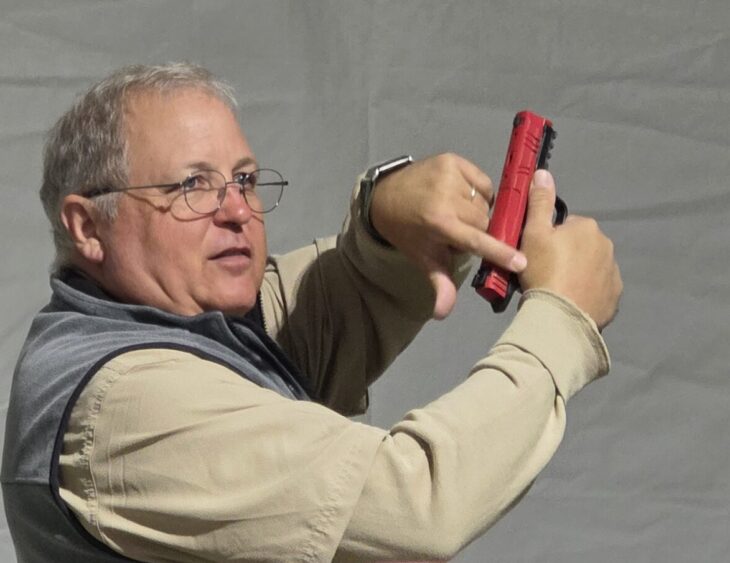
I also talked about the support hand in detail. This picture shows me gripping the pistol with only the support hand, to show how much wrist rotation is ideal. Notice in the picture my wrist is rotated enough to point my thumb parallel to the barrel. Most people do not fully rotate the wrist, which doesn’t engage the brachialis muscle (the major flexor of the elbow). By not engaging that muscle, it feels more “comfortable” because the muscle is neutral and not doing any work — which doesn’t help control the pistol at all.
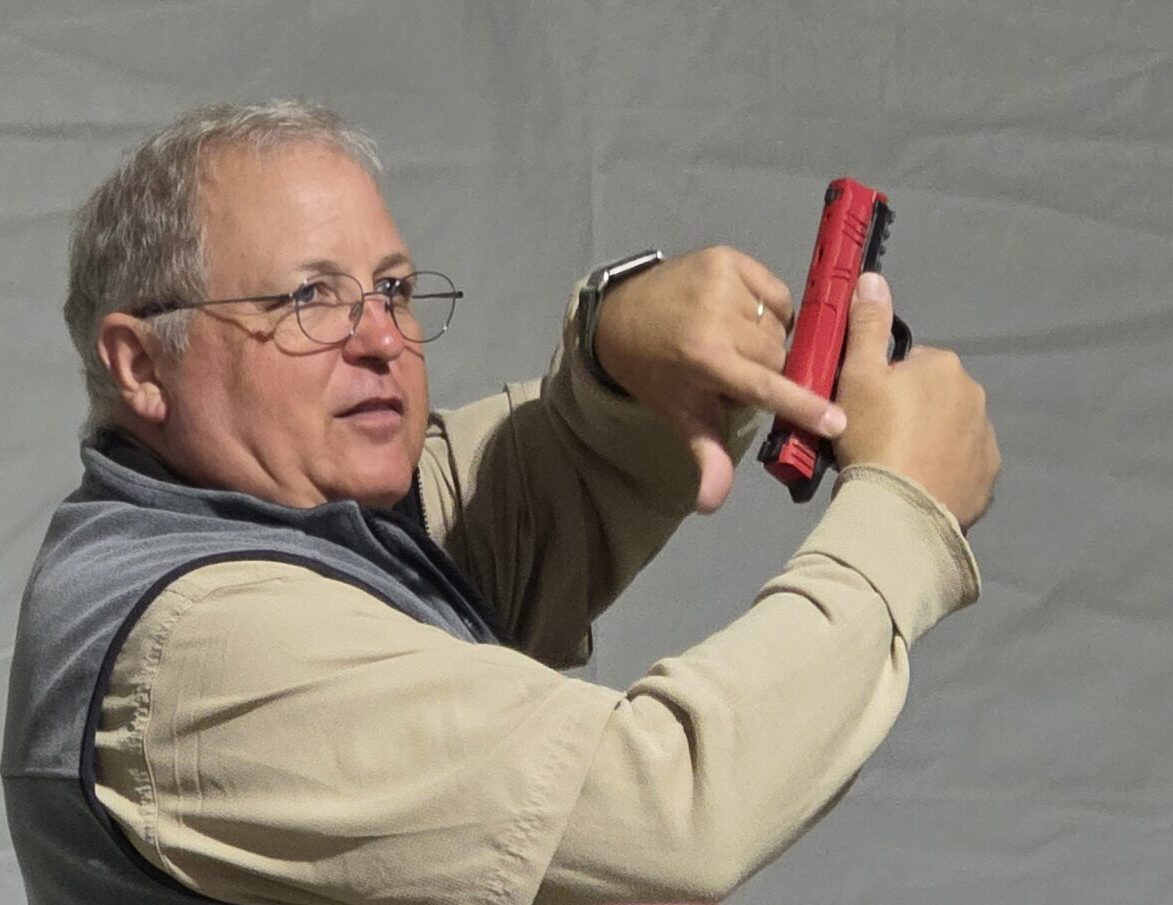
This instagram video shows a way that you can assess your support hand grip. If you try this, read all of the following disclaimer, and follow ALL of the instructions!
DISCLAIMER: if you try this and you don’t have enough support hand grip to hang onto the pistol when you fire it, the gun is going to flip backward out of your hand, likely muzzle you in the chest and possibly fall to the ground. ONLY LOAD ONE ROUND. You absolutely do NOT want the gun to capable of firing again if you lose control of it. Don’t do this at a commercial range or standing on a concrete pad. Having the gun flip out of your hand and fall to the ground could damage the gun and likely get you ejected from the range. Try this with an airsoft gun or CoolFire gun or a .22 (on a private range) before you try it with a larger caliber. If you don’t have at least 60 pounds of grip strength in your support hand, don’t try this test with any 9mm pistol. I have about 90 lbs of grip strength in my support hand, and the gun I was firing had a compensator and a weapon mounted light, firing 9mm practice ammo.
This video shows how I use the SIRT pistol to demonstrate and teach the importance of the support hand grip in minimizing gun movement, particularly when the trigger is pressed at high speed.
I’ve found that trying to explain those concepts with words doesn’t produce the same level of understanding as putting a SIRT pistol in a student’s hands and having them observe the stability (or lack thereof) of the takeup laser (the red laser dot) on the target as they work the trigger as fast as they can go (induces maximum gun movement, typically resulting from sympathetic movement of thumb and other fingers), with no support hand grip on the gun, minimum support hand grip, and maximum support hand grip.
Pingback: KR Training April 2026 Newsletter - Notes from KR