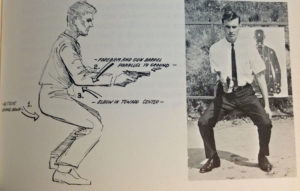
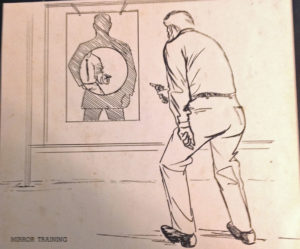
Rangemaster’s 10 principles of teaching

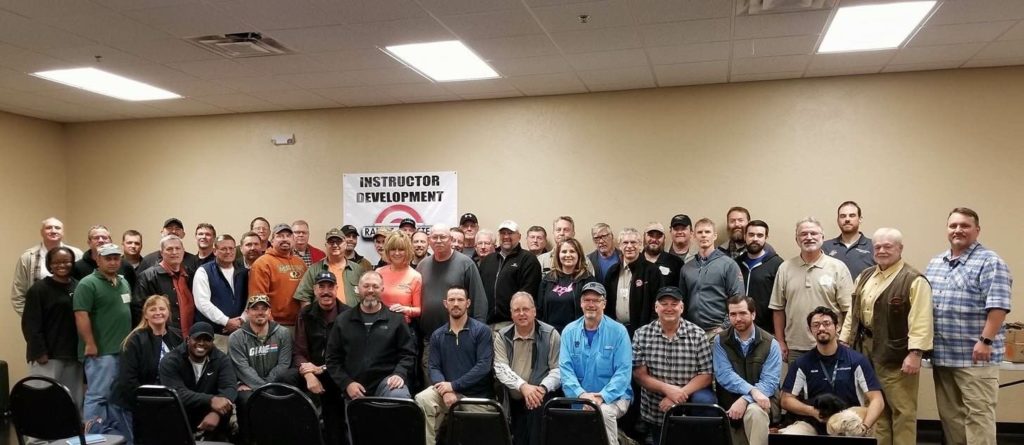
On Nov 11-12, 2017 I attended the Rangemaster Instructor Conference held at the BDC Gun Room in Shawnee, Oklahoma. 49 instructors, out of the more than 800 graduates of the 3 day Rangemaster Instructor program, spent 2 days shooting and learning.  I wrote an AAR about it after I returned.

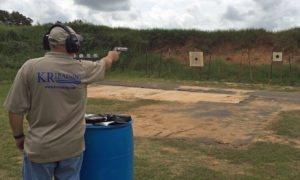
One of the presentations covered Rangemaster’s 10 principles of teaching.  They answer the question “what does it mean to be a Rangemaster-certified instructor?”  The Rangemaster program has been a significant influence on the way we do things at KR Training.  Here are my thoughts on how we apply those principles in our classes:

Self-Awareness
Understanding the limits of your own knowledge and skill are important.  Early in my engineering R&D career I had a great boss who advised me (and others) that “I don’t know” is a better answer than fumbling your way through a half-guess, half-informed response just to avoid saying “I don’t know”.  And I had a high school government teacher that would give students partial credit on exams for writing “I don’t know yet” and showing up at the first class after the test with answers they had looked up.

Understanding what you don’t know, and what you need to know, is incredibly useful in setting training goals, choosing trainers, and designing practice sessions.

It’s also important to have confidence in what you know, in those areas where you’ve put in the work, and gathered enough experience and expertise to be able to explain specifically why a particular kind of holster or gun manipulation technique or tactic is a bad choice.  “Because my guru does it this way” doesn’t answer the “why” question as well as understanding the reasons behind the guru’s decision, or (better) your own decision based on your analysis and testing.

I teach what I know, and the topics I’ve put the most effort into learning.  I host instructors that are expert in topics outside my lane, or have expertise beyond mine in topics I also teach.  That’s been my approach since day one of offering classes.

Contextual Grounding

I don’t own a plate carrier, a chest rig or a battle belt.  I’ve never taken a class where that gear was required.  As a professional musician that plays over 100 shows a year in restaurants, bars, festivals and special events, and during the 30+ years I spent working in R&D and training for the state of Texas, I’ve had to focus on practical, every day carry gear, often in non-permissive environments, sometimes with the only firearm legally accessible to me locked up in a vehicle.  That’s the same context many of my students “operate” in.  It’s not the same context someone carrying openly in a uniform, with body armor and armed friends a radio call away has.  That’s why I offer small & pocket gun classes, unarmed, knife, medical, tactics and legal classes in addition to firearms training, and why we want students to bring their actual carry gear to classes.

Front Sight Focus

For the past several years I’ve been doing deep study of historical handgun techniques.  For decades the conventional wisdom, repeated in book after book, was that there wasn’t time to aim, and all shooting had to be done with the gun at hip level, or with some form of “point” shooting.  Some instructors continue to promote those ideas, citing evidence that those in gunfights do not see their sights, so we should not try to use them.  Much of that evidence comes from analyzing performance of law enforcement officers that shoot less than 100 rounds a year, who do not dry fire on a regular basis.

Much has been learned in the past 100 years about being fast and accurate with a handgun.  Those that have performed well in actual gunfights, for example the 60+ students Tom Givens has trained (who have a hit ratio over 90%), or the officers of LAPD Metro division (hit ratio over 85%) were trained to use a front sight focus.

Additionally, a basic understanding of geometry, applied to shooting, clearly shows that the likelihood of hitting the intended target increases as the gun is aligned more precisely with it. Sights – the front sight specifically – are the key to achieving that alignment.  It can take less than 0.1 sec to read a sight picture and confirm that it’s aligned properly with the target.  Part of our program is to teach shooters the relationship between sight picture quality (precision in gun alignment) and speed.  As the target gets closer and larger, less perfect alignment is required – but seeing the front sight is still essential.

Logical Progression

Unlike many schools that offer their curriculum in 2-day, 3-day or longer courses, we’ve broken our curriculum up into 1/2 day blocks, to make them more accessible to a wider audience. Many people have limited funds and time to train. The courses are organized in a logical progression, with the most important skills trained first.  We often offer multiple classes on a single day or over a weekend to provide 2- and 3-day blocks of training for those able to invest more time and money, but many students complete a sequence of 16 or more hours of training over many separate classes over months or years.

Broad Application

The principles we teach in classes are generic to a wide variety of handgun action types, calibers, carry methods and human factors.  Our defensive long gun class is unique in the training industry, because it can be taken using any long gun (AR-15, lever action rifle, pump shotgun, semiauto shotgun, pistol caliber carbine, even a .22 rifle).  The curriculum is derived from how the gun will be used in a defensive incident. The targets, the time frames, and the type and quantity of hits required are the same, so that course teaches students how to use what they have effectively.

Understanding Violence

Most people that are not working on the front lines of law enforcement or the military have very limited life experience with violence.  John Hearne’s studies into overcoming the “freeze” response show that those that have experienced violence (for real or in force on force simulations) are less likely to lock up in an actual incident.  We’ve offered force on force (FOF) training courses for more than 20 years, pioneering the use of Airsoft guns as lower cost training tools for FOF, offering force on force scenarios as part of the annual Rangemaster Tactical Conference for more than a decade.  We include FoF scenarios in many courses in our program, to provide opportunities for students to experience full context scenarios.  Several of our force on force graduates that have been involved in defensive incidents have commented to us afterward that they had “I’ve seen this before” moments where the situation reminded them of scenarios they had participated in.

Reluctant Willingness

Using force on force scenarios as part of our training allows us to teach skills beyond simply solving all problems with deadly force.  Force on force training provides opportunities to “win” a scenario with avoidance, effective communication, posturing, and threats of deadly force, as well as appropriate use of deadly force when the situation requires it.  In live fire shoot house training, photographic targets are used to require students to make shoot/no-shoot decisions.  These approaches to training teach use of force decision making. For some students this involves restraining an over-eagerness to use deadly force, and for some it involves getting students over a natural resistance to using force at all, to get both to the reluctant willingness mindset that limits use of deadly force to a last resort, but allows full commitment to that action when no options remain.

Effective Assessment

Influenced by the Rangemaster program, we developed a simple “3 Seconds Or Less” shooting test suited to our short course format, with escalating standards for each course in the progression.   In more advanced courses, and in the Historical Handgun course, we use longer, more complex shooting tests to evaluate student performance.  Standards are useful for setting training goals and evaluating skills, not only for instructors but for any shooter seeking any level, from minimum competence to mastery.

Respect for Students

Early in my development as a shooter, I traveled to a major national school, spending thousands of dollars, to take a 3 day course.  Despite being a Master class level USPSA competitor with several hundred hours of ‘tactical’ pistol training from other schools, I (and others enrolled in the course) were told we could not take a level 2 class because we had not taken that particular school’s level 1 course.

The class had 15 students; 13 of which were over qualified for the course, and 2 well-equipped but completely inexperienced students that would have benefited from a locally run NRA Basic Pistol course before attempting to take a tactical pistol course.  The course pace was taught down to the level of the 2 beginners, with significant down time for the other 13 students as we shot remedial drills and then sat around for 4 hours, on the final day of class, as we each got a single run in the facility’s multimillion dollar shoot house (the reason I had attended the course).  During that run I “cleared” 4 rooms and shot 2 targets.

What I learned from that experience shaped several components of my program.  I gather enough information from students to recommend the right class for their interests and their skill level.  We developed a detailed list of questions specific to our Basic Pistol 2 course that’s guided many that thought they did not need that course to take it prior to attending Defensive Pistol Skills 1.  One-at-a-time drills in the shoot house or force on force scenarios are combined with other drills run by an assistant, so that students have no significant down time.  I use enough range staff, particularly on lower level courses, that students needing remedial work can be taken to a separate shooting berm and given the attention they need, while the rest of the class continues learning the material in the course.  Sometimes the remedial student rejoins the class after a short coaching session; sometimes the remedial student ends up getting a private version of a lower level course, bringing them up to the level necessary to attend a future session of the course they wanted to take.

The other area of respect we focus on is professional behavior. That means making the presentation of our training no different from any other adult education course. Throughout the history of KR Training, we’ve tried to make our classes inviting to everyone, regardless of politics, gender, or any other characteristic.  We keep politics out of the classroom and do our best to treat students the way we want to be treated not only in firearms training classes, but as customers of any business.

Lifelong Learning

Every instructor on the KR Training team attends some type of professional development training every year: taking classes, shooting matches, online training or self-study of books, videos, and other sources.  Every year the team discusses changes in curriculum, making small adjustments to improve the content or the presentation, and we develop or review complete courses on a regular basis.  We host traveling trainers every year, and each year I bring it at least one trainer new to KR Training to provide the team and our students access to a wide variety of credible information.

Summary

Over the past 2 decades the Rangemaster certification has become one of the most respected instructor credentials, because of their commitment to high standards. KR Training will be hosting the 3 day Rangemaster instructor development course again in April 2018.   Anyone that teaches firearms, even informally to friends and family, would benefit from the material taught in the class, and raising their own level of shooting skill to the standards required to pass the course.

Book Review – Pistol and Revolver Shooting (A. Himmelwright, 1930 edition)

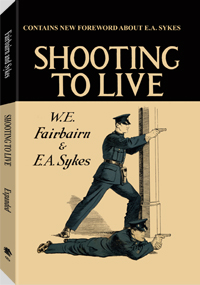
Over the past year I’ve been developing a new course for KR Training, Historical Handgun, that teaches the history & evolution of defensive handgun skills.  Part of that effort has been seeking out and reading old books on shooting, purchasing copies signed by the authors when possible.

In 1916, competition pistol shooter Abraham Lincoln Artman Himmelwright published his “Pistol and Revolver Shooting” book. Himmelwright did a significant revision of the book in 1928, and it was reprinted again in 1930.  His credentials included a term as president of the United States Revolver Association, and serving as captain of the Americas Shooting Team.  He wrote a earlier book called The Pistol and Revolver in 1908.

You can download a free ebook here.  My copy is a fancy reprint from Palladium Press.

The concepts in this book are the same as are repeated in the many books from the 1930s that I’ve reviewed in previous blog posts.

Of pistol shooting, he writes:

It is a healthful exercise, being practiced out of doors in the open air.  There are no undesirable concomitants, such as gambling, coarseness, and rough and dangerous play.  In order to excel, regular and temperate habits of life must be formed and maintained.  It renders the senses more alert and trains them to act in unison and in harmony.  Skill in shooting is a useful accomplishment that should be cultivated by every patriotic citizen.

About 90 pages of the book is discussion of specific pistols and revolvers: military arms, target arms, pocket arms, arms for home and shop protection, arms for hunting, and shot pistols.  His advice on home and shop protection? He recommends a 4″ barrel, .38 special DA revolver, Smith and Wesson or Colt.

His opinion on pistol sights:

The front sight should have a rear face or tip of some light colored metal… Such a front sight forms a conspicuous contrast against a green, drab, brown, grey or dark background and consequently can be seem more distinctly and can be “picked up” much more rapidly than a black sight, under normal field conditions. 

On competition pistols:

One match for pistols known as the “Free Pistol” match, in which there are no restrictions whatever, and the result is that competitors frequently develop and use arms with such radical modifications as to make the weapons absolutely useless and impracticable for any other purpose except competition in that particular match.

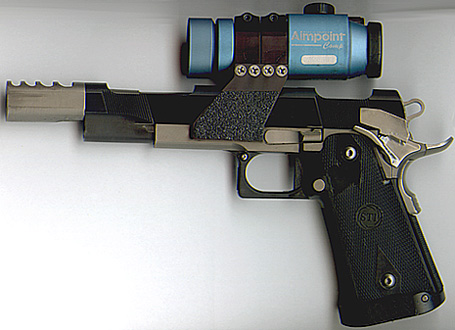
As someone that shot USPSA during the late 80’s and early 90’s – the era before there was a Limited division and typical competition guns changed from single stack iron sighted 1911’s drawn from leather holsters to red dot sighted, compensated, high capacity 2011’s, his comments about the arms race and “gamer guns”, written at the turn of the century, sound exactly like what gunwriters were saying in the racegun era. Nothing is new.

SHOOTING DRILLS & STANDARDS

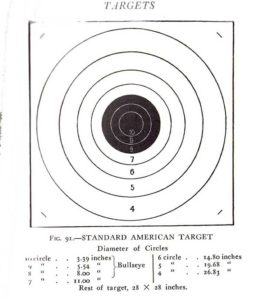
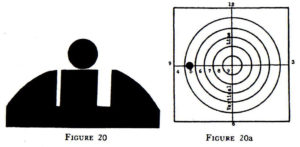
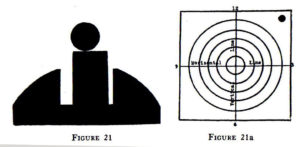
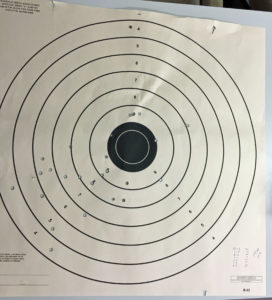
Himmelwright recommends that someone armed for personal defense should practice every 2-3 months, firing at least 15 rounds, at 20 feet, using a 20 yard bullseye target with a 2.72″ center.  A more modern equivalent would be firing at a 3″ dot at 7 yards.

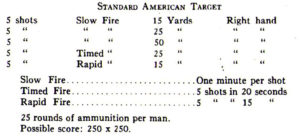
He includes specs for the American Standard Target, which was a very common target prior to WW2.

He lists shooting scores, from 1886, where 100 rounds were fired on this target, using a .44 S&W Russian revolver with a 2.5 lb single action trigger pull, at 50 yards (one handed, of course), with the highest score recorded 914 out of a possible 1000 points.   100 rounds, at 50 yards, with the majority striking inside a 5.5″ bullseye (the 9 ring), with many hitting inside a 3.5″ 10-ring is an impressive feat far, far beyond the abilities of all but the very best modern day shooters.

Himmelwright uses the term Practical Shooting to describe both handgun hunting and shooting for pleasure, by rolling cans on the ground or shooting at objects floating in a stream.

He describes the 4 courses of fire commonly used by the US Revolver Association:

Marksman Course

(Slow Fire) 10 shots at 10 yards.  60 seconds for each set of 5 shots (2 minutes total). 90 points to pass.

(Rapid Fire) 10 shots at 10 yards.  30 seconds for each set of 5 shots (1 minute total).  80 points to pass.

Sharpshooter Course

(Slow Fire) 10 shots at 20 yards.  60 seconds for each set of 5 shots (2 minutes total). 90 points to pass.

(Rapid Fire) 10 shots at 20 yards.  30 seconds for each set of 5 shots (1 minute total).  80 points to pass.

Expert Course

(Slow Fire) 10 shots at 20 yards.  30 seconds for each set of 5 shots (1 minutes total). 90 points to pass.

(Rapid Fire) 10 shots at 20 yards.  15 seconds for each set of 5 shots (30 seconds total).  80 points to pass.

Quick Fire Course

Face target, arms at sides, weapon in pocket or holster. Distance of 5 yards.  At command “fire”, draw weapon and shoot.

10 shots, 1 shot per string, double action.  Record time for each shot. (1 shot draw)

10 shots in 2-5 shot strings double action. Record total time for each string.

These drills are clearly the precursor to modern defensive handgun drills.  No recommended par times are given.

Himmelwright quotes Col. R.R. Raymond (“well known writer and authority on small arms”):

The quickest draw for a right handed man is from a holster on the right thigh at such at a height that the hand falls naturally on the butt.  Quick drawing can only be acquired only by diligent practice, grasping the butt from various positions, and putting special thought upon smooth movement rather than speed.  The thing to be avoided in practice is too much haste, resulting in a fumble.

Raymond’s observations about holster position can be seen in the modern cowboy fast draw holster.


Chapters

  • Introductory and Historical
  • Arms
  • Ammunition
  • Ballistics
  • Hand-loading Ammunition
  • Sights
  • Shooting Position
  • Targets
  • Target Shooting – Historical
  • Practice Shooting
  • Revolver Practice for the Police
  • Pistol Shooting for Ladies
  • Clubs and Ranges
  • Hints to Beginners
  • Appendix 1 – US Revolver Association
  • Appendix 2 – NRA matches
  • Appendix 3 – War Department Target Practice
  • Appendix 4 – War Dept Tests of Automatic Pistols
  • Appendix 5 – Colt Automatic Pistol
  • Appendix 6 – Powders for Pistols and Revolvers
  • Appendix 7 – Priming Compositions and Effects
  • Appendix 8 – Stopping Power
  • Appendix 9 – Gunsmithing
  • Appendix 10 – Directory

Summary

It’s a long book, filled with plenty of technical information.  The level of detail is at the ‘serious gun nerd’ level, particularly those interested in the mechanical engineering, chemistry and physics of shooting and the history of pistol competition.  In its day, it was probably the most complete collection of information about all aspects of handgun shooting available, and remains an excellent historical record of what was known about the topic prior to 1930.

Six Reasons You Aren’t Agreeing to More Gun Control

(November 19, 2017)

This article from The Federalist, listing 6 reasons why “Your Right Wing Friend Isn’t Coming to Your Side on Gun Control” has been getting shared by many of my gun owner and trainer friends. The clickbait title was cleverly written to appeal to gun control advocates as the target audience.

The points the article makes are valid but fall short of hitting the X-ring of a clear explanation.  Here are the key points from the article, with my additional thoughts on each:

We Rarely Get to Come to the Conversation in Good Faith

The article correctly points out that when gun control advocates tell gun owners their opposition to new gun restrictions means that they “don’t care” about the tragedy and loss of life, it’s offensive.  After each tragedy, gun rights supporters point out the linkage between gun-free zones and mass killings, and provide examples of incidents where immediate armed response from an individual saved lives.   Both sides have their preferred policy solutions (eliminating gun free zones and national concealed carry reciprocity, on the pro-gun side), and both come to the issue with a desire to save more lives.

A true compromise on gun policy would be if gun control advocates were willing to trade support for national reciprocity, for example, if the pro-gun side would agree to universal background checks.  When gun control advocates use the word “compromise”, they want you to agree to give up some rights, but not as many as they would like to take away, offering nothing in trade.  It’s like a mugger taking all the cash in your wallet and your phone but leaving you your credit cards and ID.

The definition of good faith is “honesty or sincerity of intention”.

Gun control advocates have a long-term “truthiness” problem – a lack of credibility. Whether it was Bill Clinton knowingly lying when he claimed the AR-15 was the ‘weapon of choice of drug dealers’ (when FBI data showed that handguns, not so-called assault weapons, were the weapons of choice of criminals), Barack Obama saying “we don’t want to take away your guns” one day, and wishing for “Australian-style gun laws” the next, or random Bloomberg-funded spokespeople claiming that the “gun show loophole” is the primary way criminals get guns (when BATFE agents and interviews with jailed violent criminals show otherwise), gun control advocates have a terrible track record of using lies and deliberate deception to make their case in the press and with voters.

This recurring pattern of deliberate dishonesty goes back well into the 1990’s, when gun control strategy was specifically to exploit the ignorance of the masses to build support for gun bans.

Awareness of this ongoing pattern of disinformation is widely known within the gun culture, as examples of technically incorrect information, prejudicially selected data, and gun control movement “talking points” are repeated without verification by media outlets whose editorial boards all support any and all new gun restrictions. (Media bias against gun rights is explained in depth in John Lott’s book The Bias Against Guns.)  

This excellent article explains to gun control advocates what they need to do to gain credibility to engage in an actual ‘national conversation’.  (The phrase “national conversation” is of course a focus-group tested propaganda phrase that actually means “People who disagree with me on a specific issue should listen to what I have to say, realize that I’m right, and address it in the way I want.“)

The ‘Blood on Their Hands’ Attacks Are Offensive

The article’s point #2 is the same as point #1.  The majority of mass shooting incidents have occurred in “gun free” zones.  Gun control advocates resist the idea of allowing more people to be armed in more places, claiming “more guns leads to more violence”.  Yet gun shops, gun shows, and shooting ranges, where almost everyone present is armed, are not locations where mass killings occur, and in those rare occasions where violence starts, armed defenders quickly end it.

From a pro-gun perspective, it is those that insist on disarming victims through implementation of gun -free zones, and laws making it difficult/impossible to get carry permits in states such as California and New York, who have the victims’ blood on their hands.

The Loudest Voices Are Often the Most Ignorant

In the mainstream media, and even in the “conservative” media, the number of actual gun owners, who carry on a regular basis, or associate with anyone who carries, is near zero.  Sean Hannity (FOX news, Sirius XM) and Andrew Wilkow (Sirius XM) are gun owners and shooters, but those that typically speak for the gun owner side of the debate in panel shows are coastal elites living in areas with the nation’s most restrictive gun laws, working in a business in which gun ownership and daily carry does not exist.  Former FOX news megastar Bill O’Reilly’s views on gun control leaned closer to his pal Michael Bloomberg’s than to Wayne LaPierre’s, and he frequently used his top rated show to spout misinformation and technically wrong facts about guns and crime.  Gun control advocates that claim that the pro-gun side of the discussion is being heard because there are conservative media outlets or because some right wing pundit was on a panel show are wrong.  Most of the conservative websites and old school publications, like National Review and the Weekly Standard, are also run and written by coastal elites as isolated from the gun culture as their friends at CNN, NBC, Time, Newsweek, Slate, Salon and other media sources are.   The NRA’s new team of spokespeople, Colion Noir for example, would do well if given the opportunity to speak for the gun culture, but are largely ignored by mainstream and “conservative” media alike, as they just keep featuring the same insular group on show after show.

The list of errors the media publishes on firearms is long, with the most recent being the USA Today info graphic showing a chainsaw bayonet as a popular accessory to the AR-15.  A recent Houston Chronicle editorial discussing a “gun surrender” policy for domestic abusers included a stock photo showing a revolver, with a single stack 1911 magazine sitting next to it.  Stock photos automatically linked to news articles on Facebook seem to always find the derpiest pictures showing the worst examples of handgun carry and handgun shooting technique available.

Some in the media are starting to wake up to this problem, but none in positions of power to actually get the details right.

David Kopel’s recent article on The Hill hit the ball out of the park, listing all the major components of existing gun law.  The overwhelming majority of gun control advocates do not understand existing gun laws, or how guns operate. That widespread ignorance makes it nearly impossible to have any kind of conversation on the topic, as most of the pro-gun person’s time is spent attempting to bring the anti-gun person up to a basic level of competence on fundamental issues, with the anti-gun person refusing to believe what is being explained out of an emotional confirmation bias driving them to reject anything a pro-gun person says as “NRA propaganda” that cannot be true.

This is why many that are the most informed on the pro-gun side simply walk away from discussions of the issue, and why so many will no longer bother to be interviewed or talk to reporters at all.

The Most Prominent Policy Ideas Have Nothing to Do With the Tragedy

In incident after incident, analysis reveals that existing gun laws were broken, or the guns were purchased legally by someone that would not have been prevented if measures favored by gun control advocates were in place.  Despite this, the same ideas continue to be promoted as “common sense” solutions by gun control groups, even though many that study the data discover that those ideas haven’t worked and are unlikely to work.

We are past the tipping point for gun laws in the US.  The majority of gun laws passed after Sandy Hook have been met with widespread disobedience from gun owners: magazine capacity bans, assault weapon registration, and universal background checks are essentially being ignored.  Law enforcement in states that have passed those laws are not enforcing the laws, and in many cases have taken legal action to oppose them in court.

Technical and tactical ignorance of gun control advocates is a factor yet again, as their belief that banning particular types of guns or magazines would change the outcome of a mass shooting situation is pure fantasy.  Shooters using 19th century mechanically operated firearms are capable of firing with significant speed and accuracy.

The other common fantasy that is promoted by those seeking to ban magazines based on capacity is that unarmed people can rush an attacker during the time he or she is changing magazines. The gun control advocates believe that untrained people can succeed in that highly dangerous, unlikely-to-succeed tactic but are unable of doing something even easier, drawing a pistol and shooting back, during that same time window.  A typical handgun reload time for a moderately trained shooter is under 2 seconds. Similarly, the typical handgun draw time for a moderately trained shooter is 2 seconds.  Skilled shooters can draw and reload even faster.

There can be no rational discussion of what policies can prevent mass killings when one side of the debate lacks any expertise on the realities of armed and unarmed self defense, particularly the abilities (or lack thereof) of the typical armed citizen.  When gun control advocates insist that the typical armed citizen is incapable of successful armed response, or  warn that ‘It just makes sense that if people are walking around armed, you’re going to have a high rate of people shooting each other.‘ (which did not occur when dozens of armed citizens fought back against the UT tower sniper)– opinions the speakers have no experience, expertise or data to support – gun owners turn off, turn away and drop out, (to paraphrase Timothy Leary).

A new trend in the Left is to pout that the public no longer takes advice from “experts” on policy issues (in books like The Death Of Expertise).  They accuse the Right (and Trump supporters specifically) of ignoring data and science and verified experts on topics where the experts favor left-wing policies–while engaging the same exact bad behavior themselves when it comes to gun violence. Actual subject matter experts in firearms, tactics, criminal behavior and any other relevant topic whose opinion did not align with the narrative have been systematically excluded from the policy making process for decades.

We Seriously Don’t Care About Gun Laws in Other Countries

Gun control advocates frequently cite the gun violence rates of European countries, with the implication that if the US had EU-style gun laws, we would have EU-style violent crime rates.  There are two basic flaws with that approach:

  1. The pro-gun person does not believe that EU style gun laws will reduce their risk of being attacked with a firearm.  States with strict gun laws, particularly Illinois, California and Maryland, have terrible violent crime problems that their neighboring states with more gun freedoms do not have.  It would take house to house searches and mass confiscations to reduce the number of guns in circulation in the US to EU levels.  If that occurred without starting a civil war (unlikely), the same network that brings in billions of dollars of illegal drugs into the country each year could easily supply (and already does supply) criminals with illegal guns.
  2. The pro-gun person believes that EU style gun laws would increase their vulnerability to injury death by criminal attack. When a pro-gun person imagines themselves being a victim of violent crime, the scenario ends when they present a firearm, use it, and the attack ends – regardless of what the mode of criminal attack is: gun, knife, or physical attack.  In many cases simply presenting the gun is sufficient to stop the attack, as noted in this Obama-era CDC study.  The CDC estimated that more than 500,000 defensive gun uses happen each year, exceeding the 30,000 gun deaths (only 15K of these were murders, the rest were suicides and accidents) by a factor of more than 10.  A simple cost-benefit analysis of those two data points shows that the net benefit of allowing citizens to have defensive firearms far outweighs the potential negative outcomes.

If you believe that EU-style gun laws won’t make you safer, statistics don’t really matter.

We Really Do Consider Owning Firearms a Right

Self defense is the most fundamental human right.  The concept of that right goes beyond the 2nd amendment of the Constitution, all the way down to the 2nd of Maslow’s human needs: safety and security.    Both gun rights advocates and gun control supporters are motivated by concerns about their individual safety and security. As these Pew Research poll results show, the divide between them is very broad, because their core beliefs are so disparate.   The history of the US is one of ever expanding freedoms and rights: from the abolition of slavery, to granting women the vote, to protections against discrimination, overturning the national ban on alcohol, and more recent Supreme Court rulings expanding both concealed carry rights and gay marriage to all 50 states, as well as state level legalization of marijuana.  Culturally, from left to right, those standing on the side of “more freedom” tend to win on their issues over the long term.


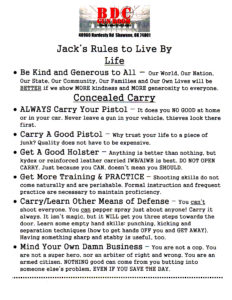
Jack’s Rules to Live By

The 2017 Rangemaster Instructor Conference was held at the BDC Gun Room in Shawnee, OK.  On the counter at the store, they had a stack of handouts listing “Jack’s Rules To Live By”, written by BDC owner Jack Barrett.

It’s a great list, particularly his #1 rule:

Be Kind and Generous to All — Our world, our nation, our state, our community, our families and our own lives will be better if we show more kindness and more generosity to everyone.

Concealed Carry

ALWAYS carry your pistol – It does you no good at home or in your car.  Never leave a gun in your vehicle. Thieves look there first.

Carry a good pistol – Why trust your life to a piece of junk? Quality does not have to be expensive.

Get a good holster – Anything is better than nothing, but kydex or reinforced leather carried IWB or AIWB is best. Do NOT open carry.  Just because you can, doesn’t mean you should.

Get more training and practice – Shooting skills do not come naturally and are perishable.  Formal instruction and frequent practice are necessary to maintain proficiency.

Carry/Learn other means of defense – You can’t shoot everyone.  You can pepper spray just about anyone! Carry it always.  It isn’t magic, but it will get you three steps towards the door.  Learn some empty hand skills: punching, kicking and separation techniques (how to get hands off you and get away). Having something sharp and stabby is useful, too.

Mind your own damn business – You are not a cop.  You are not a super hero, nor an arbiter of right and wrong.  You are an armed citizen. Nothing good can come from you butting into someone else’s problem, even if you save the day.

(KR note:  When the situation is conflict between a few people, none of which are known to you, his advice is good.  In an active shooter/mass killing incident, the decision to act should be based on the totality of the circumstances of that specific event, as doing anything other than what is necessary to protect yourself and those near you will likely place you at much greater risk.)

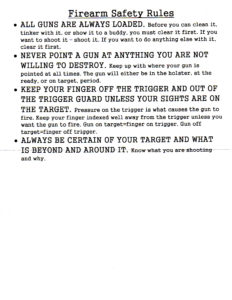
FIREARM SAFETY RULES

(KR note: Jack uses a variation of the classic 4 Cooper rules, which aren’t my favorite version of the gun safety rules. But his explanations and commentary on them is worth sharing.)

All Guns Are Always Loaded – Before you can clean it, tinker with it, or show it to a buddy, you must clear it first.  If you want to shoot it, shoot it. If you want do anything else with it, clear it first.

Never Point a Gun At Anything You Are Not Willing To Destroy – Keep up with where you gun is pointed at all times.  The gun will either be in the holster, at the ready, or on target, period.

Keep Your Finger Off the Trigger And Out of the Trigger Guard Unless Your Sights Are On the Target  – Pressure on the trigger is what causes the gun to fire.  Keep your finger indexed well away from the trigger unless you want the gun to fire.  Gun on target = finger on trigger.  Gun OFF target = finger OFF trigger.

Always Be Certain of Your Target and What is Beyond and Around It – Know what you are shooting and why.


2017 Rangemaster Instructor Conference

On Nov 11-12, 2017 I attended the Rangemaster Instructor Conference held at the BDC Gun Room in Shawnee, Oklahoma. 49 instructors, out of the more than 800 graduates of the 3 day Rangemaster Instructor program, spent 2 days shooting and learning.

The event included live fire time on the range, shooting the most challenging qualification courses in the Rangemaster program, from the Rangemaster Bullseye course to the Casino Drill, with two drills shot for score Sunday.

The level of shooting proficiency of attendees was very high, with most shooting 90% or better, and many shooting 95% or better, on all the scored courses of fire.  At one point Tom asked for a show of hands of those that were top shooter in their instructor class, and many of those present raised their hands.

Presentations

Tom didn’t do most of the teaching.  In his opening remarks he observed that many of the pioneers, founders and key figures of the private sector training industry were slowing down, retiring or had passed away.  Part of his efforts over the past two decades of his instructor program was to mentor other trainers that can carry on the great work of the previous generation.   Tom started the annual Rangemaster Tactical Conference to provide annual professional development opportunities for everyone in the private sector training industry. The model was law enforcement training conferences, where new ideas could be shared and peers from all over the country could network and compare skills and training concepts.  The impact of the conference (and Tom’s instructor training program) on the curriculum taught by trainers all over the US has been significant.

On the range and in the classroom, Tom provided opportunities for younger trainers to gain experience teaching their peers.

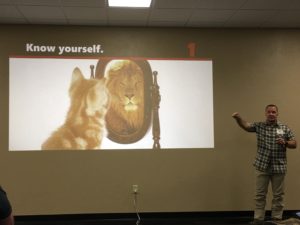
Tiffany Johnson, John Murphy, Lee Weems and John Hearne presented a long block discussing the ten principles of Rangemaster training doctrine.  I’ll summarize that presentation in a separate blog post.

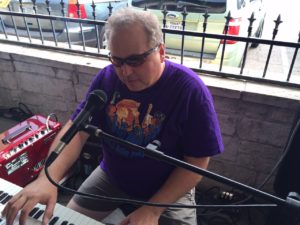
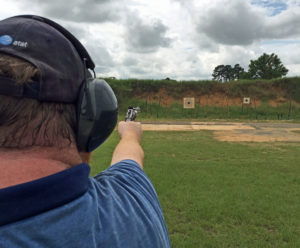
John Murphy (in the picture above) will be visiting KR Training September 2018 to offer a two person team tactics course and a vehicle defense course.  I’ll be visiting John’s school, First Person Training, in Culpepper, Virginia, in October 2018 to offer a session of my Historical Handgun course.

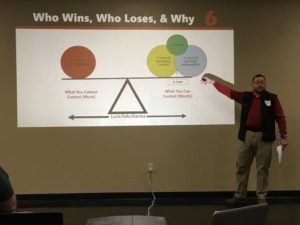
John Hearne’s section included some of his excellent material analyzing gunfight successes and failures.

Lee Weems presented some excellent material on interacting with police, including an in depth discussion of 4th amendment issues, McFadden stops (commonly known as Terry stops) and the history of “Miranda rights”.

Warren Wilson, from the Enid, OK police department, presented on criminal gangs and the armed citizen, providing advice on how to recognize members of organized gangs (colors, tattoos, clothing, other behaviors).  Several instructors present at the conference were also K-12 teachers, who shared their own experiences dealing with teenagers (and younger children) with gang affiliations in classes.

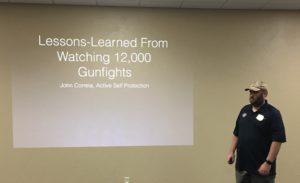
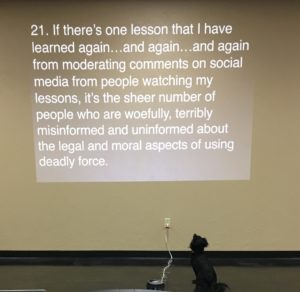
John Correia of the Active Self Protection youTube channel gave a long presentation on 21 points learned from his observation of more than 12,000 videos of gunfights. I recently became an ASP-affiliated instructor, so I’ll be using some of John’s 1100+ narrated videos of actual incidents in classes.

Shooting Competition

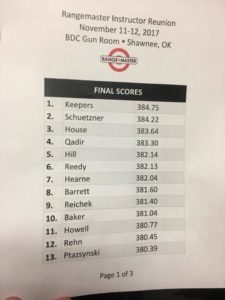
The end of the range session Sunday was a two stage match. One stage was a 60 round qualification course of fire based on the Rangemaster Instructor qual test. The other was the casino drill.  The casino drill was scored using “time plus” (penalties added 1 sec for each shot outside any shape).  The field was tightly bunched together. Only those that shot a perfect 300 on the qual course and had zero penalties made the top 5.  I pushed for speed on the casino course and had 3 hits less than 1″ outside the shapes and ended up 12th.  Dave Reichek only had 1 hit outside a shape and ended up 9th. Spencer Keepers won the match with solid runs on both courses of fire.

John Correia did a poll of what guns and ammo the attendees carried, and reported the results in a video on his channel.

LOCAL HOSPITALITY

The BDC Gun Room was a terrific host for this event.  Their indoor range area was clean with a fantastic air handling system. Multiple classrooms, an archery range, machine gun rentals, inventory of guns, ammo, clothing, accessories, and store dogs – the 3 Givens dogs plus two that belonged to one of the BDC employees (who was attending the conference).

SUMMARY

The Rangemaster instructor family is full of great people: highly skilled shooters committed to providing high quality, relevant, life-saving training.  It’s always a pleasure to be around them.

Those that attended got copies of all the powerpoint presentations and videos.  I’ll share some highlights from that content in future blog posts.

KR Training November 2017 newsletter

Welcome to the KR Training November 2017 newsletter!  Upcoming classes include AT-7 More Scenarios Nov 18, Tac Medicine Every Day Carry Dec 9, Street Smarts Knife Dec 10, License to Carry Dec 16 and a special session of the DPS-certified Active Shooter/School Safety course Dec 27 & 28.

Check the schedule page on the KR Training website for the full list.

If you aren’t already a subscriber to receive this newsletter each month, you can subscribe here or follow this blog. You can also follow KR Training on Facebook or Twitter for more frequent posts and information.

GIFT CERTIFICATES

November special on gift certificates:  Get a $100 gift certificate for $80 (20% savings).  Contact me to purchase.

UPCOMING CLASSES

AT-7 More Scenarios scheduled for Saturday Nov 18, is similar to our AT-2 course.  4 more hours of scenarios using ‘red guns’ indoors and Simunition outdoors in the shoot house. Many of you asked us to add this course.  Please get registered ASAP if you plan to attend!

Tac Medicine Every Day Carry, Saturday, December 9 is a one day class teaching skills that might be needed to keep someone alive before professional medics arrive, for example after a car accident or shooting incident.

Defensive Knife Street Smarts, Sunday, December 10, is a one day teaching fundamentals of knife defense, that can also be taken as a refresher for those with prior knife defense training.

Our last License To Carry class of 2017 will be December 16th at the A-Zone.

ACTIVE SHOOTER/SCHOOL SAFETY COURSE

On December 27 & 28, KR Training will offer a session of the new DPS-Certified School Safety course. Karl, Paul Martin and Tina Maldonado attended training at the DPS Academy this year to become certified to teach this 2 day class, developed by DPS to train K-12 teachers (with carry permits) the skills necessary to defend against an active shooter threat.

This course content is general enough that it has value to anyone interested in active shooter response, and as a state-certified, state-developed course, the training it provides will be more legally defensible in court.

We are offering special pricing for this initial offering of this course: $50 for any K-12 teacher, and $150 for all other students.  Students must have a Texas LTC to attend.  Payment in full in advance required to register for this course. 

Register here.

KR TRAINING ON THE ROAD AND ONLINE

Karl and Dave Reichek will attend the Rangemaster Instructor Conference in Oklahoma Nov 11-12. Karl will travel to El Paso to take a one day handgun class from legendary trainer John Farnam in December, and Tracy Becker will attend the MAG-120 with Massad Ayoob in Florida in December.  I’ve recorded several episodes of Handgun World Podcast, filling in for Bob Mayne as guest host.  One episode interviews John Holschen about force on force training, and one is a roundtable with John Daub and I discussing our top 10 drills for maintaining handgun competency.  You can also hear Tracy on the Polite Society Podcast every episode.

JANUARY PREPAREDNESS TRAINING WEEKEND

On January 7-8 we are replacing our annual Preparedness Conference with a two-day event at the A-Zone, offering a mix of classroom and range training.  It’s broken up into 1/2 day blocks so you can register for whatever part of it interests you.  Full details are on Paul Martin’s blog.   Here’s the details on Preparedness 1 (Saturday) and Preparedness 2 (Sunday).

Register here.

DEADLY FORCE INSTRUCTOR

KR Training is hosting the only session of the Massad Ayoob Group Deadly Force Instructor class scheduled for 2018, on Jan 30-Feb 4. This 5 day course covers the legal aspects of Deadly Force at a level far beyond what is taught in the DPS License To Carry instructor course, and is highly recommended for any LTC instructor.  Armed Citizen Legal Defense Network members and graduates of MAG-40 are eligible for discounts on class tuition.  If you plan to attend, please get registered ASAP.  

Register here.

2018 SCHEDULE

We have updated the KR Training schedule with most of the classes we plan to offer in Jan-March 2018. Registration is open in all of them.

FOR SALE

New Gen 4 Glock 19 with upgraded sights, trigger and mag release – $580

Used Springfield 5″ XD with upgraded sights, trigger and slide release, with 5 magazines and holster – $450

New CZ75 SA-B 9mm with upgraded trigger – $450

Remington 1100 12 gauge shotgun, VangComp upgrade, ghost ring sights, extended mag tube, oversized safety, other internal work – $1000

Used 1911 Airsoft gas blowback pistol w/ 2 mags – $50

Used 1911 Airsoft gas blowback pistol w/ 3 mags – $50

Used STI-style Airsoft gas blowback pistol w/ adjustable sights, 2 mags – $75

New V-line Deskmate Locking gun box – $150 (cheaper than Amazon price!)

BLOG-O-RAMA

GETTING IN THE HOLIDAY SPIRIT

As many of you know, another thing I do is perform music with bands.  I’ll be in the house band at Santa’s Wonderland, performing every Tue, Wed, and Thu from Nov 14 through Christmas.  Santa’s Wonderland is a multi-million dollar facility, with a trail of lights with over 2M lights and Santa’s Town, which has shops, food, live music, and many other activities.   It’s a state-level attraction drawing visitors not just from the College Station area, but from Houston, Austin and other Texas cities.

Another reason to come visit College Station: the Legacy of Ranching exhibit at the Bush Library, curated by my wife Penny, is still open until January.  I assisted with video production and contributed some pulp magazines from my personal collection to a display about Texas ranches in pop culture.

If you are looking for a fun day trip this holiday season, come visit the Bush Library and Santa’s Wonderland. If you come on a weekend, odds are good I will be performing somewhere, since I have 35 gigs booked between now and New Year’s Eve. My full music performance schedule is here.

We look forward to training you!
Karl, Penny and the KR Training team

Historical Handgun – even more on the 1945 FBI course of fire

Over the past year I’ve been developing a new course for KR Training, Historical Handgun, that teaches the history & evolution of defensive handgun skills.  Part of that effort has been searching for old handgun qualification courses of fire, and shooting them using the techniques and equipment used in that era.  In a previous article, I discussed the 1945 FBI qualification course of fire. A follow up article added more detail.   Several books I’ve read since writing those articles provided more details and insight the specifics of the FBI course, sometimes called the Practical Pistol Course.

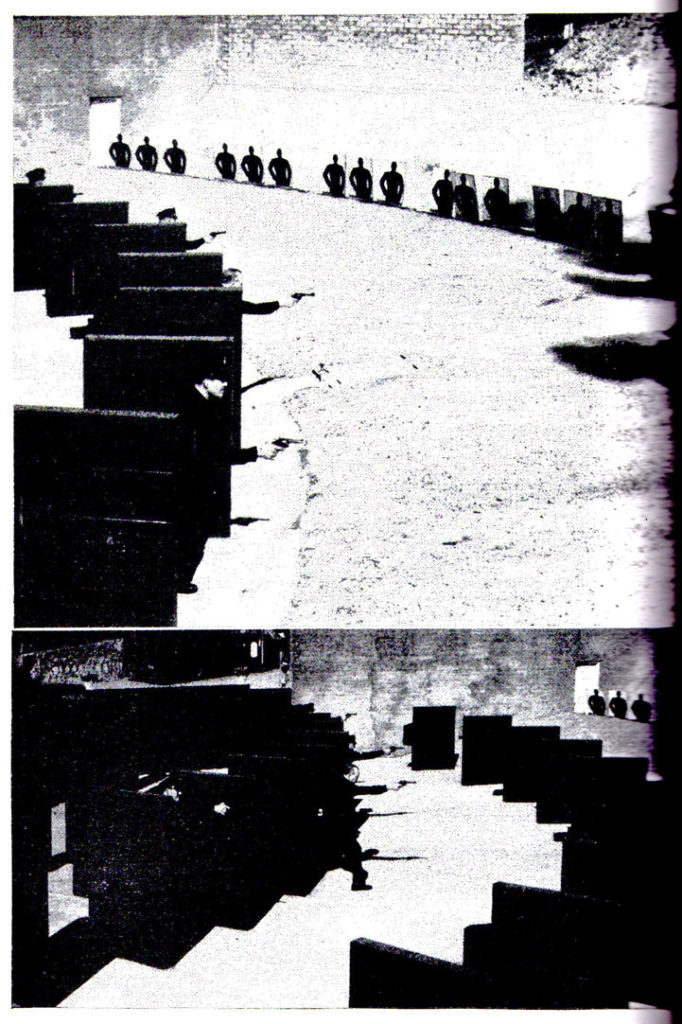
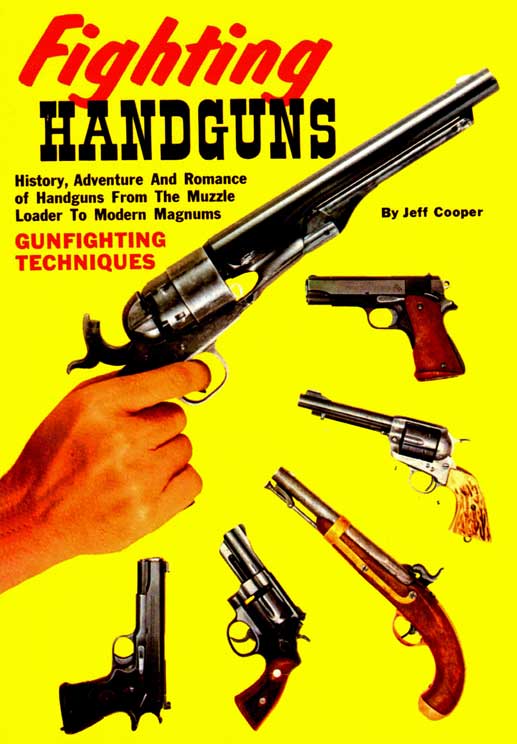
In Jeff Cooper’s 1958 book Fighting Handguns, he includes two pictures showing a range set up to run the FBI 1945 course in its original format.   That format required shooters to start prone at 60 yards and move downrange quickly to firing positions at 50 and 25 yards, firing additional rounds, all run as one long string with a 5 minute, 45 second time limit.

Unless all shooters completed each string at the same pace, moving as a group, following that protocol would put the fast shooters as much as 35 yard downrange from the slowest shooters. The FBI solution to this issue, back in the late 40’s, was to build the range with lanes that fanned out, creating more space between shooters as they moved downrange, as shown in these pictures.

This doesn’t really solve the problem of shooters being downrange of each other. It reduces the risk of being shot somewhat, but still violates basic range safety protocol.

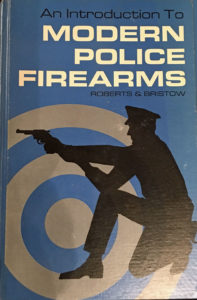
In another book I reviewed recently, the 1974 book Introduction to Modern Police Firearms, the authors address this problem and their solution to it.   When I ran the course during a Historical Handgun class, we split the FBI qual into separate strings with shorter par times for each position.  Roberts and Bristow did the same in 1974. Here are their string par times:

  1. 7 yards, hip shooting, 10 rounds, 25 seconds
  2. 25 yards, three positions, 15 rounds, 90 seconds
  3. 50 yards, four positions, 20 rounds, 2 minutes, 45 seconds (165 seconds)
  4. 60 yards, prone, 5 rounds, 35 seconds

When I split the course into individual strings, I divided up the 5:45, leaving the total time intact.

Roberts and Bristow reduced the total time from 5:45 down to 4:50, using an estimate of how long it took shooters to run from 60 to 50, and 50-25 yards.  By removing the requirement to run to each new firing position, that reduces the physical stress and made the course easier – likely something the firearms instructors that designed the course would have objected to, but their reduced par times for each string does a better job of simulating how much actual time shooters had for each string than my version does.

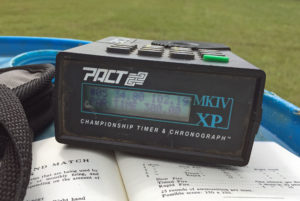
Another interesting artifact:  many modern shooting timers designed for high speed, short duration courses of fire typical in USPSA, IDPA, Steel Challenge, even NRA Action pistol were designed with a maximum par time of 99.99 seconds, making them ill suited to older courses of fire with par times longer than 100 seconds for a single string.  To run many of the older drills, I had to get my old PACT MK IV timer out of the closet, because it could handle those longer par times.  It’s yet another example of how concepts of shooting training and competition have changed over time.

For future sessions of Historical Handgun, I’ll use the Roberts and Bristow timings in place of my own variation of the FBI 1945 course.


Book Review (Historical Handgun) – Fighting Handguns (1958, Jeff Cooper)

I’ve been developing a new course for KR Training, Historical Handgun, that teaches the history & evolution of defensive handgun skills.  Part of that work includes reading as many old books on shooting technique as I can find.

Today’s book is Fighting Handguns, written by Jeff Cooper in 1958.

This book was loaned to me by KR Training assistant instructor Ed Vinyard, who has been assisting me with research.  It’s a reprint from Paladin Press, who re-published 4 of Cooper’s early books. As they note in the preface, the print quality of the text and photographs are not up to modern standards, but the information is well worth preserving.

Another victim of the internet age and the Amazon-ization of the book business, Paladin Press is closing up.  They are selling off remaining inventory at deep discounts until the end of November 2017.  It’s a great opportunity to get some print copies of many classic books on shooting and gunfighting. Their contribution to preservation and distribution of knowledge on these topics is significant.

CHAPTERS

  • The Beginning
  • Before the Revolver
  • Sam Colt and the First Revolver
  • Metallic Cartridges and the Peacemaker
  • The Western Tradition
  • Double Action
  • The Autoloading Pistol
  • Pocket Pistols
  • Combat Pistol Techniques
  • The Power of Pistols
  • Odds and Ends

Fighting Handguns is great summary of the early history of handgun development pre-1950, with at least half of the book devoted to 19th century guns and the 20th century concept of cowboy fast draw.  During the 1950’s the popularity of Westerns was at its peak in television, movies, books and comics.  The chapter The Western Tradition discusses “the code of the West”:

A man pays his gambling debts first.  A man’s word is kept, even if it kills him. A man may not accept an insult.  A stranger must be fed.  A man does not shoot another in the back or from ambush.  Horse thieves hang.  A man may not be held accountable for the outcome of a fair fight.

Those are all concepts deeply embedded in the way Western stories were told in the 1950’s, but probably not as widely believed by, or as important to, those living in the Old West as scriptwriters and novelists (and gunwriters) of the 40’s and 50’s asserted.

Cooper dives deeper into the science of the “showdown”, discussing draw speed for hip & point shooting:

Experiments in modern times indicate that a totally untrained man takes between 1.5 to 3 seconds to get off a controlled shot from the leather.  An ordinary good shot takes about a second. An expert can make it in half that.  So while the sharpie might provoke a duffer into a “fair fight” the result was murder.  The difference between the world’s best gunslinger and any other ace is so slight that the loser’s bullet is on its way before the winner’s shot can affect its aim. To allow a foe to initiate action and then to hit him before he can get off a controlled round requires approximately twice his speed.  A 15% edge won’t save your life.

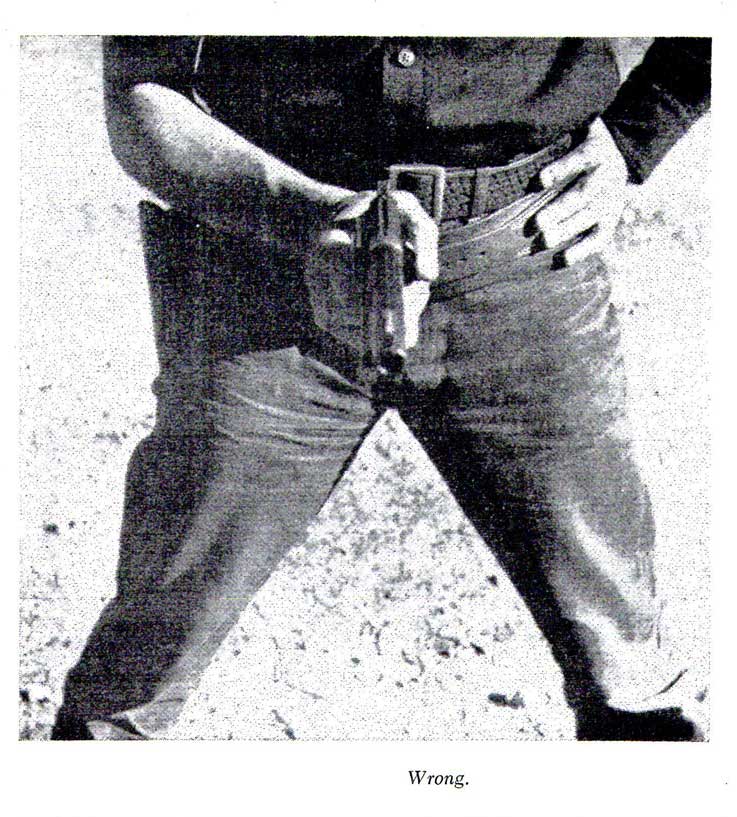
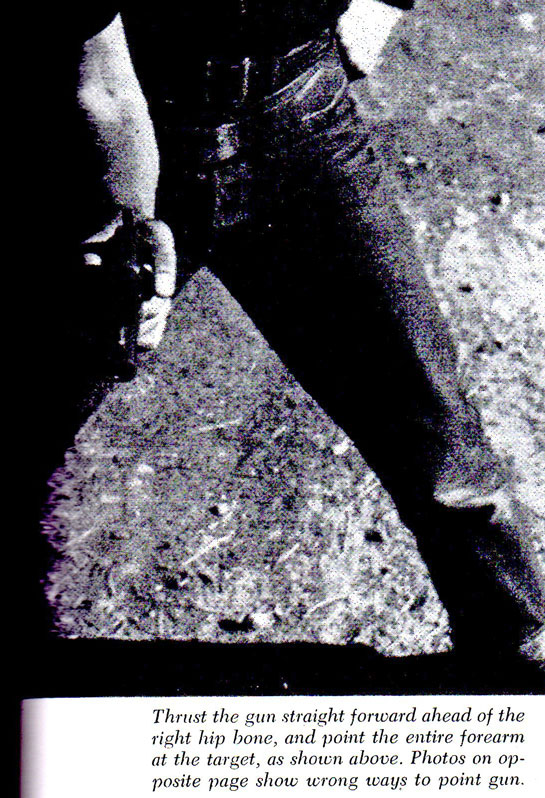
Cooper includes some pictures showing bad (first) and good (second) point shooting technique:

Thell Reed, famous quick draw artist and Hollywood firearms coach, writes in the forward that he met Cooper in 1957 during one of the Leatherslap matches, where they were shooting live ammo out of single action revolvers drawn at lightning speed – a practice that was replaced by the use of wax bullets and blanks to reduce the risk of injury.  American Handgunner has a good article about the history of fast draw competition.  This article from the modern Cowboy Fast Draw Association is another version of that history.

The early days of fast draw competition provided insight into human performance with handguns, and motivated the development of shooting timers – two essential steps that led to the innovations of the 1960’s and 1970’s.

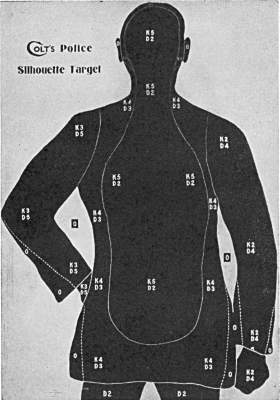
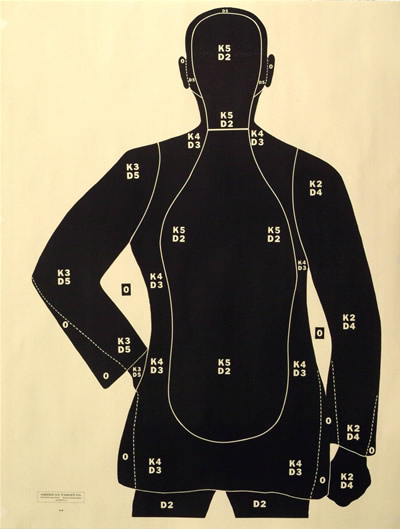
Cooper shares a 1958 definition of what a “highly trained pistol man” should be able to do: hit a silhouette (probably a Colt Silhouette or B-21) 10 times out of 10 at 25 yards, from the leather (open carry), given two full seconds from the signal to the shot.

MODERN GUNS

The chapters on double action revolvers and autoloading pistols are heavy on technical details about makes and models of specific guns.  Unsurprisingly, Cooper favors the 1911 in .45 ACP and spends much of the remainder of the book making his case for the “stopping power” of the .45 (Colt and ACP).

The chapter on Combat Pistol Techniques begins with another baseline drill from Cooper:

Until a man can put nine out of 10 shots into a 6″ ring at 25 yards, using a major caliber weapon, slow fire, offhand, he is not ready to take up combat technique.

The modern equivalent of this is “The Test” from Ken Hackathorn, which uses a 5 1/2″ bullseye and has a passing score of 90 points, for a 10 shot drill fired at 10 yards, with variations at 20 yards.

If Cooper’s original requirement were imposed on students taking most modern 2 day defensive pistol classes, it’s likely that 90% would be unable to meet it.  Slow fire, one handed bullseye shooting is a skill very few still practice, and even many USPSA and IDPA competitors lack the skill to meet that requirement shooting two handed.

Later in the book, Cooper notes:

Pointer shooting is not as hard to learn as sighting.  I can teach the average infantryman to stay on a silhouette at 10 yards, using pointer fire in two-shot bursts, more easily than I can get him into the bullseye at 25 yards using sights.  Work at this starting at 20 feet until you can slam that first shot within 10″ of your aiming point every time.  When this happens go to two shot bursts and work until the first shot is always within 8″ of the peg and the second shot is always closer than that. 

Cooper’s concept of two shot bursts from the pointer position evolved to the fast double tap using sighted fire less than a decade later.

The remainder of the book covers holsters, use of cover, the draw stroke (circa 1958, based on the 1940s FBI techniques) and a faithful recitation of Hatcher’s stopping power formula as explanation as to why calibers starting with 4 are best.

Gun Politics

Cooper’s observations about the politics of gun control are as valid today as they were 60 years ago when they were written.  He explains:

The (anti-gun) arguments seem to run like this: (1) Guns are dangerous and you might shoot yourself with one (2) Guns invite the feeble-minded to use them in fits of temper (3) The prevalence of guns constitutes a hazard for the police (4) Guns are used by criminals and should be prohibited and (5) You should not resist a criminal because somebody might get hurt.

Firearms in the hands of the people do make police work dangerous. Any policeman would feel better if he knew there were no guns in town except his.  This is the overwhelming reason why police officials should never be treated as experts in the field of arms legislation.  But as much as we sympathize with the policeman’s lot, we cannot pass laws for his benefit, if they encroach upon the liberty that we established this country to ensure.

Summary

This book is often overlooked among Cooper’s work, probably because some of what he advocates in this book he later rejected in favor of better and more effective techniques.  As a historical document, it’s an excellent time capsule of conventional wisdom of the late 1950’s.

The search for new shooting glasses

Vision plays a significant role in shooting well.  Brian Enos’ classic line “you can only shoot as fast as you can see” is absolutely true.   My vision is not perfect. I’ve had to use prescription glasses for most of my 30 years as a competitive shooter.   For the past 12 years, I’ve used a set of Oakley Half Jacket glasses, with the correction built into the lens itself.  I strongly prefer having the correction in the lens, as opposed to using a prescription insert. My experiences with Rudy Project and Bolle glasses with inserts were that you had twice as many lens surfaces to attract dust that had to be cleaned off, and twice as many surfaces that could fog or be fouled by sweat or rain.  Worse, the correction was not available in the full coverage of the lens, but only in the small section corrected by the insert.

So about 12 years ago I wrote a big check to Oakley and got RX lenses in their VR28 color. When I got the glasses, I was amazed at the quality of the optics, which were better than my daily wear glasses.  The Oakley lenses appeared to correct all the way to the lens edge, giving me improved peripheral vision.  I liked the VR28 because it increased contrast with minimal color distortion.  I discovered that I could wear them from dawn to dusk anytime I was outdoors: driving, shooting, even on stage at outdoor gigs.

After more than a decade of heavy use, and some changes in my vision, it’s time to get not only new lenses, but a new frame.  Why not just get another Oakley frame and VR28 lenses?

This article from Lucky Gunner testing different shooting glasses for safety, did not show that the Oakley product performed well.  And several other companies, particularly Wiley X and Rudy Project, have competitive & similar products.  Rudy Project, in particular, is a big supporter of the practical shooting sports, sponsoring a shooting team and offering discounts to competition shooters.

I reached out to Kevin Gentry from the Rudy Project team and he connected me with Rudy’s RX specialist, who answered a lot of my questions, and arranged for me to get a T&E package to use on the range.  It included multiple lenses.  (The T&E package was not free. I gave them a credit card number and I basically bought some Rydon glasses & extra lenses, which gave me 30 days to evaluate before returning and placing my RX order.  They sent the lens samples at no charge — all of which was terrific customer support, as they even included a shipping label to return everything when I was done with my test and evaluation.  The support I got from Rudy was outstanding.)


LENS COLORS AND OPTIONS

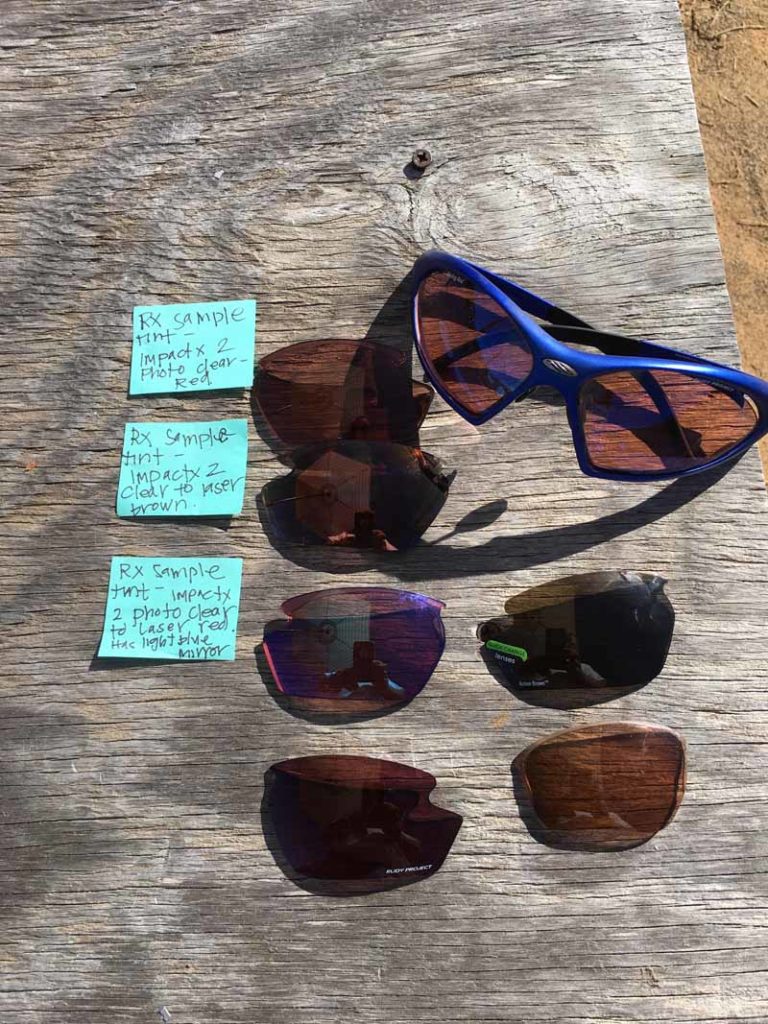
I wanted something that would allow dusk to dawn use, driving and on the range. Rudy Project suggested their “racing red” color, and a photochromic lens that could change from clear to “laser red” as lighting conditions changed.  They also sent a clear to brown, and a clear to red w/ blue mirror lens.  All of those lenses were their ImpactX2 line, which met the highest level of ANSI standard for protective eyewear.

One of the other members of the KR Training shooting team (Roy Stedman) had been using his Rydon glasses with the clear-to-red photochromic tint for the past several months, including wearing them at the 2017 IPSC World Shoot, so I was most interested in that option, which he recommended.

They also sent a brown polarized lens and a non polarized “action brown” color. I still had my original (15 year old) “racing red” Rudy glasses and my Oakley VR28’s (bottom right in the picture below) on hand as well.

EVALUATION

I wore the Rydon frames for about a week, changing lenses around several times, as I used them every time I went outside.  For a long time I only needed glasses to see objects far away clearly, and I’ve been able to see my front sight without any correction.  As I have gotten older, my far vision has gotten better with near vision starting to suffer.  Last year I actually passed the eye test for my renewed driver’s license without any vision correction, which was convenient as it allowed me to use the various Rudy lenses while driving during the daytime.

Despite marketing claims that their polarized lenses made it possible to read car LCD displays and phone displays clearly, I found the polarized lens gave too much distortion in those uses to be the right answer for me.   Their polarized lens had less distortion than the polarized sunglasses I still had from 20 years ago, so it does appear that some improvements have been made.

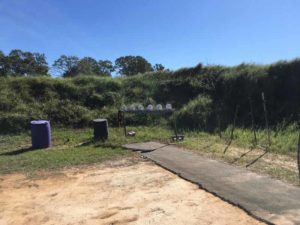
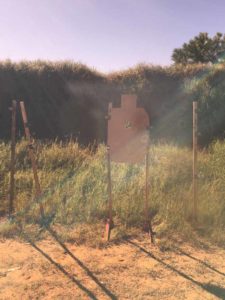
I finally got out to the A-Zone to do a serious evaluation of all the lenses.  I went out on the main range, where I could look at my sights (irons and red dot) on white steel plates, tan targets, and a variety of colored objects (barricades and 55 gal drums), with both dirt and grass backgrounds.

TINT PICTURES

I put the lenses in front of my phone camera, to provide some insight into how each lens affected contrast and color.  The photos aren’t a perfect depiction of what I saw.

Photochromic clear-to-red

Clear to laser brown

Clear to laser red w/ blue mirror

Oakley VR28

Photo Red

Racing Red

I spent a lot of time looking at my sights with the different lenses, and looking at the bullet holes I could see on the target at 5 yards with each lens, getting an idea of which one gave best visual contrast on the tan target.

The tinting on the photochromic clear-to-red and clear-to-brown lenses worked well, going from clear to maximum tint fairly quickly, functional indoors and out, dawn to dusk.

Choosing

I ended up narrowing it down to the photochromic clear-to-red, maybe with the blue mirror option, with final decision to be made after I have my annual eye exam and talk to my eye doctor about it.  After that I’ll be placing my order for some RX lenses and a Rydon frame.

This is the current version of the Rydon non-RX kit.


D.C. Al Coda party for Paul Hollis

On October 23, 2017, over 130 friends and family of Austin musician/engineer Paul Hollis celebrated his retirement from his technology day job.

I don’t know how Paul’s wife Jeanne (and 130 of his friends) managed to keep the party secret from Paul, but apparently we did, as he had no idea what was in store when he stepped through the door at the Highball.


The moment Paul Hollis walked into his surprise party last night.

Posted by Karl Rehn on Tuesday, October 24, 2017


He’s not retiring from music, though, as he performs with at least 4 active bands in the Austin area on a regular basis.  He worked for Motorola, Analog Devices, MediaTek, and Broadcom in the semiconductor field for many decades.  Because of his dual careers, the attendees represented what I remember as the old, cooler, hipper Austin of the 80’s and 90’s:  technology innovators and people passionate about music.   Many musicians attended – not only Austin players but some from Paul’s younger days in Florida.

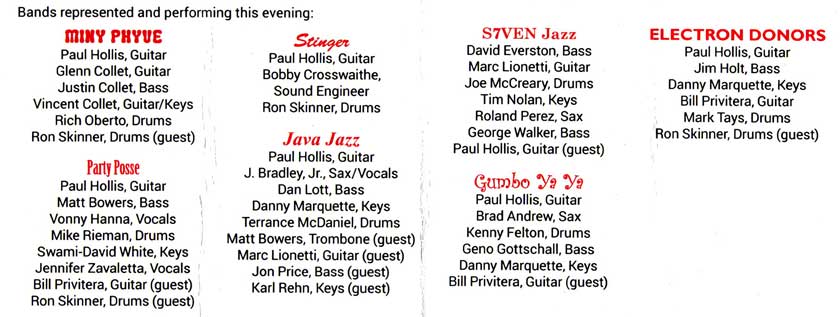
Seven bands were represented, many with shared members, with many guests, as many of us who were never full time members of one (or more) of Paul’s bands have filled in with one band (or three, in my case) at one time or another.

As one musician attendee remarked “it’s like every gig I’ve played in the last 10 years all in one night.”

The party was held at the Highball lounge run by the Alamo Drafthouse. It’s located in a shopping center where the Austin musician’s landmark Ray Henning’s Heart of Texas music store used to be.

Paul’s band Java Jazz was the Sunday brunch band at Nutty Brown in Oak Hill for 11 years. During that time I sat in with them many times, returning even after I moved to College Station.

Here’s some vintage Java Jazz video from 2005 at Nutty Brown:

After I finished my guest spot with Java Jazz, I grabbed a good seat near the stage, and live streamed some of the bands using Facebook Live.

Java Jazz playing live at the party


Java jazz live.

Posted by Karl Rehn on Monday, October 23, 2017


Posted by Karl Rehn on Monday, October 23, 2017

S7ven laying down the fusion funk


Posted by Karl Rehn on Monday, October 23, 2017


Posted by Karl Rehn on Monday, October 23, 2017

Gumbo Ya Ya bringing the New Orleans groove


Posted by Karl Rehn on Monday, October 23, 2017


More gumbo yaya band

Posted by Karl Rehn on Monday, October 23, 2017


Posted by Karl Rehn on Monday, October 23, 2017

Electron Donors playing some tasty medleys of rock classics


Electron donors playing little feat

Posted by Karl Rehn on Monday, October 23, 2017


Posted by Karl Rehn on Monday, October 23, 2017


Posted by Karl Rehn on Monday, October 23, 2017

Lots of great music. If you are in the Austin area, come out and see all these excellent bands.

KR Training October 2017 newsletter

Welcome to the KR Training October 2017 newsletter!  Upcoming classes include Basic Pistol 2 & Defensive Pistol Skills 1 (Oct 21) and License to Carry (Sunday, Oct 29th)

Check the schedule page on the KR Training website for the full list.

If you aren’t already a subscriber to receive this newsletter each month, you can subscribe here or follow this blog. You can also follow KR Training on Facebook or Twitter for more frequent posts and information.

CLASS DISCOUNTS AND DEALS

50% price refresher slots available in all courses.  If you haven’t practiced the skills you learned in class in awhile, refresher slots are a great option.

UPCOMING CLASSES

October 21 morning – Basic Pistol 2 (Rehn)
October 21 afternoon – Defensive Pistol Skills 1 (Rehn)
October 29 afternoon – License to Carry. Two sessions; Rehn at A-Zone, Maldonado in NW Austin.
November 6 (Monday) – Low Light Shooting at CCC Shooting Complex (south of College Station)
November 18th – Advanced Training 7: More Force on Force Scenarios

Register here.

NOVEMBER AND DECEMBER

Every November we take a break from live fire classes at the A-Zone, due to requests from our range neighbors and the start of deer season.  I’ll be teaching a Monday evening (November 6th) Low Light Shooting class for the Snook chapter of A Girl and a Gun.  The event is open to everyone (men and women). Pre-registration is required, via the KR Training website.  And due to student requests I’ve added a session of the Advanced Training 7 “More Scenarios” force on force course on November 18th.  I’ll be working on my Historical Handgun book during the fall and winter also.

KR TRAINING ON THE ROAD AND ONLINE

Karl and Dave Reichek will attend the Rangemaster Instructor Conference in Oklahoma Nov 11-12. Karl will travel to El Paso to take a one day handgun class from legendary trainer John Farnam in December, and Tracy Becker will attend the MAG-120 with Massad Ayoob in Florida in December.  I’ll also be a guest host on the Handgun World Podcast, filling in for Bob Mayne. You can also hear Tracy on the Polite Society Podcast every episode.

2018 CLASSES

We have guest instructors scheduled every month from January through June in 2018, and I’ll be making several trips out of state to teach Historical Handgun, other classes, and be an invited trainer at multiple national conferences.  Next month I’ll be announcing class dates for our in-house classes for the first half of 2018.  If you have any requests for specific courses, let me know.

BLOG-O-RAMA

We look forward to training you!
Karl, Penny and the KR Training team

Muzzle Direction during a reload

Kathy Jackson recently posted an article about muzzle direction during reloads. It generated a lot of discussion and controversy, which motivated me to go run some tests to analyze the issue a little deeper.

Relative importance of Reload Speed

Reloading is one of those skills that’s been a part of handgun training and handgun qualification drills since at least 1945, when the FBI required officers to do multiple reloads in their test.

The classic “El Presidente” drill includes a reload.

Those drills were created back in the days of 6 shot revolvers and 8 round single stack 1911 pistols.  And even in that era, I’m not sure that reloads were that common during gunfights. Tom Givens’ data on his 66 student-involved shootings show that none of them reloaded during the fight. Some shot to slide lock.  Analysis of police gunfights also shows in-fight reloads, where reload speed could be a factor between success or failure, rarely, if ever, occur. Similarly, John Correia of the Active Self Protection youTube channel has watched over 5000 gunfight videos, and observes:

I have seen precisely 2 reloads in a real gunfight that weren’t on-duty LEO. And neither of those affected the outcome of the fight. I have seen about 7 or 8 where a higher capacity firearm or the presence of a reload might have affected the outcome.

The main driver for obsession with reload speed comes from modern pistol competition, where reloads “on the clock” are an integral part of almost every course of fire, and tenths of seconds matter.

Where Does My Muzzle Point During a Reload?

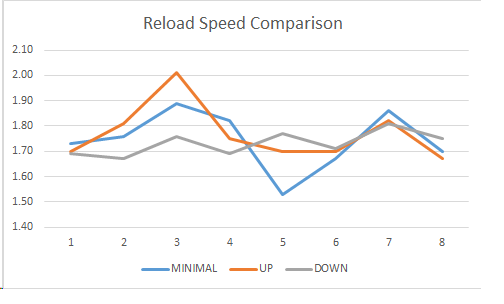
I chose 3 reload techniques to study.  (1) the one I normally use, which has minimum vertical muzzle movement, which was the technique that worked best for me to hit those Grand Master level reload speeds.  (2) The muzzle up reload technique, taught by some tactical schools, which places the muzzle pointing up at the sky. It puts the mag well right in front of the shooter’s eyes, which aids in ensuring the magazine is seated cleanly.  (3) A muzzle down technique, with the gun held down at stomach level, muzzle down as far as I could tolerate and still reload smoothly and within reasonable time limits.

The video below shows both the reload technique and a view of where the muzzle wanders, as the green laser starts and returns to the center of the NRA B-8.  I did the video standing 7 yards from the target, using the same target I used for the live fire time trials of those 3 techniques.

For my default technique, the muzzle goes high and left, up to the yellow window frame, which would likely keep the gun pointed into the berm. My wall is 8′ high, which is shorter than typical 10-12′ berm height.  In the upward technique, the laser dot was pointed at the ceiling.  In the downward technique, the laser, at its lowest point, was on the floor a few yards in front of me.

Which technique is faster?

I grabbed a shot up target from the pile, stuck an NRA B-8 on it, and put it at 7 yards out on my range.

I ran 10 trials of each reload technique, changing technique each trial, pitched the slowest and fastest runs and kept the best 8 as data.  I started aimed at the target, finger on trigger, as if I had just completed a shot. On the buzzer, I reloaded and fired one round.  A run only counted if the magazine seated smoothly and the shot hit the 6″ bullseye of the B-8.

I expected to be a bit faster using the reload technique that I used most often, but the data really doesn’t show that.  My average time for my preferred technique was 1.75 sec, and the averages for the other two were 1.77.  The spread of values was not that big, and all of them were below 2 seconds.


What is a safe direction?

In my classes, I define a safe direction as “any direction in which you are willing to fire a live round”.  And I discuss the concept of safest available direction, which may change as you or people around you move.

Off the range, options for safe directions may be limited.  Down is generally better than up, because with down you can see where the bullet may impact and you have some control over what it impacts and at what angle.

Down may not always be an option, if you are on the top floor of a building, or there are people close enough to you that you risk shooting someone in the leg or foot – or worse, if someone is lying on the ground or a small child is clinging to your leg for protection.

On the range, the Minimal technique keeps the muzzle in a safe direction if you are close to the backstop and the backstop is relatively tall.  If that technique is done standing 25 yards from the backstop, the muzzle is going to point over the berm at most ranges, and into the ceiling of an indoor range.

Unless the range has a bullet proof roof, there is no way to do the Upward reload technique without pointing the gun in a direction that doesn’t quality as “safe”.  And muzzle down, particularly at indoor ranges, may bring the muzzle completely below the backstop down to a concrete floor, which would be less safe than the top of the backstop.

Final thoughts

Many that commented on Kathy’s article claimed that any technique other that what they were currently doing would make their reload times unacceptably slow.  My own small experiment indicated that modifying my reload technique to change muzzle direction from “up at the sky” to “down at the ground” didn’t really change my reload times.

Many pointed out that a key part of learning to do a reload is getting the finger off the trigger during the load.   The problem is that the basic gun safety rules of muzzle direction and trigger finger placement aren’t “one out of two is good enough”.  In every class, I or one of my assistants have to remind at least one student about finger off trigger during a reload. So do range officers in matches.   A few competitors in national and local matches get disqualified every year for that error.  And under stress, people that have been trained to keep finger off trigger will do what is called “trigger checking” – unconsciously touching the trigger, preparing themselves to fire.

My advice to those training for real world defensive handgun use is to spend some time practicing reloads using all 3 techniques I showed in the video, and practicing some administrative (off the clock) reloads working to minimize muzzle movement. A laser was a great training tool for this, as it revealed a lot more muzzle movement in my default load technique than I expected.  Any reload not occurring while the shooter is in immediate danger can take a extra heart beat to make a decision as to what the safest available direction is, and the muzzle can be averted to that direction do to the load.  This is no different than the skill of averting the muzzle in any other situation – and learning to modify muzzle direction in a rapidly changing situation is a skill anyone that carries a gun should develop.

Those chasing Master and Grand Master level scores at matches need to be diligent about trigger finger placement and timing of getting the finger back on the trigger – both to avoid disqualification and to avoid launching a round over the backstop, which could have life changing consequences in the worst case scenario, particularly at outdoor ranges with houses (or people) within the 1.5 mile drop zone a bullet might land.


October 14-15 2017 Multi-Class AAR

Over the weekend of October 14-15, 2017, I taught 5 short courses at KR Training: Defensive Long Gun Essentials, Skill Builder Handgun, Advanced Training 4, Advanced Training 6, and Low Light Shooting 2.

Some post-class observations:

Defensive Long Gun Essentials

The class is designed to be suitable for any long gun. This session was all semi-auto rifles, with one pistol caliber carbine.  One student brought a Steyr AUG to class.  Steyr is now making these guns in the US.  The bullpup design provides short-barrelled rifle length, using a 16″ barrel, making it an excellent handling long gun for armed movement in structures work.

The level of shooting by the students was above average, allowing us to run additional drills going beyond the standard curriculum, including multiple runs in the shoot house using my pistol caliber carbine, and some work at 75 yards shooting my steel rifle targets.

I think this class is a very useful, practical course relevant to anyone that has a long gun for home defense – a course that students could or should take each year to maintain skills, particularly since refresher slots are available for half price.  Turnout for this class is often lower than I think it should be, possibly because the curriculum or the class name.  The curriculum isn’t ninja operator enter-trainment. It’s the basic skills people will likely use:  get the gun from ready to target quickly, move to cover if available, and get a few effective hits, all within a few seconds, at across-the-house distances from 5-25 yards.  No chest rig is needed, we aren’t shooting underneath cars or learning how to assault an enemy position. The skills in the class are the ones people should be practicing and proficient at.

During the classroom lecture I joked that I needed to rename the course something cooler, like Advanced Dynamic Tactical Operator Zombie Defense Carbine, to optimize my search engine keyword use.  In 2018 I’ll be revising the lesson plan and course description, as well as adding a scored shooting test (3 Seconds or Less Long Gun) that must be passed to earn the course certificate.  In the past, we’ve run the drills for that test but issued course certificates whether students made the par times or got acceptable hits or not.  That may have created a false perception that those that graduated the course are ready for a “level 2” long gun class when they may not be.  I’m hoping to see more graduates of the course return for refresher work (and better evaluation of their long gun skills) in the future.

Skill Builder Handgun

The Skill Builder class is mainly a trigger control class, working on hitting smaller targets at 5-7 yards, including work shooting with right hand only and left hand only.  As typical for this course, it drew a mix of students at different skill levels.   It’s a great course to refresh and maintain skills. 200 rounds in 2 hours in a solid structured practice session.

Advanced Training 4 & Advanced Training 6

On Sunday, I offered Advanced Training 4 and Advanced Training 6 back to back, and most students attended both classes.  AT-4 included group shooting at 15 yards, training to speed up draw and reload skills, and several hours of drills shooting on the move, including hitting 12″ steel targets on the move at 10 yards.   A 12″ steel target at 10 yards is basically like shooting a 6″ A-zone on a USPSA target at 5 yards. Practicing on steel makes bad shots that would be C or D (-1 or -3) hits obvious and is an excellent way to realistically assess shoot on the move ability and speed.

The AT-6 course is the reality check class: it’s a series of baseline drills that students practice and then shoot for score.  At the end of class, each student gets their personal data sheet, with times and hits recorded.  We started with 25 yard group benchrest shooting, measuring group sizes and offset of the group from intended point of impact.  If student abilities at 25 yards are acceptable, the class includes a walk-back drill shooting steel to determine each students maximum effective range with their pistol.  Unfortunately, student performance on the 25 yard drills exposed a lot of deficiencies and the walk back drill was bypassed in favor of additional drills working to improve trigger control.

Other drills run during this class include Bill Drills at distances from 7-25 yards, the F.A.S.T. drill, Hackathorn’s The Test, and the 5×5 drill.

The lecture portion of AT-6 was at the end of the course, as I went through each drill and provided students with specific goals (times and hits) they could use in dry and live fire practice.  Every student in the AT-6 class would benefit from taking that class each year, until they are meeting all the drill goals, which would get them roughly to USPSA B class or IDPA Expert level skill.

Low Light Shooting 2

The final course of the weekend was the updated and revised Low Light Shooting level 2 course.  A small number of diehard students attended this one, and were rewarded with lots of work with red guns and flashlights (handheld and weapon mounted) inside the classroom building, multiple live fire shoot house runs, and running all the segments of the 3 Seconds Or Less Low Light test (which all students passed).

The level 1 low light class is instruction in technique. The level 2 class is all application of technique in realistic context, such as not muzzling the no-shoots in the shoot house.  We’ll offer the level 2 class several times in 2018, as I think all graduates of the level 1 low light class would benefit from it. The level 2 class would be the right choice for those wanting annual refresher training in low light skills.

Izzy A. Threat Retirement Ceremony

Monday morning, after all 5 classes, one of the 3D targets we’d been using all summer & fall in the shoot house (Izzy A. Threat) was retired.

The ceremony was attended by some of his co-workers.

Final Thoughts

Classes are not a “one and done” thing.  Taking a class once, spending a few hours working on a skill, is not equivalent to truly owning that skill.  Whether it’s my classes or classes with other instructors, unless you are shooting 100% scores on every drill, never dropping a shot and always being the fastest shooter on the line, there’s value in repeating a course, particularly when the skills covered are difficult or impossible to practice at most commercial ranges.   We’ll continue to offer half-price refresher slots in all courses to encourage students to use the classes to not only learn new skills but maintain skills learned in previous classes.


Book Review (Historical Handgun) – G-Man (2017, Stephen Hunter)

I’ve been developing a new course for KR Training, Historical Handgun, that teaches the history & evolution of defensive handgun skills.  Part of that work includes reading as many old books on shooting technique as I can find.

Today’s book is a work of fiction, but historical handgun (and submachine gun) shooting technique is an integral part of the story.

G-Man, written by Stephen Hunter, is a “could have happened that way” story about the fictional exploits of the Swagger family, multiple generations of soldiers and lawmen, all gifted shooters.  The first book in the series, Point of Impact, about modern day character Bob Lee Swagger, was made into a movie (Shooter) and a spin off TV series (Shooter, on USA Network).  There are multiple books in the Swagger family universe.  Hunter has done several book signings in Texas, at Houston’s Murder by the Book, and I have several signed Hunter hardbacks in my collection.

G-Man tells the story of Charles Swagger, grandfather to Bob Lee, and his adventures working for the FBI in 1934, chasing down famous machine gun gangsters Baby Face Nelson, John Dillinger, and others.  A secondary plot, set in the modern day, involves an aging Bob Lee Swagger and works in several other Swagger family members at various points.

Many of Hunter’s recent books, like this one and the Third Bullet (about the JFK assassination), are carefully researched, with the plot woven around historical incidents.  Hunter takes great care in getting the gun details right, diving deep into technical and historical nuances, working in historical figures from the gun culture.  The reader gets to learn history and gun tech as part of the story, and the story depends on those details for key plot points.

Technique and Training

Firearms training, specifically Swagger’s advocacy of two handed aimed fire, shooting at targets from different angles and positions, snap shooting against a clock, in a memo sent to FBI HQ – in opposition to the crouched hip shooting and one handed bullseye shooting that was actual FBI doctrine of that era – is discussed in detail, as Swagger trains officers working with him to turn them into gunfighters.

Hunter’s gunfight depictions are detailed, often first person point of view, with the mechanics of aiming, firing, and reloading described in depth with the perspective only someone truly familiar with firearms can provide.  (Unlike other action/thriller authors who are not only gun-ignorant but also anti-gun in their politics, such as Lee Child, the author of the Jack Reacher books, for example, Hunter is a true blue member of the gun culture: collector, shooter, historian.)

As appropriate for a book about 1934, the Thompson submachine gun in .45 ACP is used by good and bad men alike, and passage of the National Firearms Act (and its impact on legal sales of full auto guns) is woven into the plot as well.

Summary

Anyone interested in reading G-Man should probably start with Point of Impact, to become familiar with Bob Lee Swagger (the print version), and Hot Springs (the first book about Bob Lee’s father Earl Swagger) before reading G-Man, to have more of the history of the Swagger family and content for events in G-Man to appreciate it fully.  G-Man does include enough information that those new to the Swagger family saga can probably follow the story — but for those likely to enjoy G-Man, reading some of the earlier books in the series will be worth it.


Book Review (Historical Handgun) – Modern Police Firearms (1974, Roberts & Bristow)

I’ve been developing a new course for KR Training, Historical Handgun, that teaches the history & evolution of defensive handgun skills.  Part of that work includes reading as many old books on shooting technique as I can find.

An Introduction to Modern Police Firearms was written in 1969, reprinted in 1974. It’s currently out of print and can be difficult to find. It was recommended to me by Tom Givens.   Authors Duke Roberts and Allen Bristow were Professors of Police Science at California State College in Los Angeles, and the book was written to be used as a class textbook in college level courses on policing, as well as in police academies in the late 60’s and early 70’s.

It’s a detailed time capsule of the status quo in police training of that era, covering all the techniques and drills that were already being rejected and revised by Jeff Cooper and others who were busy redefining the entire concept of defensive pistol training during those years.  The shooting skills content is essentially the same as police training books from the 1930’s I’ve reviewed in other posts.

Chapters

The book’s chapters cover these topics:

  1. Introduction
  2. Firearms Safety
  3. Nomenclature, Maintenance and Ballistics
  4. Basic Marksmanship
  5. Combat Shooting
  6. Courses of Fire
  7. The Police Shotgun
  8. Chemical Agents
  9. Legal and Ethical Use of Firearms
  10. Selecting a Firearm
  11. Police Recreational Shooting

The book’s two appendices include use of deadly force guidelines from a 1967 DOJ report, and from the Rochester, NY police department.

Firearms Safety

The book lists 12 rules for firearms safety (consolidation of the many lists of 10-20 rules into 4 rules by Cooper, later 3 rules by the NRA, was a significant milestone.)

As with older books on shooting, the safety rules are a jumbled mix of range rules and “lifestyle rules” (as Tom Givens describes them).  The rules, with my comments in italics:

  1. When reporting to the range carry personal weapons in a holster or suitable transportation device.
  2. Treat every gun as though it were loaded until you have personally checked it. (This implies that there a different rules for handling an unloaded gun, which is a bad idea.)
  3. Guns are to be pointed downrange only.
  4. Only shooters are allowed on the firing line.
  5. No guns are to be handled behind the firing line.
  6. Unload, load and fire on command only.
  7. Shoot only at designated targets.
  8. Never leave a loaded gun unattended.
  9. The only safe weapon is an empty weapon, and no weapon is empty until it has been checked.  Never lay a weapon down where someone may pick it up, unless it has been checked by you and left open. (Repeats their rule #2 with more words.)
  10. When a weapon is in use, never place your finger into the trigger guard until ready to fire. (The phrase “when a weapon is in use” is unnecessary).
  11. Never point a weapon, loaded or empty, at anything or anybody, that you do not intend to shoot, or in a direction where an accidental discharge may do harm.
  12. On the range, never, turn around at the firing point while holding a loaded weapon in your hand. (Same as Rule #11.)

Advice from the authors to police about “display of firearms”

Children occasionally question a police officer about his firearm or ask to see it.  The refusal to allow this should be tactful, yet firm.  It is generally accepted that one of the indications of an immature, poorly trained, unstable police officer is his unauthorized display of his revolver.  This officer frequently may be observed practicing quick draw before the mirror in his locker room (KR note: a practice recommended in another police training book from this era)…He practices dry firing when assigned to desk duty and shows his weapon to every department visitor, lost child and anyone else who expresses an interest in it.

Basic Marksmanship

The authors assume that a double action revolver will be carried, and much time is spent in the book discussing slow fire target shooting performed by thumb cocking the gun, shooting it single action.  The focus of the text is on group shooting at 25 yards, same as it was in the 1930s.

The student who faces the target directly will have difficulty controlling the elevation of his shots and will have a tendency rock back and forth…if the student shooter stands at a ninety degree angle..he will probably find that the shots spread right to left.


Combat Shooting

To the authors, this means using the revolver in double action, and not aiming. In addition to the 1940’s FBI approach of hip shooting, a point-shoulder position is taught.

At distances beyond 7-10 yards, the accuracy of hip shooting falls off rapidly.  This position is the same as the hip shooting position, except the arm is held straight, the gun is raised to eye level…and the shooter does not use the sights, but focuses on the target.

(KR note: 2017 IPSC World Champion shooter and trainer Ben Stoeger often discusses using a “target focus” on targets 10 yards and closer. The key difference between the modern approach and the techniques taught in the 1970s is that even when a target focus is used, modern shooters are looking at and aligning the sights, even if a perfect target shooting sight picture is not used.  Brian Enos referred to this as type 2 focus in his excellent book on practical shooting.  The shooters of the late 60’s/early 70s that were good at the point shoulder position were likely seeing the sights more than they were admitting to others.)

Many statements are made in this chapter that have been disproven or discredited over time, including:

  • Instinctive hip shooter is accurate up to approximately 10 yards (KR: if “any hit on a B27 target is considered “accurate”)
  • With practice, hip shooting is the fastest method of accurate shooting at this distance.
  • It is dangerous to condition the shooter to the use of both hands..as his (non firing) hand may be otherwise occupied.
  • It is important for the officer to begin firing as soon as possible..the first shot may not hit the suspect but it may distract him greatly. The period of time required for the officer to come to the point shoulder position (KR: less than 0.5 second for most shooters) could be sufficient for the suspect to shoot him.
  • from an earlier chapter: When a police officer exhibits lack of skill or judgment in a gun battle, the public is willing to accept such a situation with a “you can’t win them all” attitude.
  • To avoid being blinded by muzzle flash when shooting at night, the officer must be able to place his shots without holding the weapon at eye level.

Courses of Fire

This book is an excellent, detailed resource for those looking for information about how historical courses of fire were run, and their origins.  This was, by far, my favorite chapter of the book.  It included long descriptions of the nuances of the Camp Perry Police Course, National Match Course, International Center Fire Course, (FBI) Practical Pistol Course, NRA Combat Course (Police Practical Course aka PPC), with breakdown of scores required to reach Marksman, Expert, and Sharpshooter for each.

Shotgun

One chapter is spent on shotgun shooting, including hip-shooting the shotgun.

The courses of fire they recommend with the shotgun do all shooting at 25 yards with buckshot, but do not actually test hip shooting skill.

Other Chapters

The chapters on chemical agents, use of force, and recreational shooting for police officers all reflect the conventional wisdom and status quo of that era.  The shooting games recommended to police are the NRA PPC and bullseye sports, as practical shooting competitions (IPSC) did not formally exist until 1976 (and even after it began, was not considered mainstream or allowed at most gun clubs).

The chapter on use of force includes 10 hypothetical law enforcement use of force scenarios that end with questions to the reader about what actions are lawful and which are not.  These were clearly included as discussion questions for classroom use, and unfortunately no answer key is provided giving the authors’ opinions as to what the right answers were. It would have interesting to compare their views on which actions were lawful against current standards.

In the chapter on selecting a firearm, more disproven/discredited statements are made, this time regarding the 1911 semiautomatic pistol. This NRA article explains the 3 “conditions” or modes in correct detail.

  • It must be carried in the holster with the chamber empty (Condition 3)
  • It could be carried loaded with the hammer down, but must be thumbcocked during the drawstroke (Condition 2. In that mode the 1911 is NOT drop-safe, which the authors do not explain, which is a dangerous omission.)
  • When the weapon is carried with the magazine and chamber both loaded and the hammer cocked and safety locked, it is unsafe. (FALSE. Condition 1 is safer than Condition 2) For this reason, most agencies authorizing the 1911 also require a holster which places a leather safety strap between the slide and hammer when the gun is cocked.

If you’ve ever wondered why older shooters often have incorrect ideas about operation and carry of the 1911, look no further than outdated police training from the early 1970’s, where “experts” clearly unfamiliar with, and not advocates of, the semiautomatic pistol for law enforcement use present technically incorrect and tactically poor information to their students.

They recommend that a student spend $80-100 on a handgun, and $12-20 on a holster to carry it in.  Scaled to today’s prices with 500% inflation/devalued currency since the 1970’s, that ratio becomes $400-500 on the gun, and $60-100 on a holster.  They describe a poor quality $3 holster, would equate to today’s $15 nylon gun show special.

Summary

Law enforcement training, military training and even the NRA’s own training programs, all governed by bureaucracies, are slow to change.  When this book was written, major changes were already occurring – in the same state in which the authors were teaching.  Even as late as 1974, when the book was reprinted, the authors make no mention of, or seem to have any awareness of, the innovations that were occurring.  It would take another full decade for the major changes in technique and philosophy would reach the typical police academy recruit.


Book Review (Historical Handgun) – Manual of Police Revolver Instruction (1932, R. M. Bair)

I’ve been developing a new course for KR Training, Historical Handgun, that teaches the history & evolution of defensive handgun skills.  Part of that work includes reading as many old books on shooting technique as I can find.

The Manual of Police Revolver Instruction is a short book written in 1932, reprinted in 2014 by the Sportsman’s Vintage Press.  My review copy was loaned to me by KR Training assistant instructor Ed Vinyard.

The author, R. M. Bair, was the revolver instructor and ballistician for the Pennsylvania Highway Patrol, and the book was originally published by the NRA.

Chapters

  • Position
  • Grip
  • Sighting
  • Breathing
  • Muscle Strain
  • Squeeze
  • Flinching
  • Safety Rules
  • Care of Revolver
  • Dry Shooting
  • Qualification and Match courses

The techniques shown are typical of other books from the 1930’s: one handed bullseye shooting, mostly shot on the Standard American Target (NRA B-6) and the Colt Silhouette (B-21).

Each chapter ends with review questions. A few examples:

  1. What is meant by firing line? Line of fire? (Position)
  2. How should the hammer be cocked, between shots, when firing with the right hand? left hand? (Grip)
  3. What is the difference between blade and patridge type sights? (Sights)
  4. How would you sight a revolver at night to hit a man-sized target at 50 yards? (Sights)
  5. If you take a deep breath and hold it until the shot is fired, what will be the result? (Breathing)
  6. When firing with the right hand, why should the left hand never be placed on teh hip? (Muscle Strain)
  7. What will be the result when firing if the thumb pressure is not equalized with the trigger finger? (Squeeze)

The review question answers are found in the text of each chapter.

The chapter on sighting includes many well drawn examples showing the effect of incorrect aiming on a 25 yard target. In these pictures, the black dot is the bullseye center, as it appears to the shooter firing at that target at 25 yards.

15 Safety Rules

The book lists 15 different safety rules – far more complicated than the current NRA 3 rules or Jeff Cooper’s 4 rules, or the 2 rules I teach.  The 15 rules were very specific to the type of training the author conducted, both for range qualification and firearms handling on duty.

Examples:

  • #1 NEVER handle, point or look over the sights of any firearm handed to you without opening the arm to be sure it is not loaded
  • #4 NEVER turn around to talk to any person behind you when at the firing point without first lifting out the cylinder of a revolver or locking back the slide of an automatic pistol, and laying either one down on the shooting bench before turning around.
  • #8 NEVER talk to a shooter when he is at the firing point.
  • #10 The revolver should be loaded with the muzzle pointing toward the ground about a yard away from the feet. NEVER load a revolver if anyone is standing in front of you.
  • #13 A shot should never be fired while the officer is running.  In the case of a running gun fight, the officer should stop and fire deliberately.
  • #15 In a running gun fight where the fugitive turns to fire at the officer, the officer should fall to the ground (where he makes a very small target), grip the revolver with both hands, rest both elbows on the ground and fire deliberately.

DRY FIRE PRACTICE

The use of reduced scale targets for dry practice is recommended, as is doing dry fire practice with a partner that can observe shooter errors.  The author suggests the following:

The officer should practice drawing the revolver from the holster with the right hand, firing one dry shot at the target, and then passing the revolver to the left hand, firing the second shot, being careful to assume the proper position in each case and to see that the proper grip has been taken.  He should continue this practice with the empty revolver until it feels natural in either hand.

Similar to today, instructors had to address bad ideas students learned from entertainers that use guns as theater props.

After drawing the revolver from the holster, the officer should never raise the revolver over his head before bringing the sights into alignment with the target. This is wild west hokum, and if his adversary were a good shot it would be entirely possible for him to fire two shots at the officer before he could bring his sights into alignment.

DRILLS

During a recent private lesson, my student and I shot a few of the drills from this book.  The first one is 25 rounds and requires one handed bullseye shooting at 15, 25 and 50 yards using right hand only.  The fastest string in this course of fire is 5 shots in 15 seconds, same as required by the current Texas License to Carry shooting test. The Texas LTC test uses the giant B-27 target, scored with the 8, 9 and 10 rings (11-3/4” wide by 17-1/2” tall) counting 5 points, but this drill is shot on a bullseye target with a 3.36″ circular 10-ring.   Unfortunately, the book does not state what a passing minimum score on this drill is. 70% of possible points is typical of other similar courses from this era.

Some pics from the 15, 25 and 50 yard strings.  I’m shooting the smaller bullseye target on the right.

One challenge in shooting these older drills is par times longer than 99 seconds.  I had to dig my old PACT timer out of the storage closet, because it could handle the 300 second (5 minute) par time for the slow fire (1 shot per minute) strings.  Shooting that slowly is a very different skill from modern training. Going as slowly as I could go, my slowest time for the 300 second par time was just over 100 seconds to fire 5 rounds.

This drill was tough – one of the hardest I’ve shot in my historical exploration thus far.

I shot the drill cold without doing any dry fire runs on it, using my S&W 686 revolver, one handed, thumb cocking each shot as they did in the 30’s.  My score was 186 out of 250 possible.  I used the FBI-IP target, which had bullseye dimensions matching those listed in the book, but lacked the 5 and 6 rings the book described. I drew in a rough 6 ring, which allowed me to pick up the two 6’s and one 5 outside the printed target.

I had my student shoot another drill from the book that used the Army L (NRA B-22) target. It’s quite a bit larger, with bigger scoring rings, than the FBI-IP, but the 15 yard string has a shorter time limit (11 seconds) than the 15 seconds used in the previous test.

The drill was:

  • 25 yards, slow fire (5 rounds in 5 minutes), 2x, right hand only
  • 25 yards, timed fire (5 rounds in 20 seconds), 2x, right hand only
  • 15 yards, quick fire (5 rounds in 11 seconds), 2x, right hand only

I had him shoot my 686 revolver, also shooting the drill cold with no dry fire warmup.  He shot over 90% on the Texas LTC test, and passed my “3 Seconds or Less” test with a score over 80%, using an M&P Shield.  On this drill, he shot 64% with a lot of low-left hits, likely due to the very different feel the grip and trigger of a 6″ barrel DA revolver (shot single action) has compared to a polymer striker fired subcompact semiauto pistol.

SUMMARY

This book is yet another example of the many books written about shooting during the early 1930’s. Not particularly influential, but certainly another record of what was considered conventional wisdom of that era.  My main takeaway from it is the collection of drills that I can incorporate into the Historical Handgun course and in my own practice, as I work toward being able to shoot 90% or better on every drill, from every era.  I plan on putting some additional dry and live fire time in on additional runs on these drills over the next few weeks, and students in the October 2017 Historical handgun “one day part two” course will shoot a few of them in that course.

KR Training September 2017 newsletter

Welcome to the KR Training September 2017 newsletter!  Upcoming classes include Basic Pistol 1 (Sept 30th),  Defensive Long Gun Essentials & Skill Builder Handgun (Oct 14).  Some October courses are already sold out.

Check the schedule page on the KR Training website for the full list.

If you aren’t already a subscriber to receive this newsletter each month, you can subscribe here or follow this blog. You can also follow KR Training on Facebook or Twitter for more frequent posts and information.

CLASS DISCOUNTS AND DEALS

50% price refresher slots available in all courses.  If you haven’t practiced the skills you learned in class in awhile, fall refresher slots are a great option. 

CHANGES TO TEXAS LAWS

Knife carry: They removed the length restriction from the definition of “illegal knife” but replaced “illegal knife” with “location restricted knife.” So there are still restrictions on knives with blades over 5.5 inches. You can’t carry them “anywhere.” Basically, if you can’t carry a gun there, you can’t carry a long blade, e.g., amusement parks, hospitals, bars with a 51% sign, etc.

LTC fees and caliber: LTC minimum caliber now .22.  LTC 5 year fee now $40.
We have LTC courses coming up Oct 22 (A-Zone) and Oct 29 (NW Austin).

Law regarding storage of a handgun in a vehicle in a school parking lot improved.

Campus carry now allowed at community colleges. Here is ACC’s policy page.

More details about law changes in this Hsoi blog post.

UPCOMING BASIC / INTERMEDIATE CLASSES

September 30 morning- Basic Pistol 1 (Rehn)
October 14 morning – Defensive Long Gun Essentials (Rehn)
October 14 afternoon – Skill Builder Handgun (Rehn)
October 21 morning – Basic Pistol 2 (Rehn)
October 21 afternoon – Defensive Pistol Skills 1 (Rehn)

Register here.

ADVANCED TRAINING SERIES

October 8th (Sunday afternoon) we are offering the Tactics Laboratory (AT-5) course.  It’s similar to Craig Douglas’ Extreme Close Quarters Concepts course, covering similar material, taught by Karl, Leslie Buck and Dave Reichek.  It’s at a lower intensity level, intended for those new to integrated force on force training that merges unarmed and armed skills.  If you’ve passed our Defensive Pistol Skills 1 course, you can attend AT-5.  There is NO requirement to have taken other courses in the AT- series to attend.

In October we’ll offer Advanced Training 4, Advanced Training 6 and Advanced Training 5A (low light level 2) all on Sunday, October 15th.  These courses are for students that have completed at least Defensive Pistol Skills 2 or higher level training.  These courses won’t be offered again until summer 2018.

I’m also offering my Force on Force instructor certification class for those wanting to learn how to run scenario based training.  Attendees must take the Friday instructor course and attend/assist with all classes offered on October 7 and 8 to complete the training.

HISTORICAL HANDGUN PREVIEW PART TWO

I have developed a new program called Historical Handgun, teaching the history of handgun training and skills, 1935-present.  I’ve offered two preview courses so far, and been interviewed on the Ballistic Radio and Polite Society podcasts about the new course.  On October 28th I’m going to offer a preview of Part Two of the course.  This will be material not presented in the other two preview classes. More drills, more historical video, more classroom material on key historical figures.
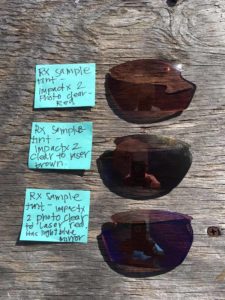
Students that attend either of the preview courses will also get credit that can be used toward slots in the 2 day version I’ll offer in May 2018.

BLOG-O-RAMA

We look forward to training you!
Karl, Penny and the KR Training team

[Minimum Standards] Shooting Ed Head’s CHL practice drill

At KR Training, one of our ongoing efforts is to identify acceptable minimum standards for defensive handgun skills.  Gunsite instructor Ed Head posted a drill he recommends as a good standard for any person carrying concealed, so John and I went to the range and shot the drill to give it a try.

The drill is simple:

  • 3 yards, draw from concealment.  Two rounds center mass, 2 seconds, strong hand only.
  • 3 yards, draw from concealment.  Two rounds center mass, 2 seconds, strong hand only.
  • 3 yards, draw from concealment.  Two rounds center mass, one round to the head, 3 seconds, two handed.
  • 3 yards, draw from concealment.  Two rounds center mass, one round to the head, 3 seconds, two handed.
  • 5 yards, draw from concealment.  Two rounds center mass on two separate targets.  4 seconds, two handed.
  • 10 yards, low ready position.  Two rounds center mass, one target.  4 seconds, two handed.
  • 10 yards, low ready position, Two rounds center mass on two separate targets, 5 seconds, two handed.

Ed suggests using USPSA or IDPA targets, or one with an 8″ circle representing upper chest, and 3″x5″ card for the head scoring area, which matches the dimensions of the F.A.S.T. target we used for our demo.

Drill Breakdown

At 3 yards, a 1.5 second concealment draw is a good standard to train to.  That leaves 0.5 second to make the follow up center mass shot, and another full second for the head shot on the 3-shot drills at this distance.

Moving back to 5 yards, the drill gives shooters a little more time:

  • Draw to first shot = 1.75 seconds
  • Follow up shot, target 1 = 0.75 seconds (2.50 elapsed)
  • Transition to next target and fire first shot = 0.75 seconds (3.25 elapsed)
  • Follow up shot, target 2 = 0.75 seconds (4.00 elapsed)

The 10 yard, low ready, 2 shots on one target string timing looks like this:

  • Low ready to first shot = 2.50 seconds
  • Follow up shot = 1.50 seconds (4.00 total)

If shooters are running 0.75 splits at 5 yards, doubling the distance allows doubling of the split time.

To me the allowed time on this string, compared to all the others, seems overly generous.

The final string – two shots on two targets at 10 yards,  has to be shot faster than the previous 10 yard string, if the par time is to be met:

  • Low ready to first shot = 2.00 seconds
  • Follow up shot = 1.00 second (3.00 total)
  • Transition to next target = 1.00 (4.00 total)
  • Follow up shot = 1.00 second (5.00 total)

Using this breakdown, the par time for the first string at 10 yards (low ready, 2 shots on one target) should be 3.00 seconds, not 4.  I suggest using a 3 second par time for that first string at 10 yards, or changing the start position for the one target at 10 yards drill to “drawing from concealment” to add a bit more work to the tasks to be accomplished in the 4 second par time.

Summary

This is a good 20 round drill that can be used in many ways:

  • Shoot it cold at the start of each practice session as pass/fail.  All 20 shots must hit inside the 8″ circle or 3″x5″ card, within par times, to pass.  Any string you fail, work on that string in practice until you can do it.
  • Daily dry fire.  Use a 1/3 scale dry fire target and use a “dead” trigger to fire follow up shots.
  • Add scanning and movement, or distance (change 3-5-10 yards to 5-7-15 yards or even 10-15-25 yards).
  • Run the drill with Comstock scoring instead of par times.  The total par time for all strings is 23 seconds.   If you use a USPSA target with B/C/D zones, and score using “minor” scoring (5 points for A, 3 for B/C hits, and 1 for D hits), dividing points by time, you can calculate a hit factor.  The original passing standard is 100 points divided 23 seconds, or a hit factor of 4.35.  Set a new goal of shooting the drill with a hit factor of 5, 6, 7, or higher!  A USPSA Grand Master level shooter should be able to run this drill with a hit factor over 8.


Book Review (Historical Handgun) – Shooting To Live (1942, Fairbairn & Sykes)

I’ve been developing a new course for KR Training, Historical Handgun, that teaches the history & evolution of defensive handgun skills.  Part of that work includes reading as many old books on shooting technique as I can find.

The 1942 book Shooting To Live, written by W.E. Fairbairn and E.A. Sykes, was a very influential work, introducing many concepts that remain a foundation for modern defensive handgun training.

Fairbairn and Sykes were in charge of the Shanghai Municipal Police in the 1930’s. During this time Shanghai was a very violent city.  During a twelve year period, there were 666 armed encounters with criminals documented by the authors.   They credit their techniques with producing a record of 260 criminals killed and 193 wounded, compared to 42 police killed and 100 wounded.

Key Principles

Their 3 key principles were:

  1. Extreme speed, both in drawing and firing
  2. Instinctive, as opposed to deliberate, aim
  3. Practice under circumstances which approximate as nearly as possible to actual fighting conditions.

This was in stark contrast to slow fire 25 and 50 yard bullseye shooting, which was still a mainstay of most law enforcement training, even in the FBI program.

Until Jeff Cooper, Jack Weaver and others in the late 60’s and early 70’s challenged the idea that there was “not time to use your sights” in close range gunfights, variations of what Fairbairn, Sykes and “Jelly” Bryce of the FBI were teaching were the standard.

As trainer Tom Givens points out in his instructor training courses, the duty and carry pistols of that time had tiny, hard to see sights, compared to the higher visibility sights that became common in the 1970s and beyond.  Similarly, the amount of light, and reliability, of flashlights of that era were significantly less than what became available in the 70s and later years. As Fairbairn observes in the book:

In any case, the sights would be of little use if the light were bad, and none at all if it were dark, as might easily happen.  Would it not be wiser, therefore, to face facts squarely and set to work to find out how to best develop instinctive aiming to the point of getting results under combat conditions?

Semi-auto vs. Revolver

Fairbairn favored the semiauto, referred to in the book as an “automatic”, over the revolver, for these reasons (which remain valid today):

  1. It is easier and quicker to recharge.
  2. It can be fired at far greater speed.
  3. It is easier to shoot with.

The authors write “that a beginner can be trained in the use of the automatic in a third of the time, and with the expenditure of less than half the ammunition required for the revolver.  Furthermore, once trained in the use of the automatic, men appear definitely to need less subsequent practice to maintain the standard of shooting which has been attained in the course of training.”

Unlike most gun writers that extolled the virtues of the double action revolver for beginners for decades after Shooting To Live was published, the authors were responsible for training over 1000 officers with less than 100 rounds available for annual training per officer per year.

Techniques

The authors recommend an hour of dry fire practice before any live fire is performed, gripping the pistol in one hand, using a thumbs forward technique.  (The conventional wisdom in one handed shooting is to drop the thumb to make a full crush grip, which provides more grip pressure on the gun than “floating” the thumb.)

They taught a technique of starting with the pistol at a low ready position, arm fully extended, raising the pistol to eye level, but not taking time to find the sights, and firing.

Raising the pistol to eye level made it possible to use a rough form of visual alignment of the pistol (the back of the slide, the top of the slide, or even the front sight by itself without alignment with the rear sight) with the target.

This technique was taught by the US Army, as shown in the 2nd half of this video.  As you’ll see from the film, standards for acceptable hits were low compared to the 6″-8″ center mass hits expected in the modern day, and many had difficulty getting rounds on paper at all — but this technique produced better results than hip shooting techniques favored by the FBI.

The use of the fully extended arm ready position influenced the low ready positions used when two handed shooting became common. This article by Ralph Mroz is a good summary of different ready positions, with pros and cons.

One of two handed positions they recommend looks like the modern thumbs forward grip, with thumbs lower on the frame than is currently taught, and the other is a precursor to a Weaver stance, with bent elbow, but with the support hand grabbing the dominant hand wrist, as opposed to gripping the pistol itself.

Fairbairn and Sykes show other positions for close quarter shooting, that will look familiar to students of the 4-count draw stroke.

This video from Paul Gomez shows the modern manifestation of the idea of shooting from positions 2, 3 and 4 of the draw – same as Fairbairn/Sykes quarter hip (2) and half hip (3) positions, with Paul showing a 3/4 hip technique as “also shooting from the 4 position”.

Handgun Loading

Fairbairn and Sykes advocate carrying on an empty chamber, and racking the slide as part of the drawstroke. The pictures in the book show a shooter loading with gun down at waist level, finger on trigger, using a “pinch” method to manipulate the slide.  None of those techniques are considered acceptable at most (any?) modern schools.

They felt that the tiny thumb safety on the automatic pistol was too difficult to manipulate as part of the drawstroke.   Cooper, Weaver, and others, who began using timers and stopwatches and man-on-man shoots to understand what techniques produced effective first shot hits fastest, proved that it was faster to start with a round chambered, taking the safety off while drawing.  The development of larger safeties that were easier to manipulate were definitely a factor in that evolution.

Training Drills

Fairbairn and Sykes advocated firing multiple rounds each time the pistol was brought to target – a technique that is still taught today.  They used live fire shoot houses with realistic mechanical moving targets, incorporating no-shoot targets (with penalties for hitting the no-shoots), psychological and physical stress on trainees, ball and dummy drills to teach trigger press and malfunction clearing under stress, and many other concepts and techniques still in use today.

Summary

In addition to contributing to the evolution of shooting technique, Fairbairn (and Col. Rex Applegate) also contributed to the evolution of unarmed self defense, as shown in this video of them teaching their techniques in this vintage film.

Shooting to Live is definitely one of the top 10 most important books written on defensive pistol, with significant influence on the change from one handed long range slow fire bullseye shooting to what is considered standard training today.  Highly recommended.


Book Review (Historical Handgun) – Handbook of Handgunning (Paul Weston, 1968)

I’ve been developing a new course for KR Training, Historical Handgun, that teaches the history & evolution of defensive handgun skills.  Part of that work includes reading as many old books on shooting technique as I can find.

Handbook of Handgunning (Paul Weston, 1968)

Paul Weston joined the New York City Police Force in 1936, was on the NYPD Pistol Team and taught at the NYPD academy.  He served as a Chief Gunnery Specialist during WW2, returned to NYPD after the war, and was a prolific author, writing and revising police textbooks, as well as articles for American Rifleman, Field and Stream, Guns and Hunting and other magazines.

In the late 60’s and early 70’s, he was an Associate Professor of Government and Police Science at Sacramento (California) State College, where he taught a college level course on handgun shooting.  His book “The Handbook of Handgunning” was the reference book for that college course.  Originally published in 1968 it was republished several times, including an updated edition in 1980.
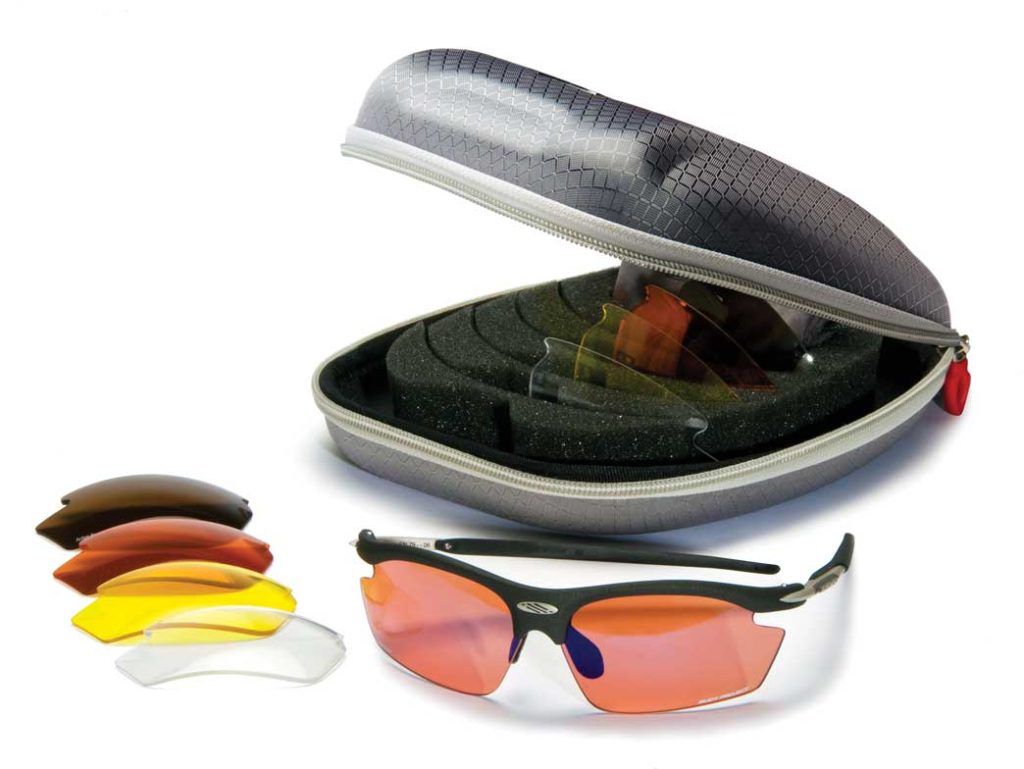
It mainly focused on bullseye competition style shooting (as shown in the classic “hand in pocket” stance on the cover photo), including many hand drawn illustrations.  This one shows proper one handed grip, and aligning the pistol properly with the structure of the hand.  I cover this information when I teach NRA instructors, but it’s not presented as well in the NRA materials as it is in Weston’s book.   Having the gun twisted in the hand, so that the gun is recoiling over the thumb knuckle, is a very common problem we corrected in classes.  It almost always occurs because the shooter has chosen a firearm with a trigger reach too long for their hand, forcing them to twist the gun simply to reach the trigger, with no understanding of the negative consequences this has on their shooting.

As is common with all gun books written prior to the Gunsite/Weaver era, the two handed grip techniques shown depict various awkward and mostly ineffective use of the support hand, with that hand placed too low relative to the barrel, or in some variation of “cup and saucer” with the support hand under the grip.

There’s some discussion of seated and kneeling positions as well.

The proper technique for the “combat crouch” is shown, with a recommendation that the shooter practice their hip shooting by dry firing at a 12″ circular mirror.

A majority of the book’s text covers traditional fundamentals, from the perspective of a bullseye competitor training for a precision shooting match.  Included in the back of the book are Weston’s two written exams used in his college course: one on “area aiming” (using a target about the size of an IDPA 0-ring or USPSA A-Zone instead of a traditional bullseye), and one on trigger motion.  I used Survey Gizmo to put both tests online (since the book is out of print), so readers can take the tests and evaluate their knowledge of what was considered correct in late 1960’s firearms training.

Weston’s Area Aiming Test

Weston’s Trigger Motion Test

I may pick up a copy of the 1980 edition to see how Weston’s curriculum evolved in response to the big changes that happened in handgun technique from 1968-1980, probably the era of greatest technique and training evolution in the past 100 years of handgunning.