If you aren’t already a subscriber to receive this newsletter each month, you can subscribe here or follow this blog. You can also follow KR Training on Facebook or Twitter for more frequent posts and information.
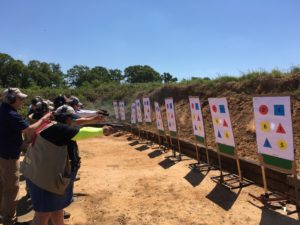
The event, to be held August 4th from 9-12 at the A-Zone Range, will be a beta test for a possible new research study, evaluating the relative benefit of the CoolFire product vs. live fire for shooter development. All guns and ammo will be provided. Event is open to up to 24 participants. Event cost is $20. Pre-registration and payment in full in advance is required.
KR Training shooting team captain Roy Stedman was 2nd overall in Classic, first Senior, 3rd in the shootoffs and part of the Team USA Classic division win at the 2018 Pan American IPSC Championship held in Jamaica.
As a result of classifier scores submitted from the summer A-Zone matches, Karl Rehn promoted to Grand Master in the Pistol Caliber Carbine Division of USPSA, giving him Grand Master ratings in 5 of USPSA’s 8 divisions.
The KR Training schedule shows most of the classes we plan to offer through late October 2018 and even a few already scheduled for 2019. Registration is open for everything listed.
Thank you for sending your friends and family to train with us. Your referrals keep our classes full and help us continue to offer in-demand classes that specifically address the needs of responsible armed citizens. Remember, now you can train with even more purpose through the KR Training Defensive Pistol Skills Program. Start working to earn your coin now.
We look forward to training you!
Karl, Penny and the KR Training team
This is the first in a series of 3 after-action reports covering the things I saw and did at the conference.
DAY 1 MORNING
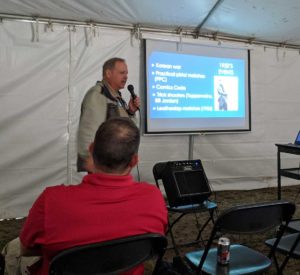
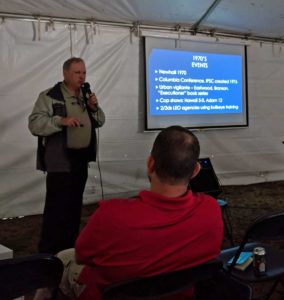
Friday morning was spent teaching the 4 hour lecture portion of the Historical Handgun class.
This version of the course included a lot of video, including excerpts from these historical films.
https://youtu.be/3qOaXl-AuDg
DAY 1 AFTERNOON
On the afternoon of day 1 I took a 4 hour handgun skills course from Gabe White. The class was very good, including some unique drills that incorporated several ideas that had been presented in previous TacCon sessions by other trainers: using an ammo tray to simulate a cell phone or other item held in the hands prior to drawing, and using a whistle blown after the ‘gun’ command was given to indicate that the situation had changed (threat no longer immediate) and the draw and fire response should end at the ready position without shots fired.
Day 1 wrapped up with an early birthday party for Tom Givens hosted by Marty and Gila Hayes at their newly completed house on the FAS property. Tom’s birthday was coming up shortly after TacCon, and Lynn (and others) decided it would be fun to celebrate his birthday with all the trainers and staff that were involved with putting on the event.
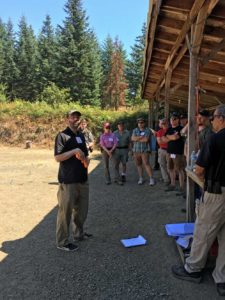
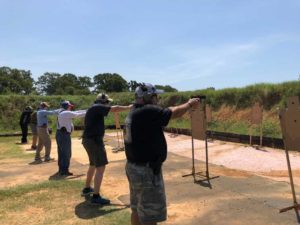
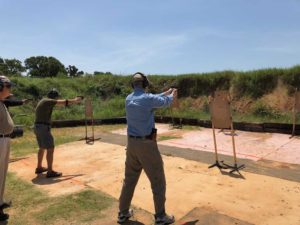
In early July I offered a summer session of the Beyond the Basics: Pistol class that sold out so quickly that I added a second session, scheduled for Sunday July 22. 11 students undeterred by heat advisories and predictions of triple digit temperatures attended the course.
A lot of curriculum was (and still is) tied closely to the contents of Brian Enos’ excellent Practical Shooting Beyond Fundamentals book. In that book he breaks handgun shooting down into 5 types, based on the target size and distance. The vast majority of handgun shooters fire every shot as a Type 3 (traditional sight picture with moderate speed trigger manipulation) – which produces decent results on targets 0-10 yards (most of the time) but begins to fall apart at longer distances. Most defensive pistol classes spend a majority of time on improving speed at the most common defensive distances (3-5 yards), which is roughly what Brian calls Type 2 shooting – using a rough sight picture with visual focus on the target. Often this is taught simply by requiring the students to shoot faster, which usually produces the desired result as they have to accept less precise sight pictures to make the par times for drills.
The skill that usually falls through the cracks is development of the ability to shoot slower than Type 3: to spend a little more time getting sight alignment more precise, and most importantly manipulate the trigger with more care when a precision shot, for example a head shot at 10 yards, is the goal.
SMOOTH, SLOW and FAST
The phrase “slow is smooth, smooth is fast” is frequently quoted in online discussions about improving handgun skill. It’s wrong. Bad technique executed slowly may not be smooth and it may not produce good results. On a close target, bad technique executed quickly may produce acceptable results. And those expecting to become faster through deliberate, slow, smooth practice may never get faster.
It’s like driving. To learn to drive well at 70 mph, start by learning to drive at slower speeds until your technique is good. Then to learn to handle the car at faster speeds requires actually going faster. Similarly, to learn how to handle the car in rough terrain requires different techniques and slower speeds.
The process to improve is:
1) Understand that targets at different distances and of different sizes require varying degrees of sight alignment and trigger manipulation. Breaking the concept down into different ‘gears’, with specific par time/accuracy goals related to target size/distance seems to help.
2) Practice each type of shooting to meet the speed and accuracy goals.
3) Be able to quickly shift between shooting types, adjusting speed and accuracy as needed to get the required hits.
The majority of the students registered for the course had taken one or more classes from me in the past, and I took advantage of that situation to modify the course curriculum to (a) present some of the concepts in the course differently than I have in the past and (b) split the lecture into two parts, one at the start of class and one mid-class, both to get us all out of the heat and back in the A/C for a break, and to improve the presentation of topics.
What changed?
In the old format, I went through all the fundamentals of marksmanship (gun fit, grip, stance, sight alignment, sight picture, trigger control, follow through) in depth in a single lecture, followed by drills on the range. This time I broke the class into two parts: one focused on isolating each type of shooting as a separate skill, and one where the skills were combined.
The first part of class incorporated segments of the “Super Test” drill, that’s shot on an NRA B-8, with varying time limits for 5, 10 and 15 yards. This particular drill is excellent for defining the relative speeds associated with different target sizes and distances. In the past I had my own drills for this concept, but using the more-widely used Super Test worked very well.
The second part of the class focused on a drill Ben Stoeger calls “Distance Changeup”, where multiple targets at varying ranges have to be engaged, adjusting speed and accuracy as needed.
My class version of it used two targets, as I called a variety of options for each repetition of the drill (using the head and body of each target to give 4 different target sizes/distances).
SUMMARY
A lot of the older lecture material in the course on fundamentals has trickled down into my Basic Pistol 1, Handgun Coaching, and Basic Pistol 2 classes, making it possible to trim some of that content from Beyond the Basics, using that time for more work on higher level concepts. Students attending future sessions of this course will get the updated version of the curriculum, as it seemed to work well in the new format.
I recently purchased an S&W SD9VE to test and evaluate. I’ve gotten questions from students about this gun model, and other shooters and trainers have mentioned it as a decent option for defensive handgun buyers on a limited budget.
Some early observations:
1) It fits in my daily carry holster (Raven “Morrigan“) made for an S&W M&P. I read online that it wouldn’t fit M&P holsters, but the Morrigan has enough flexibility in its design that I’ve been able to use it for my M&P 1.0, a Glock 19, and an M&P Shield without problems.
2) The trigger pull is long and heavy. Not as long as heavy as a double action revolver, but longer and heavier than the factory trigger on the Glock and M&P models. My trigger pull gauge only goes up to 8 pounds, and the SD9VE trigger was heavier than that. Apex makes two parts to upgrade the SD9VE, a spring kit and a flat trigger. I ordered both from Brownells and will write about the install and testing of those parts in the coming weeks.
3) Heavy triggers are harder to shoot. I lubricated the gun, dry fired for about 10 minutes and then headed outside to run the 3 Seconds or Less test with the gun. I ran the test from open carry.
I didn’t check the zero of the pistol with the test ammo (124 gr Armscorp JRN) before I ran the test.
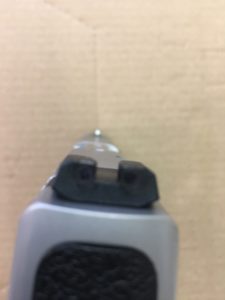
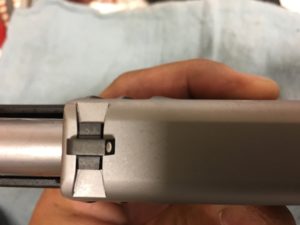
I did black out the rear dots on the sights because I strongly dislike “3 dot” sights.
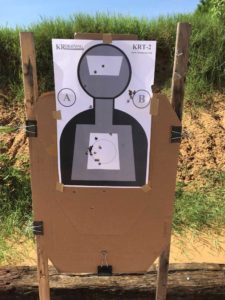
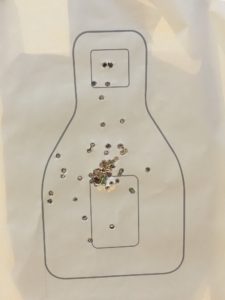
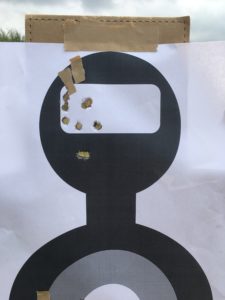
With most guns I can shoot a perfect score (20 hits in the grey part of the target) on the test, using the 3 second par time. Not so with the SD9VE. From 7 yards, the “2 head shots starting from ready” went wrong. I finished that string in 1.98 seconds (of the available 3 seconds), dropping one shot completely out of the head, low left almost into the body, with the other shot low left into the ‘jaw’ area of the head.
On the one handed strings from 7 yards, I dropped 3 of the 4 rounds below the KRT-2 target, for a score of 16/20 with 3 in the head – good enough to pass at the standards required by our 1st level Defensive Pistol Skills 1 class, but not particularly good overall. More than likely a less skilled shooter would have found it difficult to shoot.
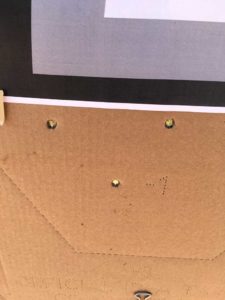
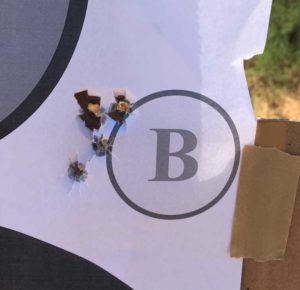
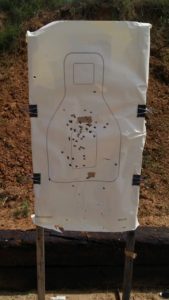
4) Seeing so many shots trending left on the target caused me to take a closer look at the sights. I shot a 5 shot group on the “B” circle on the target, at 7 yards. That produced a nice group left of the point of aim.
I took a closer look at the slide, and noticed that the front sight was off to the right of center line.
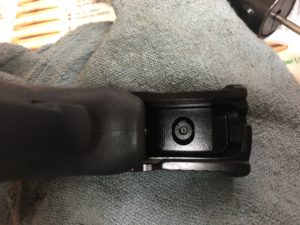
5) The other problem I observed is that the gun did not lock back on the last round of any of the 3 magazines that I used during my testing. This may not be a gun problem. If you look at the pistol you’ll see that the slide lock lever is located in a place where a shooter with a high thumbs grip might end up riding the lever, preventing it from moving upward and locking the slide on the last round. I had this problem with the Springfield XD, and it was one of several reasons I stopped shooting and recommending the XD series of pistols to students.
Next time I work with the SD9VE, I will adjust the sights to get the gun zeroed, re-run the 3 Seconds or Less test and a few other baseline tests with it, assess the slide lock issue, install the Apex parts, and re-shoot the baseline drills after I install the Apex parts.
Back on July 4th, 1988, two Austin-areaUSPSA competitive shooters, Randy Johnson and Don Davis, took a relative novice/ target shooter out to the Hill Country Rifle Range and introduced him to the 1911 .45 ACP pistol, and the fundamentals of practical shooting. Over the next few months they coached me, as I learned skills necessary to compete safely – drawing, reloading, movement with a loaded gun.
They introduced me to Alan Tillman, local gunsmith and competition shooter, who also coached me and built all my competition guns for many years. Through the local USPSA club, I became part of a group of shooters and gun businesses in the Austin area that have many familiar names: Chip McCormick, STI, Tripp Research, Dawson Precision, LaRue Tactical, Shockbottle, Competition DVD, Taylor Tactical Supply,Ben Stoeger Pro Shop – and many others. With Randy and Don’s coaching and encouragement it’s unlikely I would have started down the path I’ve taken, and certainly would not have progressed as quickly as I did in the first year.
Today is the 30th anniversary of that special day in KR Training history.
To celebrate it, I’ll be running a USPSA match at the A-Zone tomorrow (July 5th), shooting in the single stack division, using a classic 1911 .45 ACP. The gun actually has the same slide and barrel that I used in the early 1990s, mounted on a newer Springfield Armory frame.
If you aren’t already a subscriber to receive this newsletter each month, you can subscribe here or follow this blog. You can also follow KR Training on Facebook or Twitter for more frequent posts and information.
MEDICAL PREPAREDNESS JULY 14-15
On July 14-15 we are offering a one time special medical class taught by Dr. Ben Weger. Medical Preparedness is an in-depth, two day course on medical issues for individuals and families looking to improve their overall readiness for medical issues. The student will learn various first aid skills necessary in an emergency, along with techniques to manage various illnesses and injuries until skilled help arrives.
No prior medical training is required to attend. The class will be inside in the air-conditioned classroom.
Sign up for Saturday morning ($120), all day Saturday ($200), or the full 2-day class ($350).
Family discount offer! Get two slots for $200/$350/$600 *must pay in full in advance for discount.
The event, to be held August 4th from 9-12 at the A-Zone Range, will be a beta test for a possible new research study, evaluating the relative benefit of the Cool Fire product vs. live fire for shooter development. All guns and ammo will be provided. Event is open to up to 24 participants. Event cost is $20. Pre-registration and payment in full in advance is required.
We will be announcing our full schedule of Sept-Dec classes in the July newsletter.
RANGEMASTER TAC-CON NORTHWEST
Karl and Ed Vinyard will be representing KR Training at the NorthWest Regional Tac-Con, July 27-29, 2018, to be held at the Firearms Academy of Seattle in southern Washington state. Haven’t made summer vacation plans yet? Join us in the Pacific Northwest for cool weather and great training.
June was super busy – 15 days on the range teaching, not counting multiple range maintenance days, and 13 music performances. We’ll get back to blogging in July and August. Many articles in queue to complete and share in the coming weeks.
The KR Training schedule shows most of the classes we plan to offer through late October 2018 and even a few already scheduled for 2019. Registration is open for everything listed. We are adding more classes to Sept-Dec. They will be announced in the July newsletter.
Thank you for sending your friends and family to train with us. Your referrals keep our classes full and help us continue to offer in-demand classes that specifically address the needs of responsible armed citizens. Remember, now you can train with even more purpose through the KR Training Defensive Pistol Skills Program. Start working to earn your coin now.
We look forward to training you!
Karl, Penny and the KR Training team
If you aren’t already a subscriber to receive this newsletter each month, you can subscribe here or follow this blog. You can also follow KR Training on Facebook or Twitter for more frequent posts and information.
SCHOOL SAFETY/ACTIVE SHOOTER RESPONSE
We have a few slots still open in the June 2-3 Active Shooter Response course. The class was originally developed for armed teachers, but the course content is relevant and useful to anyone interested in active shooter response, including those involved with church and business security.
1/2 day and 1 day slots are available, for those that do not want to attend the entire course. For June 2-3 we will do all the live fire work in the mornings, and be in the classroom in the afternoons.
In addition to the June 2-3 session at the A-Zone, I am teaching another session June 11-12 at the Saddle River Range in Conroe, an indoor range facility.
The class is useful and relevant to anyone that is armed or handles guns in situations where children may be present: whether they are related to you, or sitting next to you in church, standing behind you at the grocery store, or a few rows away in a movie theater. The shooting drills in the course are challenging and different from material you’ll see in any other live fire course. You don’t have to be a parent to attend. Anyone that carries a gun in public will benefit from attending this course.
There are 4 options:
1) Saturday morning lecture only. 4 hours, $100
2) Saturday afternoon shooting only: 4 hours, $175 (can be taken by itself w/o Saturday morning lecture)
On July 14-15 we are offering a one time special medical class taught by Dr. Ben Weger. Medical Preparedness is an in-depth, two day course on medical issues for individuals and families looking to improve their overall readiness for medical issues. The student will learn various first aid skills necessary in an emergency, along with techniques to manage various illnesses and injuries until skilled help arrives.
No prior medical training is required to attend. The class will be inside in the air-conditioned classroom.
Sign up for Saturday morning ($120), all day Saturday ($200), or the full 2 day class ($350).
Family discount offer! Get two slots for $200/$350/$600 *must pay in full in advance for discount.
Karl and Ed Vinyard will be representing KR Training at the NorthWest Regional Tac-Con, July 26-28, 2018, to be held at the Firearms Academy of Seattle in southern Washington state. Haven’t made summer vacation plans yet? Join us in the Pacific Northwest for cool weather and great training.
The KR Training schedule shows most of the classes we plan to offer through late October 2018 and even a few already scheduled for 2019. Registration is open for everything listed.
We look forward to training you!
Karl, Penny and the KR Training team
Each year at the start of summer I offer a small gun oriented defensive pistol class. The intent of the course is to provide an opportunity for people to practice with the smaller gun that is more convenient to carry in the hot weather. Use of pocket holsters, purses, fanny packs, and any other mode of carry that’s not a traditional belt holster is allowed and encouraged, since practice drawing from those methods is typically not allowed at commercial ranges and discouraged in other defensive pistol classes due to range safety concerns and the additional time/complexity associated with reholstering.
Part of the course includes shooting our 3 seconds or Less test (3SL) with both the small gun and a full size gun drawn from a belt holster, to measure the performance change (usually a loss) that occurs when switching from the larger gun to the smaller one.
Data from the May 2018 session:
10 shooters
Small Guns: 6 striker fired (Glock 42, 43, Ruger LC9S, Shield), a SIG 938, one S&W Bodyguard 380, and two S&W J frame revolvers.
Large Guns: 9 striker fired guns (Glock, M&P, XD) and one SIG P229
Average small gun score: 74.0/100
Average large gun score: 83.5/100
Performance gain from shooting the larger gun: 8.5%
The best shooters in class shot the same score with both guns (but no perfect scores on the 3SL test); the worst dropped 20% more points with the smaller gun.
Students passing the 3SL test with 70% or higher score using their small gun: 8 of 10.
Students passing the 3SL test with 70% or higher score using their primary gun: 10 of 10.
Students passing the 3SL test at the 90% level (desired) using their small gun: 0 of 10.
Students passing the 3SL test at the 90% level using their primary gun: 3 of 10.
Accuracy, not draw time, was the biggest issue in this year’s class. Many chose to take the course drawing their small gun from a belt holster. Most students in previous sessions have used pocket holsters or other methods.
Historical average of the entire data set of 60 shooters:
Small Gun score: 78/100
Larger gun score: 86/100
This year’s class numbers were remarkably similar to data from previous classes and the historical averages. All the shooters in this session were intermediate or higher level. Each person attending had taken at least one class past the state carry permit level. Several in this class had taken the course in previous years and were attending as refresher/tune up training with their small gun.
Found some pictures I took from the Rangemaster instructor class that we hosted back in April 2018.
Shooting the Casino Drill
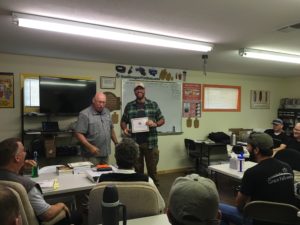
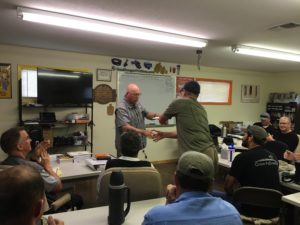
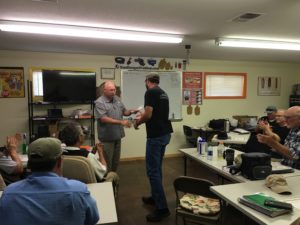
Awards to top shooters in class
Post-class Coaching
A few people didn’t pass the instructor course due to falling short of the course required on the shooting tests after 2 attempts. Tom allowed me the option to invite those students to return for some private coaching with me, to be completed within 30 days of the course, to tune up their skills and make a 3rd and final attempt on the shooting tests to earn their instructor rating.
I worked with 3 of those students (coaching all 3 to the passing level), and in all cases, the problems all related to the portions of the test that involved shooting beyond 10 yards. The correction process involved these steps:
1) Verify the gun’s zero.
Checking your gun’s zero is something very few pistol shooters either know how to do, or bother to do. We started by shooting groups at 15 yards, on an NRA B-8 target, from benchrest. This verified that the gun was hitting where the sights were aligned. This was done with the ammo to be used for the test.
For 9mm pistols I like to zero my guns with 124 gr bullets, so that I can shoot anything from 115 to 150 gr 9mm loads and be reasonably close. Zeroing the gun using either extreme of the range of bullet weights may result in a big change (usually vertical) at 15 yards or beyond.
In two of the 3 cases, left-right changes were needed to get the gun zeroed at 15 yards.
2) Time management.
In the instructor class, Tom explains that most people only have one shooting speed (time spent on the sights, time spent pressing the trigger), and that speed is too slow for close targets, and too fast for targets past 10 yards.
Any time you are shooting a par time test, the goal is to use 90% of the time provided to fire your shots. Most of the time, someone that scores poorly on the longer range strings of that type of test uses 50% or less of the available time – not aligning the sights as precisely as required, and pressing the trigger too hard and too fast.
One approach to correcting this problem is to remove the par times and simply run that section of the test scored purely on points. Practice until a perfect score can be shot, with no time limit. Then put a timer on it. Most of the time, the shooter will be able to make the par time without speeding up at all. If pushing for speed is required, often the increase is small. Time pressure causes people to forget fundamentals; removing the timer refocuses on simply getting the hits and managing the trigger better.
It’s critical for armed individuals, civilians and police alike, to understand the ability of even unarmed, untrained individuals to cause death or greivous bodily injury through blunt force trauma. Failing to control interactions early can leave you in a position where you’re left with no option but to use deadly force. Underestimating the capability of an unarmed opponent to cripple or kill — even the apparently small or weak — can leave you without the ability to respond at all.
Specific cases where fit and health people have been killed or crippled by unarmed, untrained, and physically unremarkable opponents are useful illustrations of the fragility of human life. My collegue John Daub has calalogued many such instances over the years. The knockout game may be the first example that comes to mind, and it’s certainly true that strikes to the head when completely unprepared are incredibly dangerous. But when there are signs ahead of time, maybe only seconds in advance, if you don’t actively protect yourself the warning alone is little help.
In 2017, a 45 year old man was punched a single time while waiting in line outside a bar. His assailant first asked, “What are you looking at?” according to witnesses. The struck man never regained consciousness and died despite prompt hospitalization. ABC 7
In 2018 an off duty deputy involved in a minor traffic accident is punched once by the other driver, never regains conciousness, and later dies. KTLA, including video (start at 0:44)
However, even individuals who knew for certain they will be struck are at risk. Here are a couple examples where the person struck knew in advance that a punch was coming.
In 2011, on a $5 bet, a 25-year old man was punched in the face by a 142 lb. woman. A few minutes later he collapsed; his autopsy revealed an artery burst in his neck. ABC news
In 2014, two teenagers agreed to settle a dispute by allowing one to punch the other in the face. The teen, hit once on the left side of the face with a closed fist, fell, and struck his head on the ground. He never regained consciousness and died after hospitalization. Q13 Fox News
It might be tempting to write these anecdotes off as isolated incidents or freak occurances, but by understanding the mechanisms by which such injury and death occur, these tragedies can inform our own preparations for violence and its legal consequences.
For starters, consider moves illegal among unarmed boxers and MMA fighters because of the potential for death or permanent injury. Paring the list down to only moves that work via blunt force trauma still leaves a substantial selection.
Kicks, knees, stomps to the head of a grounded opponent
Even with a “simple” punch to the head, there are a wide variety of mechanisms available that cause serious immediate or near-term consequences:
Nose bone driven into brain
Dislocated spine via blow to the top of spine or back of head
Temporal artery tear via blow to the temple area
Difficult to stop bleeding of spongy tissue (liver, spleen) via blow to the ribs
Concussion due rapid twisting of unstabilized head (e.g., due to hook or “haymaker” punch)
Cardiac contusion
Often, blunt force trauma causes secondary injuries such as
Brain impacting front, then back, of skull (contrecoup)
Head striking the ground for a second round of injury,
Airway blockages due to bleeding and swelling from primary injury, and aspiration of blood and/or vomit
Past 40 years of age, the brain shrinks and there’s more room for the brain to “float” (and gain momentum) within the vault of the skull, so the danger of brain injury increases despite a person’s overt level of physical fitness.
There are injuries that, while not necessarily deadly, frequently lead to temporary incapacitation, which means the recipient of such an injury loses the ability to observe the aggressor(s) (e.g., reaching for a weapon) and respond in an organized way. If you carry deadly weapons on your person — a handgun or a knife — you’ve ceded control of those tools to your attacker if you lose the ability to retain them:
Shattered testicle
Kidney punch
Temporary blindness due to blow to the back of the head
Tearing due to blow to the nose
Finally, some of the life-altering connsequences of brain injuries can take months or years to surface as we’ve witnessed with boxers and football players suffering concussions. It’s not necessary to receive repeated concussions for bad effects. The pituary gland rests in a small cavity of bone the (sella turcica), and suffers the same kind of impact (coup and contrecoup) the brain does, which can result in long lasting effects that are difficult to diagnose and challenging to treat.
After we have faced the violence itself, our ability to clearly articulate to a jury what behavior required us to employ force can mitigate the sometimes-hostile legal environment we find ourselves. Even for the long-time student of self-defense, the bias can be surprising. During the closig arguments of Wyoming v Drennan, the prosecutor’s (false) claim that “in the state of Wyoming, there is a law against shooting an unarmed man” may have been among the open avenues for appeal, but it resulted in an initial conviction. While eventually prevailing at appeal is not the worst possible outcome, it is far from the best: that the jury be educated by our documented training, fully apprehending the dangers as we did.
In Oregon v Weir, the supreme court of Oregon state deduced based on the structure of the penal code (Oregon’s three degrees of assault), that “the legislature did not intend that a hand could be a dangerous weapon,” despite also acknowledging that “if the other elements of assault were established, as a factual matter it would seem that the human hand could always be a dangerous weapon even the proverbial 98-pound weakling could, with one well-placed punch, disfigure a heavyweight boxing champion.”
As we’ve seen, it is just so.
None of this information is intended to suggest that we spend our lives in mortal fear of every other person around us. Rather seek out training and education that improve your ability to understand your own physical and legal context.
Understand both the statutes and case law by which uses of force are judged in our state (or states we travel to). Look for courses like MAG-20 Classroom and Andrew Branca’s Law of Self Defense seminar.
Document your knowledge of the danger presented by an unarmed assailant. Keep notes about videos you watched, articles or books you read, and training you receive. If you ever have to use force to defend yourself, make the specifics of what you knew at that moment in time available to your defense attorney and the jury.
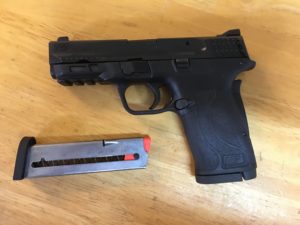
I recently purchased two of the new Smith and Wesson EZ380 pistols. I reviewed them in this recent blog post.
Since that review I’ve used the EZ380 in several private lessons, working with shooters that had small hands or limited grip strength. My appreciation of this gun continues to grow as I work with it.
One other excellent use for the EZ380, suggested by a student, is as a ‘first centerfire pistol” for pre-teens ready to transition from a .22 to something larger. The short trigger reach, light weight, and other features of this gun make it an excellent for that application also. This would particularly useful for a young shooter wanting to begin learning how to use a holster to compete in USPSA, IDPA or Steel Challenge style competition.
Evaluating the Design
Roy from Shockbottle and I were chatting after one of the Wednesday night USPSA matches I run at the A-zone, and I showed the EZ380 to him. The EZ380 uses a locking breech design, so it’s mechanically feasible that S&W could come out with a 9mm version of this pistol if they wanted to. By trimming the grip and barrel slightly, a compact version might also be possible, so don’t be surprised if either of those show up at SHOT show in 2019, as they are logical extensions of this design.
Roy tested the grip safety in a way I hadn’t thought of: pressing the trigger back, without the grip safety engaged, and then engaging the grip safety to see if the gun would fire. I replicated that test the next day in better light.
The EZ380 passed this test. The only way to get the gun to fire is to use it as intended: grip the pistol so that the grip safety is disengaged, and then press the trigger. Doing those tasks in reverse order, as might occur if the gun was dropped and the user first grabbed it by the trigger and then closed the hand, engaging the grip safety, does not cause the gun to fire. That makes this design very drop-safe.
Sights
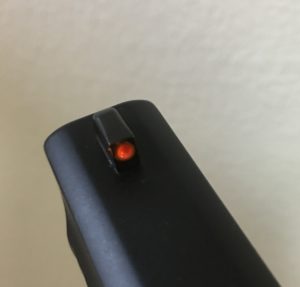
I’m not a fan of 3-dot sights. (Actually can’t think of any trainers or high skill level shooters that like 3 dot sights, but gun makers continue to make the standard option on pistols.) The EZ380 comes with 3-dot sights. I grabbed a Sharpie and a bottle of electric orange fingernail polish (purchased for painting sights), blacked out the rear dots and dropped a dot of orange on the front dot.
Holding the gun in one hand, trying to get it lined up properly, holding the iPhone in the other hand, *and* getting the phone to focus on the front sight instead of the rear sight was hard, so here’s a close up pic of the front sight by itself so you can see the orange dot better.
SPARE MAGS
Spare mags are now available for about $25 apiece MSRP. The gun comes with two. I ordered additional mags to have on hand for the class loaner EZ380. Next up is to get a dedicated holster and mag pouches for it, so I have a complete class kit someone could use for a Defensive Pistol Skills 1 or Defensive Pistol Skills Small Gun class in the future.
I expect as this gun grows in popularity we’ll see +1 base pads come on the market also. The mags that come with the gun hold 8. A +1 base pad would give the gun a 9+1 capacity, equal to an M&P Shield with +1 base pads.
SUMMARY
Once I get the final items on hand to build a full student kit, I expect the EZ380 will be a frequently used loaner gun. Since writing my first review, I’ve already sold 3 of them to students with small hands or low grip strength, who used the loaner gun during classes and had success with it.
I recently purchased two of the new Smith and Wesson EZ380 pistols.
Historically I have discouraged students from carrying or purchasing pistols in .380, because the caliber’s generally poor performance in actual shootings, and its failure to meet FBI minimum test guidelines for defensive ammo. Greg Ellifritz has a good summary of those issues on his blog.
However: every now and then I have a student that has fingers too short, or grip strength too weak, to comfortable shoot and manipulate any 9mm pistol. Years ago I added a Glock 42 to my collection of loaner guns, for use by students in that specific situation. The EZ380 has several features that made it appeal to me, so I bought two of them: one to test and one to have as inventory.
Features I liked
The EZ380 is a single action gun with a hidden hammer. That makes the slide easier to rack than a striker fired or double action pistol. The grip is longer – built to allow most people to get all their fingers on the gun without needing a grip extender base pad on a magazine. The barrel is longer. This gun wasn’t built to be a pocket gun. It was clearly designed to be a larger sized, belt- or purse-carry gun that would be easier to shoot than any of the smaller pocket pistols.
It has a giant grip safety, almost the size of the squeeze-cocking lever on an H&K P7, except on the backstrap instead of the front strap. For someone with arthritis or limited dexterity, that’s a better option than the tiny thumb safeties found on the SIG 238/938 series. I’ve seen many students struggle with the safety on those pistols, some making the bad choice to carry with an empty chamber, finding it easier to rack the slide than to swipe off the safety when drawing from a pocket. The giant grip safety enables the gun to be carried “cocked and locked” without a thumb safety at all.
I thought I was going to like the little “nub” built into the magazine, intended to help users pull the follower down when loading the magazine. It makes the magazine like most magazines for .22 semiauto pistols. I found the nub too small and almost painful to use. However, I’m sure the aftermarket vendors will come up with a solution, as they did for Browning Buckmark magazines.
When trying to use the gun the way it would get used in our Defensive Pistol Skills 1 class, drawing from a holster, doing reloads from mag pouches, I found that the ‘nub’ sticking out of the side of the magazine made the mags drag and hang on every single stack mag pouch I had on hand. That means that mag pouches for the EZ380 will likely have to be a custom design (e.g. hard to find and expensive).
The magazine release is reversible, which is a great feature, allowing right- and left-handed shooters the option to use thumb or trigger finger to press the release, depending on how the release is installed.
The slide lock is only accessible using the right thumb, not ambi like the slide lock on the full size M&P models. Changing the slide lock to work from both sides is the #1 change an EZ380 2.0 model could offer.
A Sight Problem
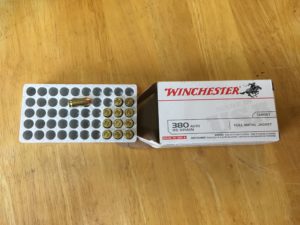
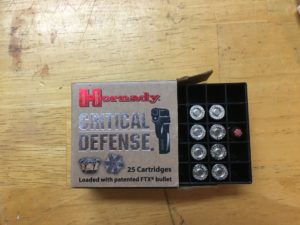
One of the questions I had was, of course, how good does it shoot? I took both of the EZ380s out to my range and fired some groups, using Winchester white box and Hornady Critical Defense ammo.
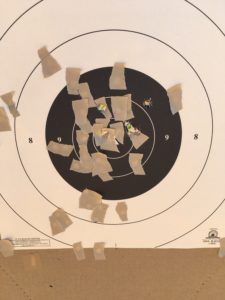
With both guns, shooting from benchrest, at 15 yards, the groups were reasonable (3-4″) but off to the left.
When the shots are hitting left for a right handed shooter, my default answer is “it’s the shooter”. I tripled down on attention to trigger control and finally convinced myself that yes, it was the guns. Both of them.
Sight Adjustment
The EZ380 has yet another unique design feature: the rear sight can be drifted left or right by loosening a set screw you access from underneath the sight. Lock the gun open, flip it over, and you can adjust the sight without a vise or a hammer.
I have some concern that the sight may drift over time, as the gun is shot and that screw comes loose. I’ll be keeping an eye on the gun I’m going to use as a student loaner for that issue.
However, once I made the sight adjustment, groups moved over to the right closer to where I wanted them.
I’m hoping there will be aftermarket sights on the market for the EZ380, because it comes with the standard 3-dot sights that come on every gun, yet no trainer or top tier shooter likes or recommends.
SUMMARY
If you are capable of shooting and handling a 9mm pistol, the EZ380 is not a gun I recommend for you. You’d be far better off with a striker fired, no-thumb-safety 9mm like an M&P Shield or Glock 43. If you are someone that can’t reach the trigger without dragging the frame on any 9mm pistol, because of short fingers, or can’t do basic tasks like fully racking the slide (all the way to the back as far as it will go) or locking the gun open on any 9mm you’ve tried, take a look at the EZ380. It has more positive features and fewer negatives for that type of customer than any other 380 on the market. It’s a pistol that you could use in a “real pistol class” (something beyond the carry permit level).
The final thought is a disclaimer. The EZ380 is a first model year gun, and normally I’m slow to recommend first model year guns. S&W has already done a recall on the EZ380 models that have a thumb safety. The non-thumb-safety models were NOT recalled. Over the next 6 months the EZ380 in my loaner collection will see a lot of use, and I’ll update this post if we encounter any problems with it.
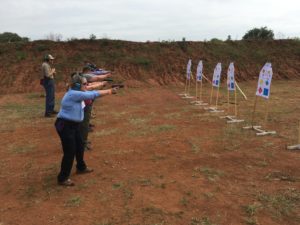
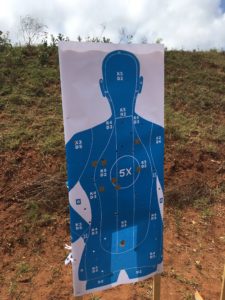
In a previous post I gave an after-action writeup from the 2018 A Girl and a Gun Conference. There were a lot of great pics that I didn’t get to use in that AAR, so here they are.
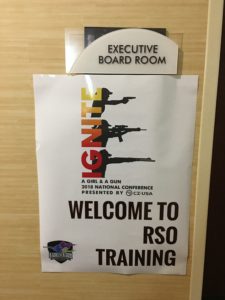
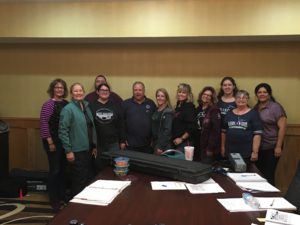
Range Safety Officer Course
General Conference Pics
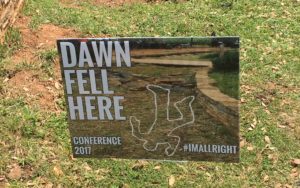
This pic is one of those “you had to be there” things. In 2017, Dawn fell down near the Pavilion, during one of the highly attended events. Her fall was memorable (no serious injuries) and in 2018 the location of her fall was commemorated with this sign.
CZ-USA was the main event sponsor. In a discussion with one of the CZ reps, I learned something interesting. The CZ-75 pistol, widely used in USPSA Production division as a DA/SA gun only has a DA trigger pull option because the intent was to give it “second strike” capability in the event of a bad primer strike resulting in a misfire. The CZ design has no decocking lever, requiring the gun to be manually decocked (hold the hammer, press the trigger, slowly lower the hammer to the down position). The designers intended for it to be used as a single action pistol.
I made a quick trip to the NRA Annual Meeting in Dallas. The NRAAM has basically become a copy of the SHOT show that’s accessible to the general public, combined with a lot of seminars and meetings related to various NRA programs. The event usually draws more than 80,000 attendees over the multiple days. Admission is free. There are many, many blog posts and youTube videos all showing bits and pieces of the event out there if you search for them, way too many for me to link to here.
My experiences at this year’s NRAAM:
THURSDAY Pt 1
Arrived Thursday afternoon. Very little signage explaining where to park. Parked in a commercial pay to park lot near the convention center. Was immediately approached by a panhandler asking for money. Put my “Managing Unknown Contacts” skills to use twice, as I had to work around him to get to the pay station and then go by him again to get back to the car to put the tag in the windshield.
No clear signage explaining where registration was. Apparently I parked in the back of the facility, ended up on the back loading dock, and entered the vendor area past security, eventually winding my way to the front to the early bird registration area. Despite being a Benefactor member, they didn’t give me a “Benefactor” ribbon, only a Life Member ribbon with my registration badge.
Saw some on-duty Dallas PD officers, told them about the panhandler in the parking area. Was disappointed that none of the 3 of them knew enough about the layout around the arena to know where the “P-Star parking lot by the loading dock” was. But one of them did stroll off to go try to find it and look into the panhandling situation.
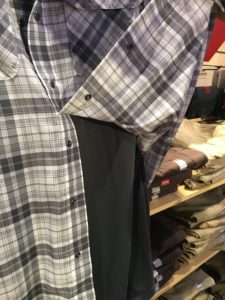
Had a stroll through the NRA store, where all the various NRA-branded items were on sale. Propper, Vertx and 5.11 also had booths inside the NRA store, and I got to chat with one of the Propper execs who was working his own booth. Double bonus, I was wearing Propper pants and a Propper shirt – all items they had discontinued – and got to talk to the exec about product needs of those carrying concealed in upscale business casual environments. One big blind spot for all the ‘tactical’ clothing companies is that they think their market is cops – so garments have features intended to appeal to cops, on and off duty. Reality is that there are less than 1 million cops, but more than 13 million carry permit holders. That’s a much bigger market. Most of the “concealed carry” shirts and parts that these companies produce have pockets in weird places (Propper shirts have sideways secret chest pockets held closed by magnets) that do get noticed by women and others that pay attention to how others are dressed.
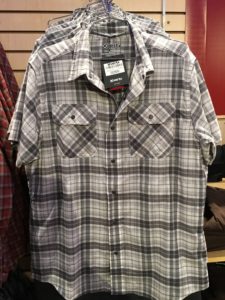
Most of the products I saw at the NRA store continued that “tradition” of being just a little too abnormal to go unnoticed in a true business casual environment. Penny’s comment is that these companies need an actual fashion consultant, not just cops and retired military people, on staff to help them. Little things, like making sure the plaid material on the pockets aligns with the plaid on the shirt, get overlooked. (The whole Plaid Tablecloth shirt design approach has become cliche.)
This particular Vertx shirt includes an interesting feature: an integral “half undershirt” attached to the shirt, to make it easier to wear a single carry garment and still have a layer between bare skin and the gun. That idea is clever, but the shirt itself is too casual for professional wear.
(Aside: one company that probably *should* have been at the NRA show advertising their products is Untuckit. They make higher grade products designed to be worn untucked. I have several of their shirts, and their Austin storefront is staffed by people that are gun friendly – they are Ok with customers trying on shirts in their dressing rooms while wearing holstered pistols as long as it’s done discreetly.)
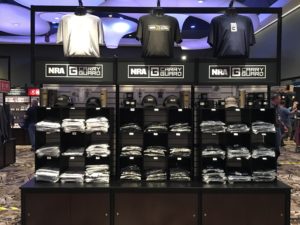
Carry Guard
Last year NRA rolled out a new program called Carry Guard that included both gun owner ‘insurance’ and a training component. I have nothing good to say about any aspect of this program. For those that haven’t been paying attention, here’s a quick summary:
2) At last year’s NRAAM, companies competing with Carry Guard in the insurance/legal market were not allowed to have booths. This year ACLDN had a booth but USCCA and others did not.
3) When Carry Guard rolled out, I contacted them about becoming a Carry Guard instructor and about hosting Carry Guard classes. A year later, I (and apparently thousands of others) who contacted them have never been replied to.
4) An early Carry Guard misstep was to tell students they could not bring revolvers or 1911 style pistols to class. This was only rectified after significant outcry from potential Carry Guard students and major industry manufacturers who produce revolvers and 1911-pattern pistols.
5) There are over 5,000 people certified to teach the NRA’s Personal Protection Outside the Home course – a class offering training similar to what the Carry Guard program offers. KR Training‘s Defensive Pistol Skills 1, 2 and 3 courses are derived from, and aligned with, this NRA course. At this year’s NRAAM, tens of thousands of dollars were spent promoting the Carry Guard program — with ZERO dollars spent to promote ANY program, trainer, or course connected to the NRA’s Training and Education Division. The T&E division is the official training operation of the NRA Not Carry Guard. Instead, magazine-sized books were available, by the hundreds, promoting Carry Guard.
As I discuss in my Beyond the One Percent presentation, basic level NRA instructors, who provide the state-mandated training for concealed carry and Hunter Education, are the primary source in the US for most gun owners to receive training. As many as a million students a year take NRA basic level firearms classes.
From a pure business perspective, there is no way the Carry Guard training program generated enough revenue in the last year to pay for the level of advertising presented at the NRAAM. And without expanding the program to incorporate local and regional trainers, or even responding to submitted requests to host courses, there’s no realistic way the program will be anything more but a small scale operation competing with dozens of well established private sector programs offering cheaper, shorter courses with a known track record of student success. They can’t sell enough t-shirts or mugs to break even.
In an era when major resources are being deployed by gun control groups, including weaponizing the media, corporations, banks and social media companies to suppress firearms related information and limit the abilities of firearms-related companies to operate, misuse of NRA funds for this failed program needs to stop. The resources should be diverted to the Training and Education program to improve or expand programs actually reaching large numbers of students, particularly new shooters that we need to grow the ranks of pro-gun voters, or given to NRA-ILA to support political action.
THURSDAY Pt 2
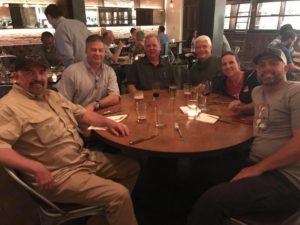
Thursday night I had the opportunity to dine with Michael Bane, producer of many shows for the Outdoor Channel, and other Down Range/Outdoor Channel folks.
I brought my old copy of John Shaw’s book “You Can’t Miss”, which Michael co-wrote, to Dallas, and managed to leave it in the car, failing in my quest to get it signed.
Ended the evening staying with Caleb and Lisa Causey at Lone Star Medics World HQ.
FRIDAY
I got there early Friday, anticipating bad traffic and difficulty parking, both of which occurred but not to the degree I expected.
I was able to spend the morning strolling the vendor floor with four longtime friends. Two of them attended the Pence/Trump talk Friday afternoon. I had to get back to College Station for a music gig and could not stick around after lunch.
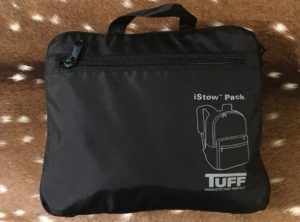
My first purchase of the morning was a TUFF products iStow backpack – a clever product that’s a full size backpack that folds up into a small package about the size of a hardback book. It was useful for wearing while browsing the floor but will also come in handy in my luggage for future trips.
Highlight of the morning was getting a copy of Bill Wilson’s “Gun Guy” book autographed by Bill. His contributions to practical shooting and concealed carry, over the past 30+ years, has been significant. The book was co-written by Michael Bane, so now I have two books on my stack to get signed by Michael next time I see him.
This could be a useful product for those that can’t carry at work and need a secure place to put their gun inside the car.
The last thing I purchased was a discounted (show special) copy of LASR software. It uses a laptop and any laser-equipped pistol (like a SIRT pistol) to support many different kinds of dry fire practice. I’ve been working on improving the dry fire/classroom materials we use in classes, and I’ll be setting up a dedicated laptop/webcam with the LASR software.
MEET AND GREETS
If you wanted to meet a pro competition shooter, industry legend, or social media celebrity, they were all at NRAAM. Many vendors had meet and greet events at their booths with their sponsored stars. I ended up with a signed “Pigman” hat by being at the Hornady booth at the right place and right time. I wasn’t familiar with his program, but getting the hat did motivate me to look him up.
SUMMARY
The 2019 NRA Annual Meeting will be in Indianapolis. If you live close to that area, or just have time and funds to go, I encourage you to attend. The annual meeting is one of the best things NRA does all year.
If you aren’t already a subscriber to receive this newsletter each month, you can subscribe here or follow this blog. You can also follow KR Training on Facebook or Twitter for more frequent posts and information.
Karl and Ed Vinyard will be representing KR Training at the NorthWest Regional Tac-Con, July 26-28, 2018, to be held at the Firearms Academy of Seattle in southern Washington state. Haven’t made summer vacation plans yet? Join us in the Pacific Northwest for cool weather and great training.
The KR Training schedule shows most of the classes we plan to offer through late October 2018 and even a few already scheduled for 2019. Registration is open for everything listed.
We look forward to training you!
Karl, Penny and the KR Training team
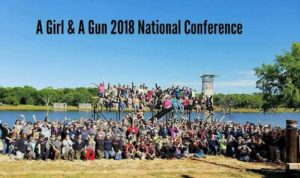
350 A Girl & A Gun Members
65 Brilliant Instructors
40 Generous On-Site Vendors
16 Dedicated Staff Members
12 Hard-Working Range Donkeys
67 Event Sponsors
35 Simultaneous Training Sessions
185,000 Rounds of Ammunition
210 Rolls of Toilet Paper
1 Incredible Sisterhood
I’ve been a presenter at the conference every year since year 2 (this was the 6th year). Everything about this year’s conference was professional grade. A short list of things they do very well, that deserve recognition:
1) For the 3 days of the main conference, there were 35 different training events running in parallel, involving dozens of instructors teaching a very wide range of students. The scope of that effort is equal or greater than a major match like a USPSA or IDPA National championship, particularly since many conference attendees have never attended anything beyond a local chapter event before. The event organizers and range support staff do an incredible job with logistics and support for all the activities.
2) On Monday, Tuesday and Wednesday prior to the main conference, AG&G provided continuing education and development for their local chapter facilitators, who serve both as club leaders and trainers at the local level. The level of shooting skill expected from those facilitators is higher than what is required for NRA basic pistol or our state level “license to carry” instructor program. In a perfect world, the NRA would offer regional annual instructor continuing education similar to what AG&G offers for their facilitators. It’s a significant level of commitment for the facilitators to invest 6-7 days each year for both the facilitator training and the main conference.
3) AG&G sorts participants into different “tracks” based on their experience and ability. Early attempts to have participants self-sort encountered the same problems that exists everywhere in the firearms training industry: the tendency of people to over-rate their abilities and enroll in courses that require skills beyond their actual capabilities. In recent years they created a check in “gear check” process with a clearly defined set of performance standards that participants have to demonstrate, to earn their track.
This process solved a lot of problems trainers presenting at previous conferences had with mismatches between student equipment and skills and course curriculum. This year was the first time that every course I taught was attended by students with the correct background and gear for the session. Previous years always had 1-2 that were not ready for the higher level courses.
John Daub and I have written extensively on minimum standards and methods each shooter can use for individual assessment (and goal setting). AG&G has done an excellent job of creating a structure for their members that describes a clear path to developing handgun skill.
4) Equipment selection can be a challenge, particularly holster selection for ladies. AG&G required all ladies attending to have an outside the waistband holster, regardless of level. Additionally, they had requirements for holsters similar to what we use in our classes, so most ladies showed up with good quality kydex holsters, instead of cheap nylon, or “gimmick” holsters that are appealing for concealed carry but are problematic when used on a firing line during a group class. This year the only gear problems we had in any session were guns that were too big for the shooter’s hand. That’s a significant reduction in gear challenges that occurred in earlier years.
5) Overall level of shooting skill and consistency in prior training. Over the past 5 years, I’ve seen the overall level of shooting skill, even at the lowest track, move up. Similarly, the level of safe gun handling and understand of proper range etiquette (how to use a safe table and handle guns in a training environment around others) has significantly increased. I’ve also observed that the information being given to local chapter members by facilitators is much more consistent than it was in the early years.
All of those things are happening because the national organization has put a lot of effort into developing their local facilitators, and the local facilitators are doing an excellent job of passing good information down to local chapter members.
The end result of this is that the majority of women I trained at this year’s conference had better gun handling, better technique and were shooting better than the vast majority of shooters that only have their state carry permit who attend my Defensive Pistol Essentials or Defensive Pistol Skills 1 course.
Everyone associated with the AG&G organization deserves recognition and attention for that significant accomplishment. AG&G’s created its own new shooter course, that facilitators were trained to teach during this year’s conference, and I expect that will be yet another step forward for the excellent work being done, particularly by the local facilitators.
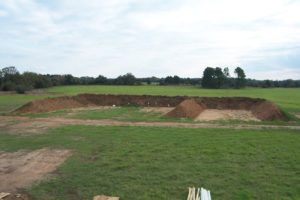
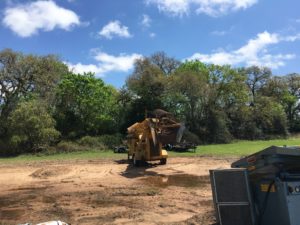
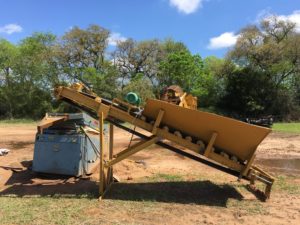
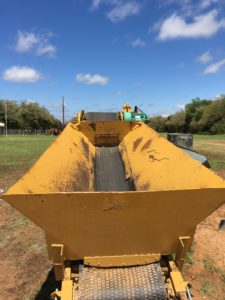
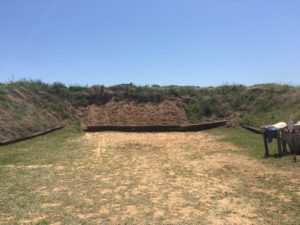
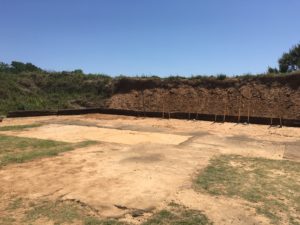
After 16 years of regular use on the range, we had the lead from the berms extracted, and the berm faces rebuilt.
We pulled more than 10,000 lbs of lead out of the berms. A few years ago, a group of reloaders extracted about 1500 lbs using shovels and manual labor. At 7000 grains per pound, that’s over 80 million grains of lead, over 650,000 rounds fired over the past 16 years. That’s not counting the rounds fired on steel targets that fragmented, or the rounds fired into side berms and in the shoothouse bay that we didn’t extract.
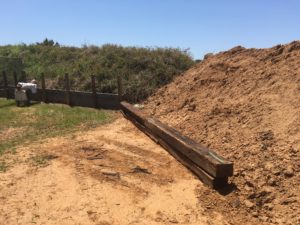
After the lead extraction was complete, we added some erosion control barriers (railroad ties) to keep the berm dirt from sliding back down.
Over the past year I’ve been developing a new course for KR Training, Historical Handgun, that teaches the history & evolution of defensive handgun skills. Part of that effort has been seeking out and reading old books on shooting, purchasing copies signed by the authors when possible.
Newhall Shooting – A Tactical Analysis – Mike Wood
The Newhall shooting is a famous incident in the annals of firearms training, best known for the widely repeated, but incorrect legend that the fallen officers were found with spent brass in their pockets.
Mike Wood’s father was an officer with the California Highway Patrol, and his book was written with significant input and contributions from current and retired CHP officers.
The first section of the book is a very detailed narrative and reconstruction of the gunfight, including crime scene photographs, and drawings. Section 2 of the book relates to my Historical Handgun program, as it discusses the state of CHP training in 1970. Section 3 is an analysis of the gunfight, and Section 4 assesses how the Newhall gunfight affected firearms training in the years after it occurred, with Appendix A of particular interest to me, as it provides a history of CHP firearms, equipment and training.
Section 1 – The Gunfight
The book includes a lot more details, but here’s the shortest possible description of the incident, for those unfamiliar with the incident: Two criminals, Jack Twining and Bobby Davis, were driving around Southern California with a carload of guns, planning to steal explosives and rob an armored car. They threaten another motorist with a gun. The motorist calls 911, and two CHP officers (Gore and Frago) respond. During the initial contact, Frago is shot by Twining as he stands by the passenger door of the criminal’s vehicle. Officer Gore is killed by Davis, all within the first minute of the stop.
Two more officers, Pence and Alleyn, arrive on scene and are immediately fired at as they call for more units on the radio. An extended gunfight occurs, with Pence and Alleyn both dying, with minor wounds to Twining and Davis. During the fight, an unarmed citizen/former Marine, Gary Dean Kness, attempts to assist, using a shotgun and a revolver from fallen officers, to engage the criminals, hitting Davis before retreating.
This video includes interview footage with Gary Kness, the citizen that used dropped CHP guns to fire back at the attackers.
Other officers arrive.
Twining retreats into a nearby building and eventually commits suicide rather than surrender to CHP; Davis flees on foot and is captured.
Section 2 – CHP Training 1970
This section details the behind the scenes situation at the CHP academy, as competing agendas between CHP and FBI programs fought for their part of the available training time provided to cadets. A 36-hour CHP tactics course on felony car stops was 30 hours of classroom and 6 hours of field exercises. CHP photos included in the book show some of the tactics that were taught.
Firearms training in 1970 was one handed bullseye shooting at distance, and one handed hip shooting at distances 7 yards and closer. Single action (thumb cocking) was advocated for shots past 7 yards. As the author notes:
Courses of fire began with the gun in hand, not in the holster. Officers mostly fired at match-style bull’s-eye targets in training, and they loaded from trays or cans of ammunition that were frequently located on a waist-level table in front of the shooter. They were expected to police their brass during the course of fire and neatly collect it for disposal later. The whole affair was a rather orchestrated and orderly process—a test of marksmanship perhaps, but bearing no resemblance to the chaotic conditions encountered in a real gunfight.
They did use a “Drawmeter”, a device developed in the 1930’s to time quick draws, to measure draw speed. During the 1960s, drills were expanded to include some shooting at night with a flashlight, some two handed shooting techniques. Non dominant hand shooting and gun manipulation, and shooting on the move were not taught. Shotgun training included both hip and shouldered firing.
According to the book, three of the four officers killed scored well in training, and Officer Gore was top shooter in his academy class.
This video was produced by CHP after the incident for use in police training.
Section 3 – Gunfight Analysis
Author Wood uses Ayoob’s priorities of survival as a framework to analyze the gunfight, starting with Mental Awareness and Preparedness, Proper Use of Tactics, Skill with Safety Equipment, and Optimum Choice of Safety Rescue Equipment.
Under Mental Awareness and Preparedness & Proper Use of Tactics, Wood postulates that Officer Gore was using tactics appropriate for a high risk stop, where Officer Frago appeared to be treating the incident as a low risk stop. In both cases, proximity of the officers to the suspects was a key element in their deaths. The officers arriving later in the incident already knew it was a very high risk situation and adjusted their actions accordingly. For Pence and Alleyn, it appears that marksmanship was a key factor, as they fired many rounds but failed to get effective hits. The most effective hit on either criminal was fired by the citizen who stopped to assist. Wood’s analysis also addresses the myth regarding “brass in pockets”, explaining that what actually occurred is that Officer Pence was trying to reload his revolver pulling loose rounds from a dump pouch, while wounded and crouched behind cover. He dumped his spent brass on the ground and did not put the cases in his pocket. Certainly higher capacity firearms that were easier to reload or backup guns (Optimum choice of equipment) would have provided some advantage to the officers. The criminals had multiple loaded guns in the vehicle, and simply discarded empty guns, grabbing others, to stay in the fight.
Wood’s analysis is far more detailed than I can recount in this review.
Section 4 – Where Are We Now
After the incident, CHP changed tactics for felony stops, required officers to wait for backup before doing a felony stop, treated reports of brandishing more seriously, and increased training in tactics. Firearms training changed, to eliminate policing brass during a course of fire and add instruction in weak hand firing, reloading, night shooting, malfunction drills and movement, both for pistol and shotgun.
Duty ammunition, not target ammunition, was used for training after Newhall. CHP began carrying speedloaders, replacing dump pouches. Methods for how shotguns were carried in cars were changed. Car radios were updated.
The Newhall incident was a turning point in the evolution of firearms training, a key step in the major transition away from the status quo established in the 1930s and 1940s, leading to more realistic and dynamic training conducted today.
Appendix A – History
The Appendix is a great summary of one agency’s evolution from the 1920s to the present day – a subset of the material I’ll be covering in my Historical Handgun course and book. It uses a similar format to mine, breaking down history in blocks of time, discussing the guns, gear and skills used in each era.
SUMMARY
Anyone teaching firearms, at any level, and anyone that carries a firearm for self-defense should read this book. The level of detail it includes about the Newhall incident is significant, the perspective it provides on the history of firearms training is essential. It’s an extremely well researched, well written book heavy with footnotes and references.
\From March 16-18, 2018, several of us from the KR Training team (myself, Dave Reichek, and Tracy Becker) attended the 20th annual Rangemaster Tactical Conference, held at the Direct Action Resource Center near Little Rock, Arkansas. This is part 5 of a series of posts about sessions I attended and taught, the match and products I evaluated as part of the conference.
Today’s post is about the 2018 match and the evolution of the match format.
MATCH HISTORY
The Conference began as the IDPA Winter Nationals, held at Tom Givens’ Rangemaster indoor range in Memphis. The match consisted of standard IDPA stages. When the event evolved into the Tactical Conference, the live fire match changed to an all-low-light, all-surprise-stage, multi-stage event. Competitors received very little/no information about the stages, and were instructed not to discuss the stages with others after shooting them. The stages used reactive 3D targets designed by John Hearne. I purchased 4 of them to use at my own range. They use the plastic 3D Tac-Man shells, attached to a pepper-popper type steel target that must be hit in the 6″ chest plate or small head plate to fall.
Stage scoring was simple. Total time to knock down all the shoot targets, with penalties for hitting no-shoots and a few other IDPA-ish tactics rules about use of cover. No limit on magazine capacity. No reload restrictions. Simply “solve the problem using your actual carry gear”.
In 2005 the conference was featured on an episode of Shooting Gallery. A sample of what the stages were like that year are in this video.
When the Conference moved to the Memphis police academy, the match began to evolve, combining a standards stage (simpler to run for more shooters in less time), with a decreasing number of surprise scenarios. In 2010, when the match was held at the US Shooting Academy in Tulsa, the match included a run in their shoot house.
The importance of the live fire match began to decrease, as the number of presenters and sessions increased. When the conference became a traveling event, logistics of the host facilities became a factor, as did the increasing number of participants. This resulted in a transition away from scenarios to a pure standards/qualification course of fire approach using a challenging course of fire intended to be very difficult to shoot a perfect score for a Master or Grand Master level shooter.
2018 MATCH
The 2018 match was shot using turning targets, and the first event was a variation of the FBI qualification course used in many courses taught by Rangemaster certified instructors.
You can see a simulation of the match course of fire by visiting dryrange.com and selecting Tac-Con 2018 as the course of fire.
186 shooters completed the defensive pistol match this year (many attendees opt not to shoot the match). This total included 160 males and 26 women.
38 of them shot a perfect 200 on the first stage, and progressed to the shoot off, which used the Five Yard Roundup drill I described in a previous blog post. All those in the top 16 were IDPA Master or higher level shooters. Under the stress of competition, only one shooter (Massad Ayoob) fired a perfect 100, and many shot less than 90 points. Scoring 90 points or better on this drill, with the small 10 ring on the NRA B-8, can be challenging even for the very skilled shooter.
from Tom Givens: The man vs man shoot-off pitted two contenders against each other on a mirror image problem based on the old Middle Race shoot. Each contestant had two mannequin type reactive targets, one at about 8 yards and one at 10 yards, plus a Split Popper at 9 yards. Shooters began while holding an empty cartridge box in both hands, chest high, to simulate a cell phone. On signal, the shooter must drop the cell phone, draw, knock down the closer mannequin, knock down the farther mannequin, then knock down his side of the Split Popper, all before his opponent could finish on his side. Two out of three falls wins the bout, and advanced the winner to the next level. This continued until the only two undefeated shooters met for the championship, when their bout was for best three out of five.
After that final stage was completed, Gabe White was the match winner, with Spencer Keepers 2nd and KR Training student KA Clark 3rd. Here’s video of their shootoff runs. Here’s more video of the shootoff that shows the 3D targets. For the ladies, Melody Lauer won this shoot-off, with Lynn Givens in second place, and Sarah Ryan took third.
The match staff tracked competitor equipment this year and found the following trends:
Calibers
9mm- 89.6%
.40- 4.8%
.45- 3.6%
.38- 1.2% (2 revolvers)
.357 SIG- 1 example
Handgun Type
Glock 70.5%
M&P 23.2%
1911 4.4%
Other 1.9% (Beretta, SIG, HK, Kanik, CZ)
Holster Type
IWB 58.4%
OWB 41.6%
Optic on pistol- 9.6% (Top 3 in both Open and Ladies Championship standings had no optic)
The top 3 male competitors all carried in the appendix position.
The One Point Down Club
I don’t practice as much as I used to, because 99% of the time I’m on the range I’m teaching, preparing to teach, or cleaning up from a class. It’s the irony and the joy of owning my own range. But I always use the TacCon match as motivation to tune myself up and evaluate gear. This year was no different. When I was on Mike Seeklander’s American Warrior Society podcast discussing red dot sights, I stated that I had planned to shoot the match using a slide mounted red dot.
When I started doing practice sessions using the previous year’s match course of fire, however, I found that I was consistently shooting better scores with iron sights using an OWB holster, so that’s what I used on match day. The performance losses were occurring at 3 and 5 yards, with one hand presentations and occasional failures to find the dot quickly. I went back to my notes from the 2017 match and focused on improving my “IDPA gamer” slide lock reload technique. Instead of using my dominant hand thumb to work the slide lock lever to release the slide, I experimented with using both thumbs, in a technique Massad Ayoob taught in MAG-40, and with simply using my non-dominant hand thumb, pulling down. That practice time paid off, as I not only figured out a technique that was reliable for me 100% of the time, but improved my understanding of variations on that technique I can teach others.
The other area I worked on that needed improvement was clearing an open front cover garment. When really pushing for speed I found myself sometimes getting the cover garment tangled up and fouling the draw. Again through lots of repetition, with attention paid to what worked and what did not, I cleaned up that movement so that multiple different cover garments that I wear on a regular basis were all clearing cleanly and consistently.
Most previous years were scored in Time Only format, with speed being a factor in the match score and time added for shots outside the center zone. This year’s match was shot on points using par times – par times that were slow enough that 38 people shot perfect scores.
I had a perfect score going until the final string at 15 yards, where I pushed my first shot up and right, maybe 1/2″ into the -1 zone, shooting a 199/200. There were a lot of us in the One Point Down club this year. The level of shooting required to finish in the top 10, or top 16 (this year), continues to increase, as does the number of attendees (most of whom are trainers) shooting at a very high level.
Tom Givens, on the full match results:
We’re not going to post the full results, but let me explain why.
First, for the men, this was a three-tiered match, which can get pretty confusing. The paper match was a series of standard skill drills, fired on turning targets, which increases the stress a bit. We had 186 shooters complete the match, and we needed to narrow the field. The average score was 188.86 out of 200 points possible. Of 160 males, 38 shot a perfect 200 out of 200 score on this paper match. Those 38 then shot a preliminary elimination round on a scored drill, again on the turning targets. The Top 16 shooters from this elimination went on to a man vs man shoot-off.
As you can see, especially for the men, the full results would be confusing, at best. Among the 38 men who shot 200 on the paper standards, for instance, that does NOT mean a 38 way tie for first place. Some of those men did not survive the preliminary cut and some who did were eliminated on the first round in the man vs man event. So, this year the only scores that really mattered were the top 3 in the men’s shoot-off and the top 3 in the ladies’ shoot-off. Congratulations to these six intrepid contestants who clawed their way to the top of a contest full of talented and dedicated shooters.
Raising the bar for handgun skills performance is one of the main legacies of the Rangemaster Conference – one that I expect to continue as the 21st annual conference happens in 2019, at a new facility near New Orleans.
If you aren’t already a subscriber to receive this newsletter each month, you can subscribe here or follow this blog. You can also follow KR Training on Facebook or Twitter for more frequent posts and information.
April 15th: Handgun: Beyond the Basics and Defensive Long Gun Essentials. $160 ($40 savings). Must pay in full in advance. These two courses cover material not included in other courses. Taken together they are a great foundation for defensive skills on any platform. Visit the class links for full descriptions and prerequisites.
April 21st: Basic Pistol 1 and Gun Selection Clinic with John Daub. $100 ($20 savings). Must pay in full in advance. Learn the basics of safe gun handling, accurate shooting, and what to look for when purchasing a handgun.
50% off refresher slots in any course you’ve taken before.
INSTRUCTOR / RANGE SAFETY OFFICER CERTIFICATION CLASSES
In April I’m teaching and hosting multiple instructor and range safety officer classes. Many of them are weekday courses associated with the national A Girl and a Gun conference and Tom Givens’ instructor course.
Karl, Dave Reichek and Tracy Thronburg represented KR Training at the 2018 Rangemaster Tactical Conference. Karl has been posting a series of after action reports on the KR Training blog: part 1, part 2, part 3 and part 4, with more parts to be posted soon. Registration for the 2019 conference, to be held at a new facility near New Orleans, is open. It’s the best value for your training dollar available. I’d like to see more KR Training students attend in 2019! It’s open to everyone regardless of skill level – not just for instructors or top tier shooters. The event sells out quickly so I suggest registering soon to ensure you get a slot.
Karl and Ed Vinyard will be representing KR Training at the NorthWest Regional Tac-Con, July 26-28, 2018, to be held at the Firearms Academy of Seattle in southern Washington state. Haven’t made summer vacation plans yet? Join us in the Pacific Northwest for cool weather and great training.
The KR Training schedule shows most of the classes we plan to offer through early July 2018 and even a few already scheduled for 2019. Registration is open in everything listed.
We look forward to training you!
Karl, Penny and the KR Training team

 KR Training, in collaboration with Dvorak Instruments, Walther Arms, and Paulus Consulting, will be offering students an opportunity to evaluate the Walther PPQ M2 pistol and the CoolFire Trainer simulated recoil system.
 Thank you for sending your friends and family to train with us. Your referrals keep our classes full and help us continue to offer in-demand classes that specifically address the needs of responsible armed citizens. Remember, now you can train with even more purpose through the KR Training Defensive Pistol Skills Program. Start working to earn your coin now.