KR Training July 2019 Newsletter

Welcome to the KR Training July 2019 newsletter!

We’ve added more classes to our schedule through the end of the year and into 2020. Sign up now for any classes on the schedule by clicking the “Register” link at the top of the page. Check the schedule page on the KR Training website for the full list of upcoming classes.

AUGUST CLASSES

With the heat of the summer upon us, we’re taking it easy for the month of August and gearing up for non-stop training during cooler weather in the fall. It’s the perfect time to train and expand your skill-set, so start planning your classes and registering now. September will be here before you know it!

Complete classes toward your Defensive Pistol Skills Program Challenge Coin. Check the schedule for class availability.

Continue your Defensive Pistol Skills Program education in August and September with classes that apply toward your challenge coin. Remember: now is the time to check out the September and October class schedule and register for any classes you still need to complete your 40 hours of required coursework.

While you’re building skills in your defensive toolkit, start thinking about attending the MAG-20 Range September 7-8 with Tracy Thronburg, followed by the MAG-20 Classroom with Massad Ayoob himself September 14-15. Together, these classes make up the MAG-40, the Massad Ayoob Group’s fundamental shooting skills and legal self-defense course for armed civilians. If you haven’t trained with Mas, register now for these classes. Click on the class links to make sure you have the gear, ammo, and mindset to prepare and be ready to learn.

Seven more students earned their Defensive Pistol Skills Challenge Coin in July.

SUMMER USPSA MATCHES

Our summer USPSA-format matches continue with two more matches July 31 and August 7. Anyone that has completed DPS-1 or other classes using a holster can attend and new shooters are welcome. Details and dates here.

PRIVATE TRAINING AVAILABLE

I am available for private lessons on weekdays. Contact me to schedule.

BLOG-O-RAMA

Here’s a list of links to articles we’ve shared so far in July. See links as we post them by following KR Training on Facebook or Twitter.

If you aren’t already a subscriber, to receive this newsletter each month, subscribe here or follow this blog (right) for more frequent posts and information. You can also follow and interact with us on Twitter or Instagram.

We look forward to training you!
Karl, Penny and the KR Training team

Book Review – Breakthrough Marksmanship (Ben Stoeger, 2019)

Multi-time USPSA and IPSC champion shooter Ben Stoeger recently published another book, Breakthrough Marksmanship. This book is all about troubleshooting. As Ben puts it:

There is a disconnect between what happens and why it happens for many shooters. Connecting the dots between what happens and why it happens is complex, and that’s the reason most people … don’t understand what corrections to make.

Breakthrough Marksmanship, Ben Stoeger, 2019

Ben’s been teaching for about a decade now, and I was one of the first people to host him early in his teaching career. One of my first observations about him was that he got more value out of each round fired in practice than most shooters. That value came from spending more time in dry fire preparing for live fire practice, more skill at structuring his live fire time, and better mental focus during the drills themselves. Many of his earlier books explained how to do effective dry fire practice, and the best drills to develop skill. This book is the fix-it manual – like a well written set of notes from one of his classes.

It has 4 major sections: Intro, Marksmanship, Practical Marksmanship, and Drills. The Intro section puts the rest of the book in context, giving some examples of target arrays that have been shot, showing how the shooter can gather information about what errors occurred during the run from reading the holes. That skill is something that comes from firing hundreds of thousands of rounds and observing thousands of shooters — and it’s a topic that really hasn’t been addressed or explained in any other shooting book I’ve read. His analysis goes beyond the over simplified “bullseye chart”. Practical shooting involves engaging multiple targets, drawing, reloading, movement – many skills that induce errors that aren’t addressed by the bullseye chart.

The second section, Marksmanship, has sections on each of the key fundamentals of basic marksmanship: grip, index, acceptable sight pictures, acceptable aiming areas on targets (relative to target distance from the shooter), shot calling, trigger control, recoil management, and one handed shooting.

He uses the international IPSC target for all the examples, but the concepts translate easily to the USPSA and IDPA targets and their larger scoring zones. His concepts about what are acceptable aiming areas and acceptable sight pictures connect nicely with the ideas John Daub and I presented in our own book.

The third section, Practical Marksmanship, adds in all the dynamic elements of practical shooting matches (and defensive shooting) such as gun handling, drawing, reloading, target transitions, movement, shooting on the move, and stage planning/mental preparation.

The final section, Drills, includes 9 drills familiar to readers of his earlier books. The difference here is that for each drill, he provides examples of what usually goes wrong and how to fix it. This is valuable information for those trying to improve without a training partner or a coach.

(Aside: Ben is now offering online coaching through the Practical Shooting Training Group, which is an excellent resource for USPSA and IPSC competition shooters wanting more instruction than a normal weekend course can provide.)

Who should read this book? The first group I would recommend it to are instructors, particularly those teaching carry permit and mid-level students (including those teaching law enforcement officers). They should take the book and go to the range and run the drills in the last section, and learn how to improve their own shooting using the fix-it information the book contains. Then they can start applying that information in classes with students to become better coaches.

The other group that should read this book is it’s stated target audience: people that practice a lot and are working to get better, but may have roadblocks that need to be broken through. Back when I started training with Ben, this was me. His approach to training got me past the USPSA Master level up to the Grand Master level, after being stuck at M for many years. This is one of Ben’s shorter books, but it condenses the key knowledge from his program and presents it very well. Highly recommended.

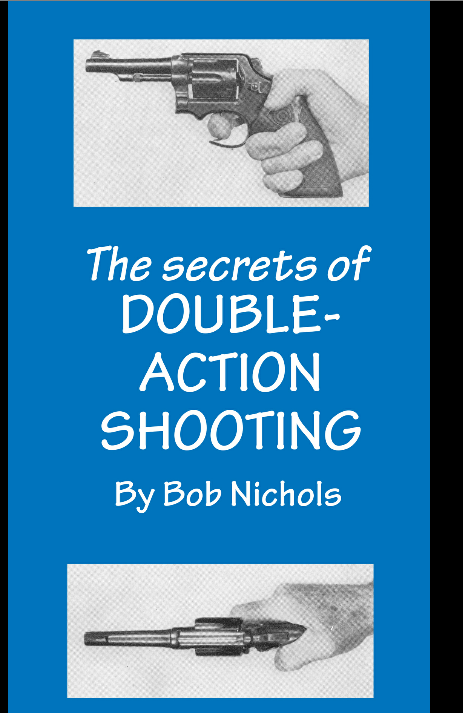
Book Review – The Secrets of Double Action Shooting (Bob Nichols, 1950)

Book cover – Secrets of Double Action Shooting

Bob Nichols published this book, “The Secrets of Double Action Shooting” back in 1950, in an era where most handgun shooting was one handed bullseye, or point shooting (unsighted) from the hip. Nichols was ahead of his time, advocating for handgunners training for personal defense to transition from thumb cocking to double action technique. The book discusses nuances of grip and trigger control in more depth than most books on shooting from the 1950’s do. It was reprinted by Sportsman’s Vintage Press, who brought it back into print in both physical and e-book format.

Nichols was convinced that the Smith and Wesson revolver design was far superior to the Colt. It’s worth noting that both the best revolver shooters of the 20th century, Ed McGivern and Jerry Miculek, accomplished all their world record feats using S&W wheelguns.

Nichols was a big fan of Lt. John D. Leppert, of the municipal police force of Saginaw, Michigan, who would shoot traditional bullseye matches, firing all his shots double action, rather than thumb cocking for each shot as was common in that era.

The ten-second interval for five shots in the conventional rapid fire stage of bull’s-eye match shooting was a laughing cinch for Lt. Leppert. He could shoot five shots in five seconds, or even faster. Leppert’s rapid fire scores were nearly always winning scores, too; and the same was true of the other double action shooters (William Peterson, Joe Rivers) mentioned here.

Nichols, Bob. The Secrets of Double Action Shooting . Sportsman’s Vintage Press. Kindle Edition.

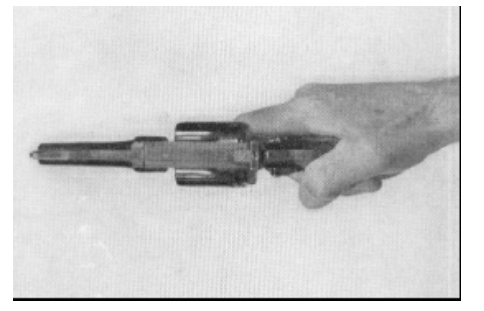
As Nichols describes it, McGivern manipulated his trigger using a smooth, continuous roll all the way through the double action. Leppert staged his trigger pull, pausing part way through the stroke with hammer at full cock, confirming his sights before finishing his trigger press. McGivern shot with the gun in a traditional grip, with the barrel aligned with the bones of the arm, recoiling into the soft space between thumb and forefinger. Leppert twisted his gun to the right, as shown in the photo.

Nichols believed that combining Leppert’s grip and McGivern’s trigger control techniques was the key to shooting the double action revolver well.

  1. In the long, smooth double action trigger pull to let-off of the shot, no “breaking glass rod” climax of single-cocked sear disengagement takes place. We are therefore not tricked into easy transgression of the first commandment of all good pistol shooting, which is: Know not the instant of thy trigger let-off. The long, smooth double action trigger pull simply “dissolves” into let-off of the shot. Result: accuracy of fire
  2. The one-digit fire control and four-digit alignment control, as in double action shooting, gives us much more positive alignment control over the pistol—especially with the added control of the trigger finger on the long double action trigger pull following the recoil disturbance of the fired shot. Result: speed of fire.
  3. Double action triggering is a technique of natural motion—which naturally blends and synchronizes with natural and unavoidable body motion, both internal and external—and which also blends and synchronizes with target motion, if any. Result: hitting, whatever the target, whether motionless or in motion—and easier hitting.

Nichols, Bob. The Secrets of Double Action Shooting . Sportsman’s Vintage Press. Kindle Edition.

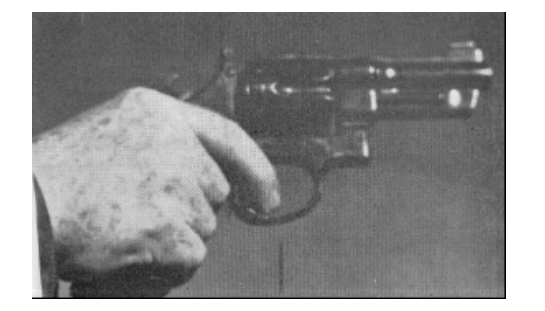
McGivern finger

Nichols’ notes that McGivern’s trigger finger was abnormally short, causing him to manipulate the trigger using his finger tip, from an unusual angle compared to most revolver shooters. This likely required a significant amount of grip strength.

Another historical fact in Nichols’ book may be the origin of a training technique still in use today. He credits with Col. Sandy McNab, during World War One, with developing the technique of having the shooter aim, and the instructor press the trigger for the student, or press the trigger while the student’s finger is resting on the trigger, so they can feel what a proper trigger press feels like. I use this technique a lot, because one repetition of this drill can convey the concept of what a good trigger press feels like more than thousands of spoken or written words can.

Nichols explains that there are two dominant modes of “one-digit fire control and four-digit alignment control”: either pinning the trigger of a Colt single action to the rear and running it purely by manipulation of the hammer, or shooting a double action revolver purely in double action mode. He felt that the awkwardness of thumb cocking, whether it was a single or double action revolver, added unnecessary complexity. Similarly, he felt that having to click off the manual safety (or rack the slide as part of the draw) made the 1911 semiautomatic’s design suboptimal as well.

Many of the arguments Nichols’ makes for the double action revolver can also be made for the modern striker fired semiautomatic pistol. Here’s his description of trigger manipulation:

With the long, smooth double action trigger pull, this sudden climax of the “breaking glass rod” single-cocked sear disengagement simply disappears. Actually it no longer exists—there is no such sudden climax, no sudden change from the static condition to a condition of abrupt motion. The long, smooth double action trigger pull simply “dissolves” into a let-off of the shot. Automatically we are thus led to obey the first commandment of all good pistol shooting, Know not the instant of thy trigger let-off.

Nichols, Bob. The Secrets of Double Action Shooting . Sportsman’s Vintage Press. Kindle Edition.

In his discussion of the “new” Commander sized 1911, he writes that

I wish Colt’s might have foreseen what a long, smooth, imitation double action take-up trigger pull might accomplish for its already cunning hitting quality. Such an imitation double action trigger take-up continued into quietly “dissolving” let-off of the shot would, I surely feel, make this new light-weight big-bore centerfire automatic the most astounding gun ever produced in its class. Such an imitation double action trigger take-up continued to quietly “dissolving” let-off of the shot should avoid completely the treacherous climax of the “breaking glass rod” trigger let-off which is inherent in all single cocking. Also, the extra realignment control of the gun from the trigger finger, following the recoil of the fired shot, should give the big-bore gun increased speed of aimed fire with better accuracy. Even with an imitation double action trigger take-up, of smooth quality, the .45 automatic could be gripped for best control, whatever the shooter’s preference in hold so long as it seemed to him secure and steady.

Nichols, Bob. The Secrets of Double Action Shooting . Sportsman’s Vintage Press. Kindle Edition.

In a later section of the book, Nichols shares his opinions on statements made by earlier authors, such as Winans, Frazer, Hatcher and Himmelwright – several of which I’ve read and reviewed in previous posts. He cites Askins’ 1939 book as the only one in which double action shooting is discussed in any detail. Nichols also discusses Ed McGivern (his book, and his shooting skills) in detail, giving some insight into how influential (or not) McGivern was in his day.

Here’s a fascinating tidbit about Colt legend Henry Fitzgerald:

Next, we come to the trigger guard. Shall the front be cut away, or not? This all depends. On a snubnose pocket gun for a civilian, yes. This cut-away front of the trigger guard was originated by Fitz of Colt’s. Fitz was a civilian. Fitz’s favorite carry was the side trousers pocket carry. When Fitz rattlesnaked his guns on his lightning double draw, his guns were lifted out of his pockets by the trigger finger, already on the trigger, already to go. Fitz carried his two big snubnose .45 FitzGerald Specials strictly as shooting man killers, not as striking weapons.

Nichols, Bob. The Secrets of Double Action Shooting . Sportsman’s Vintage Press. Kindle Edition.

Throughout the book Nichols points out that American pistol shooting has become too focused on sport, with the defensive aspects being ignored. His observations were ahead of their time, as it wasn’t until the Southwest Pistol League began developing what became known as “practical shooting” to change the focus of both sport and defensive shooting.

This book should be a “must read” for any fan of the double action revolver, and the content makes it one of the most significant books on handgunning published in the 1950’s.

KR Training June 2019 Newsletter

Welcome to the KR Training June 2019 newsletter!

We’ve added more classes to our schedule through the end of the year and into 2020. Sign up now for any classes on the schedule by clicking the “Register” link at the top of the page. Check the schedule page on the KR Training website for the full list of upcoming classes.

JULY CLASSES

After a break the first weekend of the month, we’re offering the 2-day Active Shooter/School Safety training July 13-14. If you aren’t seeking DPS certification, you can opt to attend only the lecture portion of the class at no charge. The lecture portion is suitable for armed or unarmed civilian response and will be followed by a FREE, 2-hour Stop the Bleed course.

Complete classes toward your Defensive Pistol Skills Program Challenge Coin. Check the schedule for class availability.

This summer is a prime opportunity to begin our Defensive Pistol Skills Program and begin earning your challenge coin. KR Training Instructor John Daub will teach Personal Tactics Skills July 27, Defensive Pistol Skills 1 August 17, then Top 10 Drills August 27. Top 10 Drills runs students through the 10 drills John and I identify in our book as an essential training set, and it counts as elective hours toward your challenge coin.

SUMMER USPSA MATCHES

Our summer USPSA-format matches continue most Wednesdays through Labor Day. Anyone that has completed DPS-1 or other classes using a holster can attend and new shooters are welcome. Details and dates here.

PRIVATE TRAINING AVAILABLE

I am available for private lessons on weekdays. Contact me to schedule.

BLOG-O-RAMA

Here’s a list of links to articles we’ve shared so far in June. See links as we post them by following KR Training on Facebook or Twitter.

If you aren’t already a subscriber, to receive this newsletter each month, subscribe here or follow this blog (right) for more frequent posts and information. You can also follow and interact with us on Twitter or Instagram.

We look forward to training you!
Karl, Penny and the KR Training team

Tactics and Shooting Matches

Awhile back I posted this as part of an online discussion about “tactics” and shooting competition.

Those that worry about “tactics” at matches usually haven’t shot enough matches, or gotten good enough at matches, to understand what is going on. The shooters that win at major matches are good at looking at a stage, quickly coming up with a stage plan, visualizing that stage plan to the level that execution becomes automatic when the “go” signal is given, with efficient action and superior marksmanship. You could take someone good at those skills and give them a stage that has whatever “tactics” you like, and they will still do well at it, as long as you give them the rule set they need to follow.

The point was that there’s a skill unique to competition shooting that is separate from the fundamental skills themselves. To use a music analogy, it’s the difference between being good at playing scales and doing a recording session where you get sent a MP3 file of the part of the song you are to play on an hour before the session. You listen to it on the way to the studio, and think about what you are going to play, and you get one take to record the solo. Someone that is only good at playing scales is not going do as well as someone that has practiced that specific skill.

Those that are very good at shooting USPSA, IPSC, and IDPA matches have learned how to “overlearn” something very quickly, using visualization, to the level that their first actual run at it is flawless (or at least executed with minimal errors). You can’t learn that skill just by shooting matches. That skill has to be developed by setting up stages and practicing that part of the process. It’s a level of training separate from simple skill development which is what is taught in most ‘tactical’ handgun courses.

Does the skill of being able to quickly develop a plan, “overlearn” it, and execute it well on the first try matter for self-defense? Some examples where it might:

  1. Home intruder response when you and those you care about are in typical/known locations.
  2. Active shooter response when you are at a frequent or familiar location such as at work or church or school.
  3. An “armed movement in structures” situation where you need to move quickly from location A to location B (for example your bedroom to a child’s bedroom).

The elements of the over-learned plan will be different from a competition course of fire. It will likely involve communication, and shoot/no-shoot decisions that may depend on what you encounter. But in those situations, having more of your plan worked out and over-learned in advance frees up brain cells for paying attention and making decisions in the moment.

The flip side of this issue is that being good at executing pre-programmed sequences of target engagements does not develop the skill of changing your actions based on rapidly evolving situations. Returning to the music analogy: being good at sight reading sheet music you haven’t seen before is not the same as being good at improvising.

In the never-ending, low-information online debates about the value of competition shooting for self-defense training, the focus is always on the details of the preprogrammed actions: when you should reload, use of cover, what order to shoot the targets in, when or if you should drop magazines on the ground, and that sort of minutia. I don’t think those things are as important as understanding the difference between sight reading and improvisation, and the value of each of those skills for self-defense.

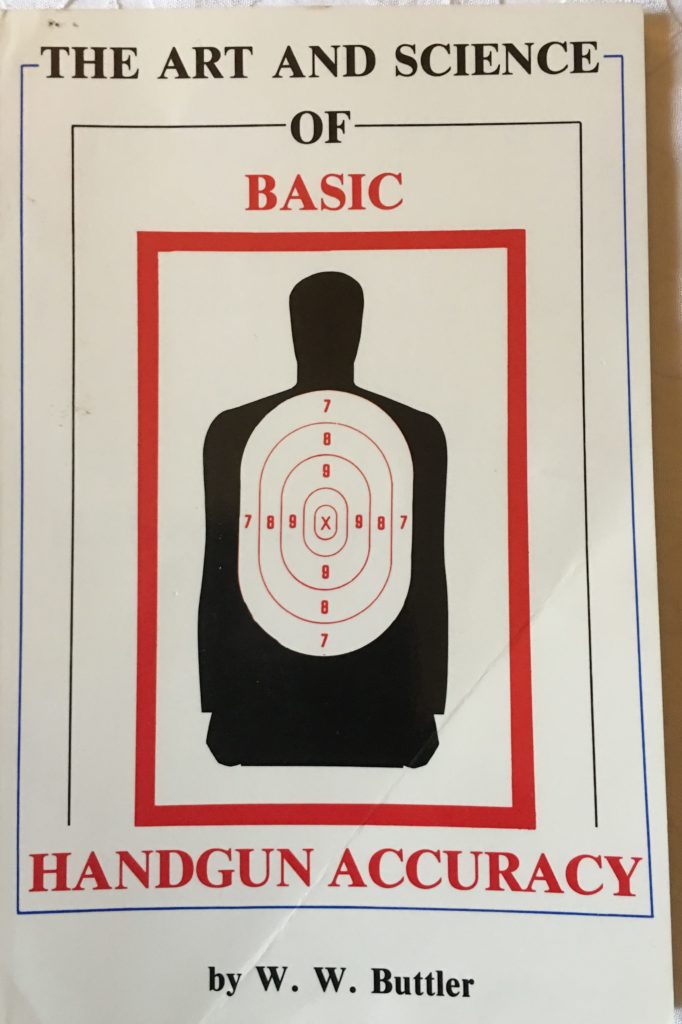
Book Review – “The Art and Science of Basic Handgun Accuracy” (W.W. Buttler, 1991)

The book “The Art and Science of Basic Handgun Accuracy” was published by W.W. Buttler in 1991. According to the book, Buttler was a Federal Air Marshal at the time the book was written. He was also a graduate of the Chapman Academy, the Caliber Press Officer Survival School, and many other programs, and an instructor certified by the NRA, FBI, and State of Missouri.

The book is a solid but brief (72 page) summary of what was being taught by most schools at that time. In its day it would have been a useful handbook to use in teaching basic and intro-level defensive pistol courses.

The book’s chapters are:

  1. Handgun Safety At Home on the Range
  2. Glossary of Terms – Handgun Nomenclature
  3. Out of the Box
  4. The Grip
  5. Sight Alignment
  6. Review
  7. Dry Firing – Putting it all together
  8. Recoil Acceptance and Control
  9. Live Fire
  10. Target Analysis
  11. The Stance
  12. Cleaning and Routine Maintenance
  13. Summary

Buttler’s discussion of handgun safety includes two different lists of 10 rules. All of the rules listed are good advice about safety, but this certainly serves as an example of the sort of confusion and excess advocates of Jeff Cooper’s 4 rules (and later the NRA’s 3 rules) point out as the reason for simplifying the safety rules.

The handgun nomenclature section covers both revolvers (S&W double action) and semi-automatic (1911 style). For the most part, all discussion of semi-autos is 1911-centric, aside from one picture of a field stripped Glock in the gun cleaning section.

Pros and cons of both revolver and semi-auto are presented in the “out of the box” chapter on gun selection, and the classic Weaver, as well as the thumb over thumb grip/Isoceles arm position are taught. The importance of dry firing is emphasized throughout the book.

Many photos show the author coaching a uniformed police officer, leading me to infer that the primary purpose of the book was for police academy use. Some discussion of pancake holsters for concealed carry is included.

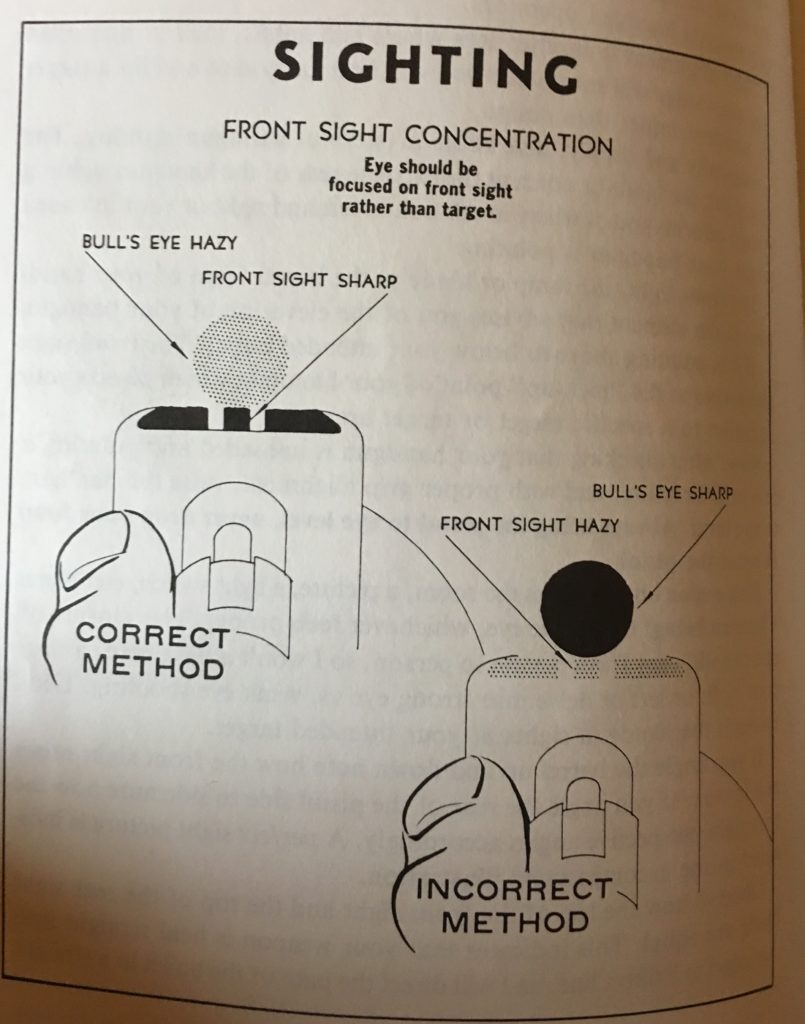
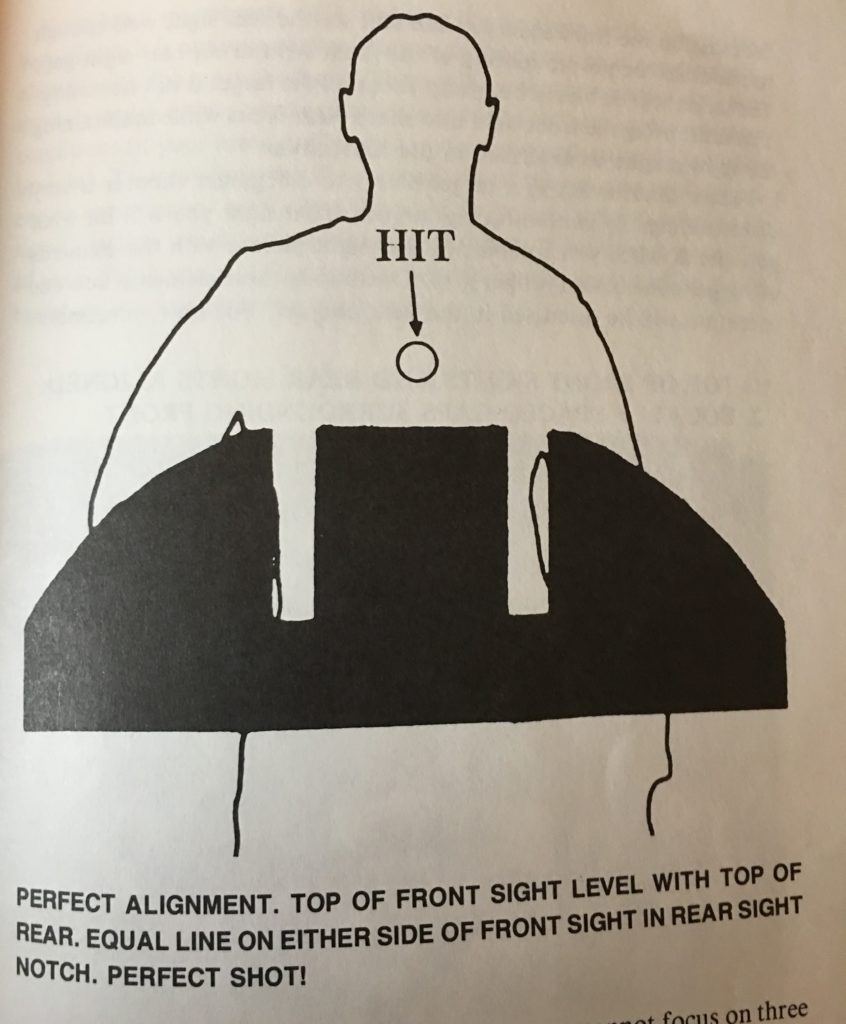
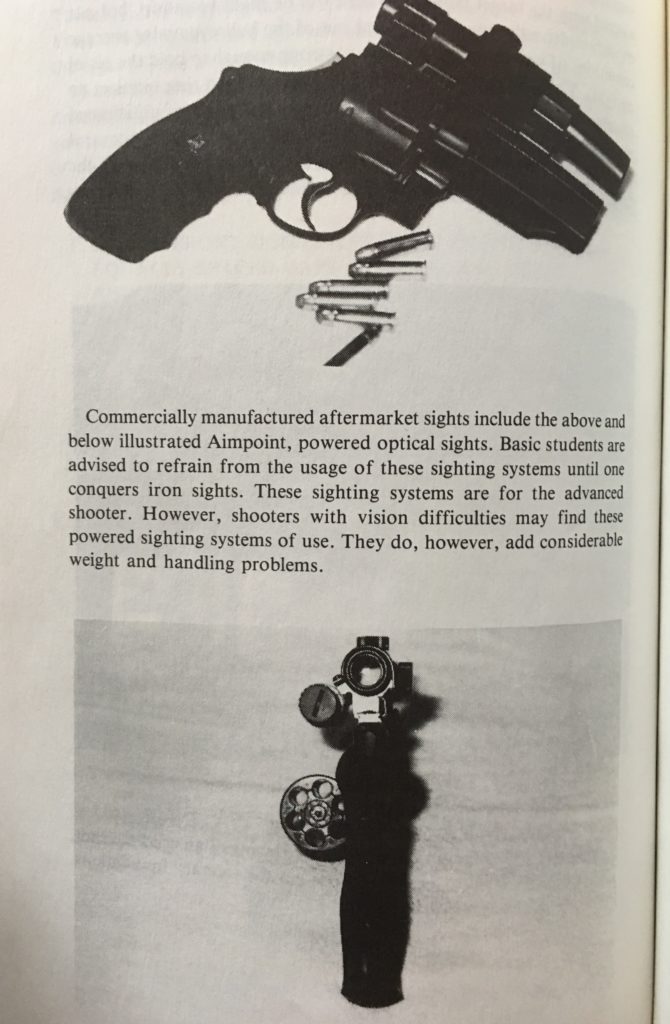
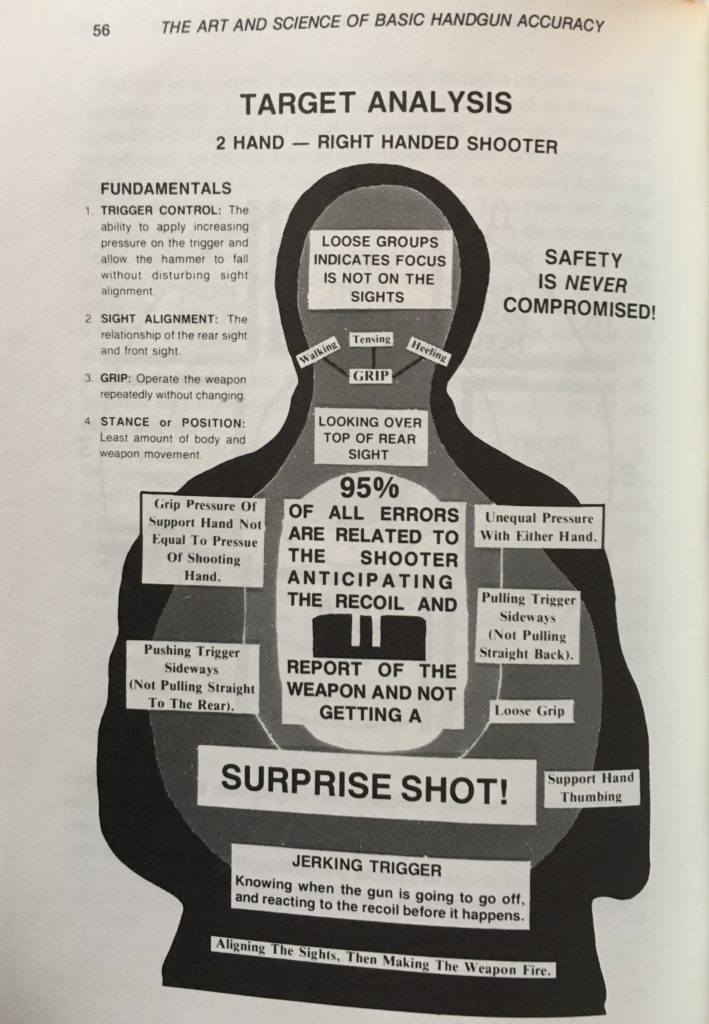
Below are a couple of pages that I thought were noteworthy or interesting.

This was a nice graphic showing proper visual focus.

This graphic showed proper sight alignment and sight picture relative to the human anatomy.

Back in 1991, people were putting red dot sights on handguns.

This target analysis graphic is much better than the standard one that is widely distributed.

Nothing in this book is revolutionary, but it was an interesting snapshot of what was considered correct information for beginning shooters in the early 1990’s. Both this book and the author’s 1993 follow up, “The Armed Option: Zen in the art of combat pistolcraft” are out of print, but used copies are available from used booksellers. I found mine at a used bookstore in Loveland, Colorado (and I paid more than I would have had I ordered one from one of the used sellers on Amazon).

STI Factory Tour

From assistant instructor Tracy Thronburg:

STI FACTORY TOUR

07 June 2019

By Tracy Becker Thronburg

The north and south Austin chapters of A Girl and A Gun were fortunate to get to tour the STI handgun factory on a recent Friday in June. There were approximately 22 AGAG members in attendance. Dustin Tackett, a regional sales manager for STI, led us on the tour.

STI is housed in two large warehouses in an industrial park in Georgetown, Texas. One warehouse fabricates slides, while in the other warehouse, located across the street, the frames are built and the gunsmithing done.

STI was founded by Sandy Strayer and Virgil Tripp. It should be noted that I am a die-hard 1911 girl, and for many years STI made a quality 1911s, however, much to my disappointment, STI no longer makes 1911s, focusing their production only on 2011s. I asked Dustin why STI no longer makes the 1911, and his answer was that “they” felt that the market was saturated with 1911s, so “they” decided to turn their focus to making modular 2011s. I told Dustin that I own three STI 1911s, all of different models, and that I am saddened that they no longer make the 1911. My STIs run flawlessly and I shoot them well – having shot them exclusively for both of Tom Givens’ Rangemaster instructor/advanced instructor courses and all of the advanced classes with the Massad Ayoob Group. My favorite STI 1911 is the Trojan with a short trigger and a slim magwell. Oh well, too bad for me. My options are a Staccato C (which is a single stack) or a 2011 with a short trigger put in it.

STI currently employs 69 folks to build their guns, with the employees being cross-trained on different aspects of building their guns.


I inquired as to whether or not STI still has their custom shop, because I recently noticed on their website that the custom shop was not accepting new orders. I was told that, in fact, STI does not have a custom shop anymore, and the two gunsmiths who used to build the custom-order guns were now working to help build their stock 2011s. So, the days of custom STI builds are of the past and you will have to send your gun to someone else for customization, should you so choose.

The grips for STI’s 2011s are injection molded, made at an outside facility, and finished in house. The bluing for STIs is also not done in house, although Dustin did mention that something is in the works to bring that process back in house. The magazines for STI guns are also not made in house.

We had the opportunity to look at several different 2011s in various configurations, including the Staccato C, the Staccato P, a DVC 3, a DVC S, and a DVC O. The DVC O, their race gun, was described by one of the ladies as looking like something out of Star Trek or Star Wars with the compensated barrel and frame-mounted red dot.

As we were finishing up our one-hour-long tour, one of the ladies asked if STI test fired their guns before shipping them out for sale. Dustin told us that yes, each gun is test fired in the CONEX behind one of the warehouses, and that three magazines of ammo are run through each gun. One magazine is fired slowly. One magazine is fired fast. One magazine is fired for accuracy.

For their guns that come with iron sights, I was happily informed that Dawson Precision is the exclusive provider of sights for STI. In fact, Dawson Precision has sold more STI products than anyone on the planet.

We had a great time on the tour and look forward to STI bringing out some guns for an event day with the local A Girl and A Gun chapters. Thank you, STI.

Student incident AAR

I recently received this email from a student, relating an incident involving a potential robbery in a Home Depot parking lot. He’s given me permission to share his original email and excerpts from our discussion of it, with his name omitted.

Well, I actually had to use escalation/de-escalation verbal and physical skills yesterday, skill sets I’ve actually practiced from your courses.

I drove over to a nearby Home Depot to pick up a few replacement faucets for our kitchen and bathrooms.  As I usually do, I prefer to park some distance away from the store entrance/exits (easier to get in/out of parking lot traffic and to avoid pedestrians) but not too far from the return cart receptacles.

Pulling up next to a green space, I noticed and man (mid 40s) eyeing me, smoking a cigar, and just loitering around as if waiting for someone; just seemed out of place.  After being in the store for 20 minutes or so, I’m on my way out.  I have to park the shopping cart in front of my truck as there isn’t enough room between it and the green space.  Then that same man comes jogging up to me as I’m picking up the boxes and placing them in my truck.

Immediately closed my door and punched the keylock.  Side stepped and extended my left hand with the a stop gesture.  He started feeding me lines of how he was a contractor and wanting to know what I payed for faucets all while slowly kept creeping forward and reaching into my cart and foundling my newly acquired property.  My cart is between me and him.  I’m about 10 feet away.  I gave him very direct verbal commands to back off, go inside and check things out yourself.  Feeding me more lines (can I take pictures of their part numbers…let me help you carry these) and not dropping my property, I went into position one while verbally ordering him to back off and to get away.  I quickly checked my six, noted a heavy set woman near my truck and in very hurried manner walking away.  I went right at the guy, I slapped the boxes out of his hands with my left hand – he got the message then and walked off.  Though I went to position one*, I never revealed my firearm.

He disappeared into the sea of parked cars.  I let a minute or so pass by before proceeding again with the normal load up the merchandise and go home routine.  Returning the cart, I caught eye of him again, this time sitting in a parked older junk Toyota sedan that has seen better days.  There is, I believe, the same heavy set women I had noted when I checked six o’clock.  There was two of them. Their body language, gestures, and faces informed me the she was emotionally upset and that he was very agitated. They both had that homeless person look about them, appearance, clothing.  The back seat of their old Toyota was full of junk and he just couldn’t get the engine to turn over.

Back to my truck, got out of there ASAP, made sure I wasn’t being followed.  I didn’t call the police because I never showed my firearm and he never acted aggressive.  I’m 99% positive he was trying to distract me, pull me into conversation so his lady friend could quietly snatch and grab the items I had just placed in the back seat.  My immediate actions of closing the door, hitting the key lock, side stepping, clear concise verbal and non-verbal actions, and the posture of position one all worked into my favor.  For improvement, I should have checked six sooner for a possible accomplice – his oddball conversation did distract and held my attention too long.  And I should have called the cops to make a report.

Living near and working within Houston, having a stranger approach you in a parking lot for a handout is about a twice per year event for me.  I’m going to see if I can get access to security recordings, if possible.

I can say that your training regimen, without doubt, added to my ability to handle the situation.

*Note: “position one” refers to the start of the drawstroke, where a firing grip on the pistol is established while the pistol is still in the holster.

When I’ve had similar incidents occur, as soon as I was on the road away from the scene, I’ve called the non emergency police number (which goes to the 911 dispatcher) and reported the panhandling / suspicious person to the police, with a description. My response to him included discussion of how pepper spray might have been another option. His response:

I purchased Sabre Red some time ago based upon your class recommendations.  However, I had it sitting inside the center console within my truck.  I’ll be keeping it on my person as it may have been the better tool for this situation.

I’m actually going back to Home Depot this afternoon to pick up more plumbing supplies; I’m taking my time stamped receipt and will ask for the manager to advise them of the experience.

Having a couple of days to evaluate; I was never nervous – I don’t believe my heart rate ever accelerated.  It just happened.  I did lag a bit in my responses because in my mind I was debating with the “is this really happening…it can’t be happening?” kind of thoughts.

Our upcoming Personal Tactics Skills course is suitable for both armed and unarmed individuals. It teaches management of unknown contacts and interaction with strangers in public places, including around vehicles. That 3-hour class is one of the required courses in the Defensive Pistol Skills challenge coin program. The class will be indoors (mostly) in air-conditioned classroom the afternoon of July 27, 2019. This incident is a great example of why non-shooting skills are important and how they can be applied.

KR Training May 2019 Newsletter

Welcome to the KR Training May 2019 newsletter!

We’ve added more classes to our schedule through the end of the year and into 2020. Sign up now for any classes on the schedule by clicking the “Register” link at the top of the page. Check the schedule page on the KR Training website for the full list of upcoming classes.

Join Caleb Causey of Lone Star Medics and Karl Rehn for 1.5 days of firearms and medical scenario-based training June 1-2, 2019. Test your skills and knowledge under pressure!

OPERATION ANALEPTIC

On June 1-2, KR Training and Lone Star Medics will offer a 1.5-day special event called Operation Analeptic with 2 instructors (Karl Rehn, Caleb Causey). This event integrates medical, firearms and tactics skills in scenario-based training. This event is suitable for those with training in holster use and a minimum of Stop the Bleed level medical training. Registration is open now. We have 5 slots remaining in this course. We’ve dropped the price to $325 since we scaled the event back to a 2-instructor, smaller class size event.

JUNE CLASSES

We have added a LOT of classes to our June schedule, including a new class, Top 10 Drills, that runs students through the 10 drills John and I identify in our book as an essential training set. The Top 10 drills class counts as elective hours toward your Defensive Pistol Skills challenge coin.

We are also hosting Hank Fleming to teach a 3-hour Glock Maintenance course.

June 22 we are running multiple sessions of Handgun Coaching, including two ladies-only sessions for those wanting individual attention, and a Texas License to Carry class. Having one or more family members get their carry permit and/or some handgun coaching might make a great Father’s Day gift.

SUMMER USPSA MATCHES

In addition to everything else we have going on this summer, we’ll be running USPSA format matches most Wednesdays through Labor Day. Anyone that has completed DPS-1 or other classes using a holster can attend and new shooters are welcome. Details and dates here.

LEE WEEMS VISIT

Lee Weems is part of the Rangemaster team of instructors, and he’s also Chief Deputy for his home county’s sheriff’s department in Georgia. Four of the top 5 scores on the Rangemaster Casino drill have been shot by deputies in his department who train with Lee on a regular basis. I’m hosting Lee to teach two classes at the end of June.

Social levergun/pump shotgun can be taken with either a lever gun (rifle or pistol caliber) or a pump shotgun. Manually operated guns are still popular, widely available, and will likely survive any future “assault weapon”/semi-auto long gun ban. Understanding how to run these guns well is a useful skill for any shooter. Trained shooters often end up coaching less trained or untrained friends and family to use these guns, so learning the best techniques is good information to have. If you have one of those guns in your own closet or gun safe and haven’t gotten to shoot it in a while, this will be a fun class with an entertaining and very smart instructor. Join us Saturday, June 29, for this class.

Deliberate Speed Pistol is a one-day pistol class teaching how to “shift gears” (similar to my Beyond the Basics course). Most people fire every shot with the same quality of sight picture with the same speed of trigger press. That is NOT what top shooters do. They do less sight picture for close/big targets, and more sight picture (slower, more precise) for longer, harder shots. Lee’s class is a full day developing that essential skill. We have a few slots left in that course scheduled for Sunday, June 30.

ACTIVE SHOOTER TRAINING

In response to multiple recent active shooter events, I have scheduled a 2-day session of the state-certified Active Shooter course for July 13-14. I am certified to teach the ALERRT Civilian Response to Active Shooter Event (CRASE) lecture course. That lecture material is part of the full 2 day DPS course. Those who only want the lecture course without state certification are invited to attend the FREE lecture on Saturday, July 13. The lecture course is appropriate and relevant to both armed and unarmed individuals. Stay after the CRASE course for a FREE Stop The Bleed course.

PRIVATE TRAINING AVAILABLE

I am available for private lessons on weekdays. Contact me to schedule.

BLOG-O-RAMA will return in a future newsletter. The easiest way to keep up with the articles we share each week is to follow KR Training on Facebook or Twitter to see those links as we post them.

If you aren’t already a subscriber, to receive this newsletter each month, subscribe here or follow this blog (right) for more frequent posts and information. You can also follow and interact with us on Twitter or Instagram.

We look forward to training you!
Karl, Penny and the KR Training team
Book Review – “A System of Target Practice” (Henry Heth, 1858)

The book “A System of Target Practice”, written in 1858 by Henry Heth and published in 1862 by the War Department, is cited as the US military’s first marksmanship manual. Heth graduated from West Point in 1847 and fought for the Confederacy during the Civil War.

The full text of the book from archive.org is here. A scan of the book’s pages can be found here.

The book is basically an instructor’s guide on how to teach others the skill of shooting muzzleloading rifles in combat. It includes “modern” concepts such as benchrest shooting, dry fire (using caps and blank cartridges), and use of reactive steel targets. The author claims that in 1856, using the no-live-fire training methods described in the book one unit produced a 300% improvement in shooting skill without firing a single ball.

It discusses long range shooting (at 200 yards, aim at the head, at 150 aim at the throat, 100 aim at the chest) as well as volley fire and shooting in relays.

While the book doesn’t specifically address pistols, all the concepts of marksmanship apply, from the detailed instructions on how to teach trigger press to explanation of aiming and trajectory. The book defines some very basic standards (Heth’s version of “minimum acceptable”) for soldiers, and defines a rating system where awards can be given for good scores.

Most of my research into the history of handgun shooting technique is focused on 20th and 21st century material, but this book was an interesting short read and a reminder that the basic concepts and methods of firearms instruction have been around for centuries.

KR Training April 2019 Newsletter

Welcome to the KR Training April 2019 newsletter!

May and June classes are filling quickly. We’ve added more classes to our schedule through the end of the year. Don’t miss the opportunity to sign up now for any classes on the schedule. Check the schedule page on the KR Training website for the full list of upcoming classes.

MAY CLASSES

On May 25 we are offering multiple FREE sessions of the Stop the Bleed course, in honor of May being Stop the Bleed month. Come out for one or both of the shooting classes, and attend a Stop the Bleed session before or after the live fire class at no additional cost. Thanks to Levi Nathan for volunteering to offer this training.

FREE SEARCH AND RESCUE COURSE

On Thursday May 30 and Friday May 31, we are offering a session of the DHS-funded FREE class: Search and Rescue for Community Responders. This class teaches skills you would use as a volunteer assisting professional search and rescue teams. It’s 1.5 days, finishing up at Noon on Friday. From 1-3 p.m. that day immediately after class, Paul Martin will offer a FREE Stop the Bleed session. Click here to register.

OPERATION ANALEPTIC

On June 1-2, KR Training and Lone Star Medics will offer a 1.5-day special event called Operation Analeptic with 4 instructors (Karl Rehn, Caleb Causey, Dr. Sherman House and Eli Miller). This event integrates medical, firearms and tactics skills in scenario-based training. This event is suitable for those with training in holster use and a minimum of Stop the Bleed level medical training. Registration is open now.

JUNE CLASSES

We have added a LOT of classes to our June schedule, including a new class, Top 10 Drills, that runs students through the 10 drills John and I identify in our book as an essential training set. We are also hosting Hank Fleming to teach a 3-hour Glock Maintenance course.

June 22 we are running multiple sessions of Handgun Coaching, including two ladies-only sessions for those wanting individual attention, and a Texas License to Carry class. Having one or more family members get their carry permit and/or some handgun coaching might make a great Father’s Day gift.

SUMMER USPSA MATCHES

In addition to everything else we have going on this summer, we’ll be running USPSA format matches most Wednesdays from Memorial Day to Labor Day. Anyone that has completed DPS-1 or other classes using a holster can attend and new shooters are welcome. Details and dates here.

ACTIVE SHOOTER TRAINING

In response to multiple recent active shooter events I have scheduled a 2 day session of the state-certified Active Shooter course for July 13-14. I recently got certified to teach the ALERRT Civilian Response to Active Shooter Event (CRASE) lecture course. That lecture material is part of the full 2 day DPS course. So those that only want the (shorter, cheaper) lecture course (with no state certification) are invited to attend the FREE lecture on Saturday July 13. The lecture course is appropriate and relevant to both armed and unarmed individuals. Immediately following the CRASE course will be a Stop The Bleed course.

KR Training Standards Book Now Available

John Daub and I published a book in March. Signed copies are available at the A-Zone for $15, or we will ship you one for $20.

A Girl and A Gun Conference 2019

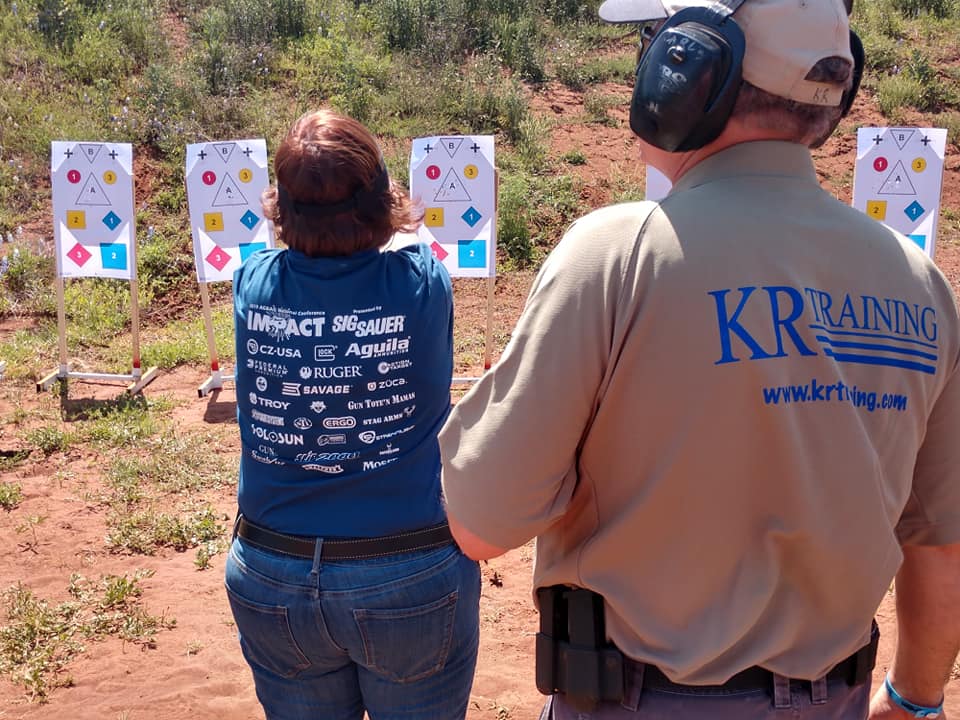
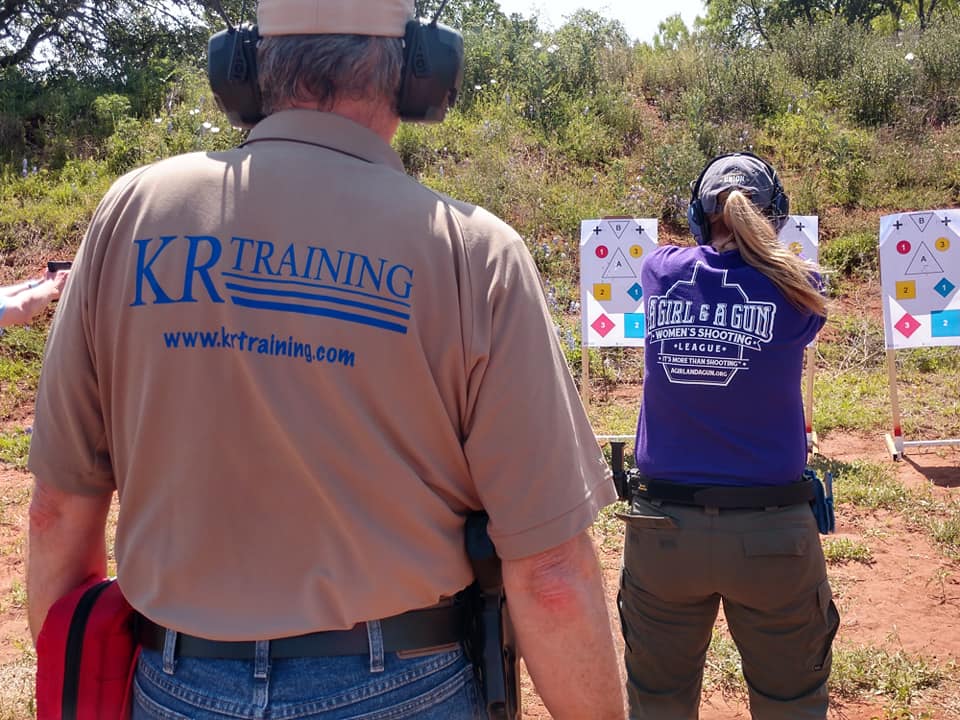
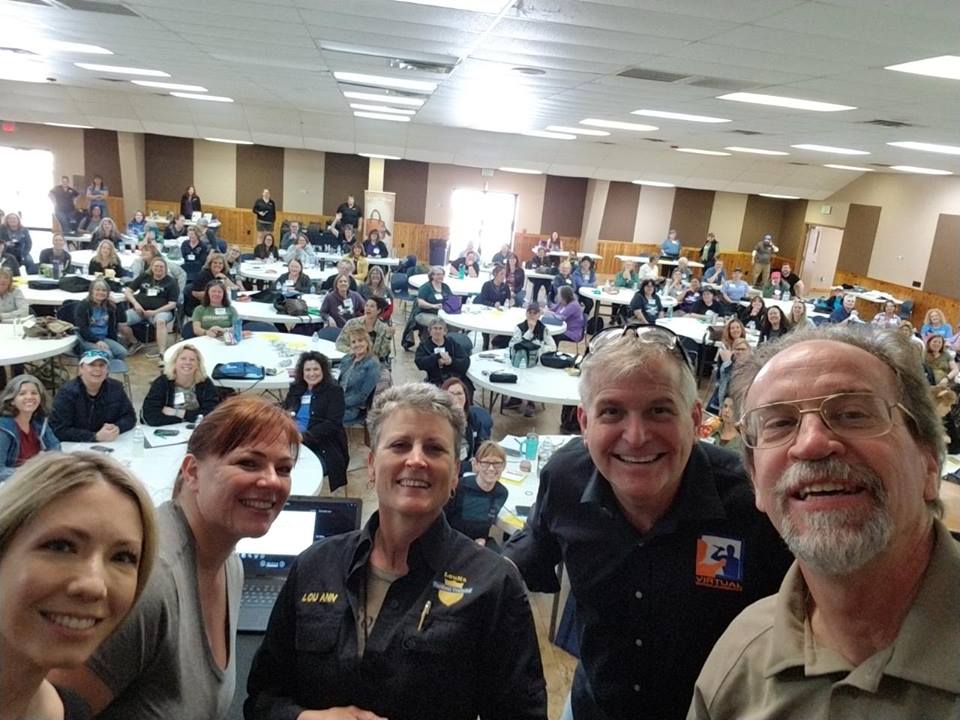
Multiple instructors from the KR Training team presented training at the annual A Girl and A Gun national conference in April. We posted reports from the conference here and here.

PRIVATE TRAINING AVAILABLE

I am available for private lessons on weekdays. Contact me to schedule.

BLOG-O-RAMA

You can also follow KR Training on Facebook or Twitter to see our favorite blog content from other authors as we post it. Want to see articles we’ve shared? Follow KR Training on Facebook where we post the links when they are fresh and current.

If you aren’t already a subscriber to receive this newsletter each month, you can subscribe here or follow this blog. You can also , Twitter, Instagram, or subscribe to this blog for more frequent posts and information.

We look forward to training you!
Karl, Penny and the KR Training team

The “Reloading Pause” Fallacy

Since the 1990’s, gun control advocates have insisted that reduced capacity magazines (limited to 10 rounds) were “safer”. The most recent set of talking points relate to active shooter incidents. The claim is that by requiring the active shooter to reload more often, this creates an operational “pause” in which untrained, unarmed people can rush and disarm the shooter.

In the Force Science certification course I just attended, they shared a lot of time measurements made on various movements. Their numbers track the numbers we put together in our recent book, and timing values common to shooting qualification courses. I decided to evaluate the “reloading pause” concept using the FSI information.

Summary

Time to reload an empty gun and fire one shot at 20 feet (approx 7 yards): 2.0-5.0 seconds, for average to novice skill level.

Time for a standing person to move 20 feet with no obstructions: 1.4-2.0 seconds.

Time to get up from a sitting, prone or crouched position and move 20 feet around obstructions: 3.0-5.0 seconds.

Time to draw and hit a target at 20 feet: 1.5-3.0 seconds, depending on skill level. Times are even faster if the gun is already in hand.

Hit probability: 77% or higher depending on skill level.

Conclusion: drawing and shooting is as fast or faster than the tactic of an unarmed person trying to charge at an active shooter during a reload.

Notes: The draw-and-shoot response can occur immediately. If the defender has to wait until the active shooter is reloading, the possibility of more deaths and injuries increases. If the defender shoots from a position of cover at a distance from the active shooter, the odds of the defender being shot are much less than the risk they will be shot at point-blank range if the defender completes the reload before the defender can close distance and attempt to disarm them.

Discussion in depth

How long does it take the average person to reload a pistol from slide lock? Here’s a video from our range safety briefing, showing a basic old-magazine-out, new-magazine-in, rack-the-slide reload. As part of our Three Seconds or Less test, we require students to seat a magazine, rack the slide and fire one shot at 7 yards in 3 seconds. Most complete this task in the 1.5-2.5 second range.

The actual reload process begins when you realize that you need to reload. In FSI terminology, response time is reaction time plus movement time. So reaction time is 0.3 seconds, maybe longer. Call the typical “slow” reload from slide lock 4 seconds total – maybe 0.5 second reaction plus 3.5 sec to complete the task. Skilled shooters can easily do this in half the time (1.5-2.0 seconds).

On the defender side: they have to realize that the shooter is out of ammo and then decide to take action. The absolute best case reaction time is 0.3 seconds, assuming the defender is waiting for that pause and has already made the decision to act.

If we assume the person is standing up (unlikely), they can cover 20 feet (essentially 7 yards) in 1.4 seconds. That means someone standing up, poised and ready to pounce, could get to the shooter in under 2 seconds, before they complete their reload. What do they do when they reach the shooter? None of the “training for unarmed people” programs promoted by government teach weapon disarm skills beyond a vague “fight any way you can” directive. Maybe the unarmed defender did some weapon disarms in their karate class a few times, against an opponent that wasn’t resisting (since many techniques can cause serious injury if performed at full power against a resisting opponent). Unless the training was recent and/or was performed enough times to make the skill automatic under stress, what’s likely to occur is the “technique of no technique”.

That timeline is an extremely optimistic best case scenario that assumes every possible advantage is available to the defender. Starting from a seated, crouched or prone position is going to add as much as a full second to the response time – before a single step forward to close distance is taken. Add the typical array of furniture and possibly other people that might have to be stepped around or over, and the time to move that 20 feet could easily double. That means total response time could be as long as 0.3 (reaction) + 1.0 second (get up) + 2.8 seconds (move around obstacles). That’s 4.1 seconds–slower than the 4 second “slow reload for an average shooter” time.

The typical active shooter spends significant time planning his special day, studying prior events, buying gear, and in many cases putting in range time. If a potential active shooter knew he was going to be limited to 10 round magazines, learning how to do a faster reload (by watching youTube videos) and putting in some time to practice that skill would likely be part of their pre-event work. So assuming that the active shooter will have a 4 second clumsy reload is an extremely unrealistic assumption.

For any of these scenarios to end with a successful defense requires some unarmed person in the room to be mentally prepared and committed to action. Adding any amount of hesitation prior to movement only increases the chance that the shooter will be able to complete the reload and fire on the advancing defender before they can reach him.

Why not just shoot back?

If we assume that someone in the room has the mindset and is willing to act, why not look at alternatives that solve the problem faster with lower risk to the defender? Another common talking point from the gun control movement is that a carry permit level armed person will be incapable of making a 7 yard shot under life threatening stress.

FSI’s study on the “naive shooter” shows that hit probabilities for “novice” shooters, in the 1-5 yard (3-15 feet) zone, are as high as 77%, increasing as skill level increases. Texas requires carry permit holders to shoot at 15 yards (45 feet), and armed teachers must pass the carry permit shooting test with a score of 90% or higher. In 20 years of observing thousands of gun owners shoot the Texas carry permit test, complete misses on the target at 7 yards are extremely rare. The Texas carry permit course includes NO additional range time improving handgun skills, and most taking that course have had no prior formal handgun training. In this video, the Texas LTC course is shot (and passed) blindfolded.

Shooting across a room, from cover, minimizes the risk that the defender will be shot. Will they have time? If a committed defender can be poised and ready to pounce when the active shooter starts a reload, why can’t the armed defender have drawn and be ready to fire, gun in hand, as soon as the active shooter is within range — BEFORE the shooter has fired the rounds necessary to empty the magazine and create the “pause” for the unarmed defender to counterattack?

Typical times for a carry permit level shooter to bring the gun from ready to target and get a hit are anywhere from sub-1 to 3 seconds. The Texas carry permit test uses one shot in 3 seconds, and two shots in 4 seconds at 7 yards as standards. Most students shooting the test are done firing before the time limit is reached. In our Three Seconds or Less test, students have to start with hand on their holstered gun, draw and fire 3 shots in 3 seconds at 7 yards.

FSI’s own studies show that someone with a gun in hand, from a prone position, can get the gun on target and fire one shot in under 1 second.

If you watch any of the thousand-plus videos of actual armed encounters on the Active Self Protection youTube channel, you’ll notice that a very common reaction to being shot at is to run or move to avoid being shot (or shot again). Even if the active shooter isn’t struck by the first shot or shots, the likelihood that they will break off their attack on occupants of that room is very high.

If the armed defender doesn’t begin to draw until the active shooter has started to reload, a 2 second draw to first shot from concealment is not difficult for the average person to perform. In our 4 hour Defensive Pistol Skills 1 class, the vast majority of students are able to meet that time standard. Starting with hand on the gun (concealment garment out of the way) can cut draw time in half, down to under 1 second. So even if the armed defender takes no action until the active shooter starts to reload, drawing and shooting back is going to a faster response in most cases — and more effective.

The real advantage of the draw and shoot back response is that is does NOT require a “reloading pause” and can be done immediately.

KR Training assistant instructor John Daub wrote about this issue back in 2016. His thoughts on this topic are relevant and worth a read.

Hopefully this analysis will help you understand (and explain to others) the time factors involved in the “reloading pause” fallacy. Allowing (and encouraging) armed response, not reducing magazine capacity, is the solution most likely to bring an immediate end to an active shooter’s mass killing. The idea is difficult for those with limited or no experience with firearms or tactics to accept – particularly those that have a confirmation bias toward gun control. The ‘reloading pause’ fallacy comes up as a talking point each time the idea of magazine capacity restrictions is advanced. Perhaps this analysis will be useful for those arguing against those restrictions.

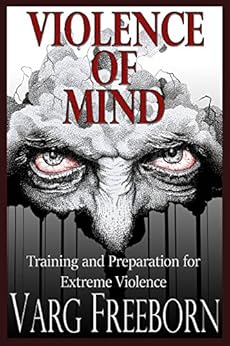
Book Review – Violence of Mind (Varg Freeborn)

Through all my experiences on both sides of the tracks, I have accumulated the widest range of violence experience and training that I have ever heard of anyone having for the narrow lane of civilian criminal violence.

Freeborn, Varg. Violence of Mind: Training and Preparation for Extreme Violence . One Life Defense LLC, Varg Freeborn. Kindle Edition.

I bought this e-book based on Greg Ellifritz’ recommendation. According to his website, Varg Freeborn is an author, self-defense and gunfight instructor, lethal force educator, fitness coach, a father and a family man.

Varg’s written an excellent book on mindset and human behavior, sharing his observations and perspective on violence and what it takes to be prepared for a violent situation. It’s presented in blunt, plain talk. No acronyms, no cool phrases, no sheepdog/military/cop lingo.

The first section of the book is all about “mission”. What is your mission, and how it can change in various situations. Understanding your limits, responsibilities and universal legal concepts. He writes about prison from the perspective of an inmate. Most books on self-defense ignore or downplay the possibility that use of violence in self-defense could lead to jail time. The typical armed citizen is unlikely to have firsthand (or even secondhand, through a friend or family member) prison experiences like the ones Varg writes about in the book.

He closes the first section with a chapter on risk assessment. One of the concepts he emphasizes is learning to look for, and react to, abnormalities — something you notice that seems out of place. Learning to see those things and change your behavior in reaction to them is important for avoidance as well as survival.

The second section is all about training. Principles, skills, standards, techniques, tactics, testing, and validation. He emphasizes the value of “woodshedding” (putting in lots of practice out of public view) to develop skills and encourages people to turn off the ‘selfie machine’ that drives many to concentrate more on getting a perfect take to post on Instagram than on actually improving during a practice session.

He includes a long section on how to choose an instructor, discussing the different types of backgrounds and mindsets instructors can have: not just the usual mil/LEO/competition split, but the differences in individual performance, whether they train with others outside their primary expertise, whether they continue to develop their own skills, and other elements. His opinions in that section closely match my own thoughts on that topic.

The final section on “Conditioning and Orientation” covers physical and mental conditioning. It starts with the usual “spend more time in the gym so you are harder to kill” material and progresses to a discussion of mindset and mental preparation. The final chapters deal with concealment and daily considerations – how to be armed and prepared without being an abnormality when you are out in public.

It’s a book full of well presented, solid advice, and ideas that align with and sync up with what the best of the trainers I’ve studied with over the past 30 years have taught– no matter what path they took to get to those ideas. If someone asked me tomorrow for advice on how to be a well rounded, well prepared armed citizen, I could hand them a copy of this book and tell them: “learn what this book teaches, take the actions this book recommends.” Or to quote the author:


Violence ruins lives. It changes things forever. It can take away loved ones, freedom, opportunities…changes that last a lifetime and oftentimes from which there can be no recovery, ever. Some of us know this all too well. Be ready, but don’t glorify it in your mind. Practice the things I have talked about in this book, and focus on living a strong, happy, productive, and protected life.

Freeborn, Varg. Violence of Mind: Training and Preparation for Extreme Violence . One Life Defense LLC, Varg Freeborn. Kindle Edition

.

You can order the book in print or digital format from Amazon.

A Girl and a Gun 2019 Conference AAR – part 2

Team KR Training is back from the 2019 A Girl and a Gun National Conference, held at Reveille Peak Ranch in Burnet, Texas, April 2019.

Saturday morning started off OK, but by 11 am, all the sessions were stopped and the “seek shelter” message went out over the radio. We stayed at our bay as heavy rains came, turning the range into a soggy mess. Temperatures dropped 20-30 degrees. Elsewhere in Texas, a tornado was hitting the small town of Franklin.

The roads down to our bays were difficult for many vehicles to traverse (the picture looks better than actual conditions), and our Saturday afternoon session only drew about half the registered participants. Tracy taught a bonus session of Kubotan under the shelter of the main pavilion Saturday afternoon, and others taught make up sessions in nearby hotel lobbies and conference rooms, where many attendees had retreated to get dry and warm.

The sun came back out, and Saturday night’s instructor dinner was well attended.

Sunday morning included one final session, in sunny weather, to an overflow group that included some that had missed out on our Saturday sessions.

Observations

Every year the conference gets better and better. This year over 425 women attended, with trainers from all over the country. Dozens of events running in parallel, spanning the entire spectrum of shooting and self-defense topics. The scale and scope of the event is as big as most major national shooting championships, supported by a much smaller, very hard working staff. The 2019 conference faced difficult challenges on Saturday, with hazardous weather and muddy, rough roads to the shooting bays.

Each year I see fewer and fewer problems with participants attending with problematic gear. We had no major holster issues with any students this year – everyone had quality holsters, and almost all had them set up at angles and positions that needed no adjustment. I brought both of my new Glock 48 handguns, and my S&W EZ380 to have on hand as loaner guns. We did encounter 2-3 students in each session that discovered that the skinnier single stack guns fit their hands better than the double-stack guns they had brought, but in most cases the gun fit of the guns they had was decent aside from some frame-dragging. (This article by Tom Givens explains that aspect of gun fit.) On average, though, we had fewer problems with gear than we see in a typical Defensive Pistol Skills 1 class.

The instructor invitations to teach at the 2020 conference, planned for Grand Junction, Colorado, April 30-May 4, 2020, have not been issued yet. Hopefully I and others on the KR Training team will be a part of that event – the first AG&AG conference held outside Texas.

A Girl and a Gun 2019 Conference AAR – part 1

Team KR Training is back from the 2019 A Girl and a Gun National Conference, held at Reveille Peak Ranch in Burnet, Texas, April 2019.

The first presentation by the team was on Wednesday, when John Kochan presented on preparedness, specifically on water collection, storage and purification.

Tracy Thronburg taught Kubaton/Persuader – multiple sessions all weekend.

Bluebonnets were in bloom everywhere. The Burnet Bluebonnet Festival was happening the weekend of the AG&AG conference.

Tracy attended Spencer Keepers’ AIWB session, and won both challenge coins as top shooter in the session.

On Friday, John Kochan and I ran two Skill Builder sessions.

more in part 2 to follow…

The 16x16x16 drill

The 16x16x16 drill: 16 rounds at 16 feet within 16 seconds, onto a KRT-1 Target.

To set up, divide 16 rounds between two magazines; it does not have to be 8 and 8, in fact it’s encouraged to have an unknown and varying round count between the two magazines. Load the gun with one of the magazines, and holster. Stand 16 feet from a KRT-1 target, gun concealed, hands relaxed at your side. Par time of 16 seconds.

KRT-1 target available from letargets.com

On the signal, shoot each numbered shape on the target. The shapes marked “1”, shoot with 1 round. Those marked “2”, shoot 2. Marked “3”, shoot 3. Shoot 3 rounds in the A triangle and 1 in the B triangle. Whenever the gun runs empty, reload and continue until you’ve shot at all the shapes with the required number of rounds.

Your score is your time plus 1 second for every miss, and 1 second for any procedural (such as failing to shoot the right number of rounds for the drill, or right number of rounds on each shape). Total score under 16 seconds is good. Times below 12 seconds are excellent. While I haven’t run it with my competition gear yet, I think times in the 10’s or maybe lower are possible.

Note: the KRT-1 is an 18″ wide target you can buy from LETargets.com. It’s intended to be put over a USPSA or IDPA cardboard backer. If you print the image on 8.5″x11″ or even 11″x17″ paper, the target will be the wrong size, and the drill will become MUCH harder. Scaling matters.

Development

During a brief moment of “down time” at the 2019 A Girl and A Gun national training conference, John Kochan and I started thinking about how we could use the KRT-1 target in a drill similar to the Rangemaster “Casino” Drill.

Tom explains the Casino Drill

Sample Run

I ran it with a Glock 48, from concealment, shooting at a comfortable pace, in this video. If you watch carefully you’ll see the gun fail to lock open (my support hand thumb was riding heavy on the slide lock lever), and I actually take one ‘dry’ shot, realize the gun was empty, do the reload, rack the slide and resume shooting. All that extra work probably added a full second to the run time, which was 13.65 with all hits.

Randomize it

In-the-moment decision making is a skill that’s not tested by most formats of competition shooting. To do well on match day, typically what is required is the ability to quickly put together a stage plan, memorize it, and execute it without conscious thought in an automatic sequence. If all you want from this drill is to discover the fastest possible time you are capable of, you can plan out a sequence to minimize target transitions, and carefully load your mags so you can reload between two large shapes. But taking that route doesn’t provide all the training you could get from the drill if you run it in a less structured way.

To get maximum value from this drill, randomize it. If you practice with a partner, have that person load your mags for you, so you don’t know how many are in each one. Have your partner call a color or a shape or a number right before starting the timer. Then you have to shoot all the 2’s, or all the triangles, or all the blue shapes first. Or they can give you a full sequence by calling these items in any order:

  • 1,2,3, triangles (or) 1,2,3,A,B
  • circle, square, diamond, triangle
  • red, yellow, blue, triangles (A, B)

Each of those lists calls out all 8 shapes on the target using a sequence of 4 or 5 items. I think only giving the shooter one item to start, and tasking them with the job of figuring out how to finish, is harder — and a more realistic decision-making task.

No partner? Make a pile of 16 rounds and don’t count when you load the two mags. Take some index cards, mark them with 1, 2, 3, circle, square, triangle, diamond, red, yellow, blue. Shuffle the deck. Draw a card and use the shape pair identified by what’s on the card as your first pair to shoot.

Your times will be slower. Decisions take time. Reacting to the surprise of the gun locking open takes time. The drill, in a small way, can be used to build decision making speed, making choices between a small number of options in between sequences of 1-3 shots per target.

Not hard enough for you?

Load your magazines with 16 rounds and one dummy round. Add reacting to a surprise malfunction to the tasks to be performed. Add elements of the 3M test to it. Move on the draw, move on the reload, move on the malfunction. Move the target farther back. Lower the par time.

Variations for all levels

If the full drill with all the tasks in the 16 second par time is more than you are ready for, here are things you can do to simplify the drill and still get value from it.

  1. If the range won’t allow drawing, or you have no training in how to draw, start the drill from the ready position. Any ready position that keeps your muzzle pointed at the backstop will do. Muzzle at your feet or the range floor is too low; muzzle pointed at the ceiling or over the backstop is too high. The safest ready position, particularly for shooters with less training or experience, is simply to point the gun just underneath the target with arms at full extension, with finger OFF trigger, laying against the slide. (Finger resting underneath the frame, against the trigger guard, is a bad technique that can easily deteriorate to finger on trigger. Finger on slide is just as fast and much safer for general gun handling.)
  2. Run the drill with no time limit and just work on hitting all the shapes with no misses. If you can’t shoot the drill “clean” with no misses and no time limit, keep working on that until you can.
  3. Once you can shoot the drill clean with no time limit, use the timer or a stopwatch to figure out how long it takes you. (No par time. Just look at the time recorded for the last shot when you are done.)
  4. Set your own par time by cutting your “clean” run time down by 10%. Work at that until you can shoot it clean. Then knock another 10% off and keep working.
  5. Skip the reload. If your magazine holds 16, use one magazine. If your magazine holds less, shoot one round per shape, or shoot fewer shapes.
  6. If you are close to making the par time and need a little help, move the target closer. Try it at 12 feet (4 yards) or 9 feet (3 yards).
  7. Pro tip: don’t aim at the middle of the shapes. Cover up the numbers or letters with your sights. The top edge of your front sight is usually 2-3 bullet diameters above the center of the barrel. Point of aim won’t be exactly the same as point of impact. There is holdover. That means at close range (16 feet) your bullets are likely striking 1-1.5″ below the top edge of the sight. On a 3″ dot, aiming at the center and doing everything right could result in a hole down at 6 o’clock on the shape itself. Covering up the numbers/letters will move your aiming point above the center and move your hits to the center of the shape.

As part of a longer practice session

I suggest running it cold, as the first drill in your practice, with as little pre-planning on sequence and magazine capacity as possible. Your “cold” performance is the best indicator of actual performance in an incident or a match. After you finish the drill, stop and assess. Write down your score, make notes about which shots you missed, or anything else that’s important about that run. Scroll back through the times for each shot. Look at splits, transitions, draw time, reload time. Identify 1-2 things you can do better. Use the shapes on the KRT-1 to work on those skills. When you get down to the last 16 rounds you plan to shoot in practice, run it again. Score it, analyze it. Use those 1-2 things you need to improve on as the “to do list” for your dry fire practice before your next live fire session. (Then actually DO the dry fire work before you spend time and money to go back to the range and shoot live fire again.)


Force Science class – more quick hits

This week I’m taking the 33 hour Force Science certification course held at DPS HQ in Austin. The course is attended by 80+ people from 40+ agencies, 10 states and 2 countries (one from Canada). Class kept me busy last week so my plan to write “quick hits” each day did not happen. I did post some pics each day to Facebook, so I’ll use those pics for a brief AAR of the rest of the week.

If this picture is rotated 90 degrees off, sorry. Word Press keeps turning it no matter how many times I edit and re-save it rotated properly. Looks fine in the editor and wrong in the preview.

I’m a big advocate of bringing science, facts and measurements to the discussion about deadly force. The presenters do the work and publish it in peer reviewed journals. There are very few funding sources for research into the areas that need to be explored. Part of the revenue generated from the Force Science classes is re-invested into funding new research. The course was the most expensive training class I’ve ever attended — but between the large staff of subject matter experts and the information provided from the research results, the value of the course, per hour, and per dollar, was very high.

Artifacts at the DPS HQ training facility.

The class was held at the Texas Department of Public Safety training facility in north Austin. I remember going there in 1995 for the very first Concealed Handgun License instructor course, and I taught there a few times during my decade with TEEX. The hallways in the facility used for class were filled with display cases showing guns, uniforms, and other memorabilia from the long history of DPS. I should have taken more pictures of these items, as it’s unclear whether that building is open to the public to see them during regular working hours.

Truth.

This quote opened a section on mindset and mental health. The first part is noteworthy. Most that walk around unequipped and untrained don’t believe that they will ever experience a violent life-threatening event. “It won’t happen to me” is the most popular self-defense and emergency preparedness plan used by the general population.

The good news is that those that survive the events may not be as psychologically damaged by them as “conventional wisdom” might lead us to believe. One of the instructors for the course described a program put in place after 9/11 that paid psychologists to walk around New York City, offering to talk to anyone that needed counseling. According to the instructor, there were plenty of psychologists willing to do this (and get paid by the gov’t to do it), but very few takers among the general population. Talking to peers (others with similar life experiences), friends and family were actually ranked as the most effective post-event coping mechanisms.

The FSI material on post-incident counseling centers mainly on using the counseling to explain the range of reactions that can occur that are normal. And their survey data indicates that for most, within a month of the incident, many of the worst psychological effects subside and continue to fade over time. Their data indicates that mandatory post-incident counseling had little to no impact on reducing post traumatic stress disorder (PTSD). That position is not settled science, though.

How long does it take?

Another large chunk of the course explored movement times. How fast do different movements take? Draw times, shots from ready, turns, head movements, punches, steps (in street clothes and wearing duty belts), and many other actions. These things become very important when trying to figure out the exact timeline of a deadly force incident.

Another time issue relates to synchronizing sound in video. The farther the person recording the incident is from the action, the longer it takes the sound to reach the recorder. Anyone that shot steel targets understands this. Past 15 yards, certainly past 25 yards, there’s a noticeable delay between the shot firing and the “ding” of the bullet hitting the plate coming back to the shooter. This becomes important in cases where the accusation is “the cops shot him in the back”. In many shootings, shots are fired 3-4 shots per second, with split times of 0.25 on average. It can take less than 0.50 seconds for someone to turn in response to the first shot, or even as the gun is almost at firing level. In some situations, the sound can arrive late enough that it appears that the first shot isn’t fired until the person’s back is turned.

When multiple recordings of the same incident, from different positions, are available, it’s possible to correct sound-travel errors. The problem is that most videos uploaded immediately after an incident occurs are the raw feed — and the general public is completely ignorant of this basic science issue — and those most likely to view the incident through the most critical opinion are the least likely to be willing to consider the corrected recording as legitimate. Emotion and biases make rational discussion after a controversial incident almost impossible.

Block learning doesn’t work well.

Part of the course discussed how much material taught in large blocks was retained. The answer: not much. In the private sector training world, the same is true. There are people that will travel to “destination” schools, spend a week training, end the week at a high level of skill, and then check the box “done” for the year, doing no maintenance or refresher training beyond un-timed target shooting, usually at a range that does not allow holster use. That’s better than doing nothing, but by the time 12 months have passed, their return to the “destination” school usually means a lot of review and refresher just to get back to where they were when they ended the previous training. The same is true for law enforcement cadets. A better approach is what we do at KR Training – breaking up blocks into shorter segments, encouraging students to return for the next increment within 3-6 months, combined with structured dry fire and/or live fire practice to maintain skills. It’s the same approach FSI’s training indicates produces better results.

Why “the gun just went off”

This section looked into unintentional (a.k.a. negligent) discharges. Routine firearm tasks includes holstering and reloading.


One type of muscle co-activation I’ve noticed is “pinching”. That occurs when someone moves both thumb and forefinger when pressing the mag release button. Often this results in the trigger finger coming out of “register” (high and flat on the upper frame or slide) and ending up curled pressing straight into the frame, as the user “pinches” the frame to operate the mag release. This happens a lot more often than many realize. It happens because the pinching movement makes it easier to work a stiff mag release. But it puts the trigger finger perilously close to the trigger, pressing in a direction that could easily cause the gun to fire should the finger contact the trigger instead of the frame. Next time you press the mag release on your pistol, pause just before you press (or video the reload) and look at what your trigger finger is doing.

This picture shows an example of “pinching”.

Sample “public safety” questions

The conventional wisdom in the armed citizen world is that you should not say anything to responding officers. Police officers may have to answer questions like these, which are public safety related and time sensitive. In my opinion, this type of question is something an armed citizen might want to answer also, with the challenge being to keep the answers short and specific. About a half day of training was dedicated to sleep and memory, and research results showing that ability to recall details 48-72 hours after an incident occurs was better than immediately after the incident. The issue of whether someone involved in an incident should be allowed access to any recordings taken of the incident prior to giving a statement was also discussed. If the recordings were taken by witnesses, who are likely to upload (and monetize) them as quickly as possible, there may be no way to avoid that content.

Another issue related to that is the difference between what a camera sees and what an individual sees during an incident. According to FSI, we are only going to really pay attention to those details and actions that are critical to use in the moment, and our field of vision will likely be 3 degrees in sharp focus and at best 10-20 degrees of periphery. Wide angle lenses on body cams, and cell phone video taken from farther distances are going to show details that the people involved may not have noticed — and as with the issue with delayed sound, those viewing the incident with emotion and bias will be resistant to the idea that the individual actors didn’t see everything the camera did. The FSI team drew on research on driver and pilot performance, from research funded by insurance companies, car & plane makers, and gov’t agencies, as well as their own research running force on force scenarios involving participants with eye trackers, to explain this complex topic.

One of the best aspects of the course was a ‘study guide’ that had questions related to the key learning objectives for each module. During and after each module, we had to write down answers to the study guide questions (writing things down reinforces learning), and we reviewed the study guide questions and answers several times each day. This was important because there was a 75 question multiple choice/true-false test students had to pass in order to receive the certificate. The level and quantity of information was college level. Students in class were attentive – very few laptops open, very few people looked away from lectures at their phones. Lots of notes were taken. Most that attended were law enforcement or lawyers — and the topic was information essential to making better decisions under stress and (most importantly) being able to defend and explain those actions. So those that attended were highly motivated to learn. Instead of blogging I had to do homework each night studying the materials to be ready for the test.

This course should be considered essential for anyone in law enforcement or anyone in the legal profession involved with defense of deadly force cases. As with many other credentials I’ve spent “my own time and my own dime” to acquire (to borrow a phrase from Tom Givens), it’s a class that would be of great value to anyone teaching state level carry permit classes, were they motivated to attend. The Force Science website is here. They have more classes coming up all over the US, and an email newsletter you can subscribe to.

AAR: Ladies-Only Basic Pistol 1 & 2, March 30, 2019

By Becky Dolgener

KR Training hosted two ladies-only classes March 30, 2019 at the A-Zone Range. Basic Pistol 1 and Basic Pistol 2 are generally taught as co-ed classes, but this special offering gave ladies the opportunity to train in a special class. The curriculum was the same as that used in co-ed classes. Basic Pistol 1 incorporates and expands upon NRA Basic Pistol instruction and serves as the range portion of that class. Basic Pistol 2 builds on that knowledge and lays the foundation for KR Training’s Defensive Pistol Skills 1 and subsequent courses with more target presentation and trigger press work.

I co-taught the classes with Tracy Thronburg. It was the first time either of us had taught this curriculum at KR Training. We began the day in the classroom with seven students who showed up with open minds and specific goals that carried a common theme: they wanted to be comfortable enough with their skills and safety to carry a defensive firearm.

As graduates of the Cornered Cat Instructor Development program, that theme wasn’t unfamiliar to Tracy and me. In our preparation for the class, we discussed key points of instruction we agreed were crucial to setting the stage for the students’ continued success in progressive defensive pistol training:

  1. We couldn’t overwhelm them with information.
  2. We had to make it fun (for women, that involves lots of talking and questions).
  3. The techniques had to be transferable to subsequent training.

The Morning: Basic Pistol 1

Basic Pistol 1 is a class for brand-new shooters. The goals include the students understanding safety rules and the fundamentals of safe gun handling and accurate shooting. While it sounds simple enough, this is a lot of information to impart to new shooters in just four hours. Students have the option to expand the coursework by taking the NRA Basic Pistol online class, which none of our students had opted to complete before the class.

The classroom portion of the morning went well. Our students had a few preconceived notions we addressed within the framework of the class, but we also added some discussion specific to women. We found that the majority of our seven BP1 students had been given bad advice about safety, gun handling, and buying their first gun. None of this came as a shock to Tracy and me; as women ourselves, we shared our own experiences facing unsafe practices and advice offered by well-meaning but ill-informed people. The ladies appeared both surprised and relieved to learn that their experiences weren’t unique, but are some that all women share.

On the range, Tracy and I took a different approach to allow all the women to try all of the loaner guns Karl had provided, plus my own Sig P320F 9mm with a small grip module. We started at 3 yards with guns on barrels and the NRA Basic Pistol targets. Working with one gun, the ladies incorporated the fundamentals we discussed in the classroom and had practiced with blue guns in a set of dry-fire drills. We then worked on loading sequence, then on to one-shot drills, then 5-shot drills in a 4-inch circle. Each woman on the line had the opportunity to experience shooting a variety of common semi-automatic carry pistols in the most popular calibers. Pocket pistols typical of women’s first gun purchases were excluded from the lineup, since we wanted them to have a positive shooting experience and small guns are difficult for new shooters to handle safely and shoot accurately.

Big Take-Aways

Gun selection was huge with this class. We discussed that the concept of gun fit was one not readily embraced by a male-dominated gun culture, and that anyone of any gender working a gun counter was most likely not well versed in gun fit or felt recoil. One student had hands the size of a 10-year-old child and showed up with a Glock 19. Another student with very long fingers walked in with a Glock 42. A third mentioned she had a revolver at home that she hated—a story that’s all too familiar to everyone who has ever trained women shooters. The students appreciated the opportunity to try out all of the different guns on the line, even though doing so put us behind schedule about 20 minutes.

Overall, the morning was a success. We saw women go from shaky and insecure to loading and firing multiple firearms with confidence. The extra repetition of the entire process helped Tracy and me work on areas that proved challenging for some of our students:

  • Filling magazines, which is difficult for weak hands “in the workspace.” Many older students had a hard time loading magazines with tight springs. The S&W Shield 9mm was a predictable culprit. We didn’t offer UpLulas because we wanted the ladies to try techniques that work with larger muscle groups and make it less of hand strength issue.
  • Establishing a proper dominant-hand grip from first contact with the gun. The students tended to try and pick up the gun one of three ways: with a pincer grip, with a fist around the grip, or with a finger on the trigger. We spent a lot of time going over Tom Givens’ admonition to “get all the grip you’re ever going to have on the gun” from the first contact.
  • Gripping the gun hard. This was evident when students had to readjust grips and consistently dropped shots low. Long fingernails and weak hands weren’t as much of an issue as the comprehension of how hard they really needed to grip the gun, a challenge all new shooters face. Those shooting guns with grip safeties learned this lesson multiple times: if you don’t grip it hard enough, it won’t even fire.
  • Racking the slide. No surprise here. Racking the slide is a concept that seems foreign to most beginners, but particularly women who aren’t inclined to be forceful with their movements. Through repetition and more than a few feed issues, they learned to sling-shot the slide and stop helping it forward. Locking the slide back also requires a study in ergonomics for women. Men can lock a slide back while working inefficiently due to greater hand strength. Women need a little more coaching in positioning to work the slide-lock while also moving the slide and remaining aware of safe muzzle direction and trigger finger discipline. The students agreed that the Shield and Glock 42 were the most difficult slides to rack and lock back, while the Shield EZ was a crowd favorite.

While a cold front blew in wet and angry at the end of our time on the range, we still saw lots of smiles and an ever-increasing cadence of questions and “A-ha!” moments. Our debrief at the end of BP1 was full of comments about increased confidence and “I can’t wait to show my husband/dad/boyfriend” some specific skill or safety procedure.

The Afternoon: Basic Pistol 2

After a quick brown-bag lunch in the range classroom, we reconvened with 6 students, two of whom were new to the training day. Basic Pistol 2 classroom time includes a recap of the safety and fundamentals elements of BP1, with additional general information that relates to the students’ specific guns like ammunition selection and cleaning. BP2 applies the concepts of BP1 within the scope of defensive firearms carry, culminating in a Texas DPS License to Carry live-fire qualification. Half of our afternoon students already had their Texas LTC, but only one regularly carries a pistol. All 6 women passed the qualification while shooting in bitterly cold (for Texas) and windy conditions that required the use of every target stand weight available.

Ladies at the March 30 Basic Pistol 2 class work on filling magazines while Tracy Thronburg runs the line.

Student Physical Discomfort

Every instructor knows that the most dangerous time of any training day is about an hour before the end of class (or, the “4 o’clock stupids,” according to Kathy Jackson). That’s when instructors and RSOs know to be on high alert for students who are tired or otherwise uncomfortable becoming lax on safety.

Two of our all-day students were ladies nearing 80 years old. Paired with the blustery cold front at our backs, the long day took its toll on our students and their targets. We took frequent breaks despite the class running long to preserve sanity and safety. We dealt with falling targets at inopportune moments. I sent one student inside to warm up because she could no longer feel her fingers and was shaking violently. She insisted that she could continue to shoot, but the safety concerns here were a no-brainer. Five minutes in the classroom helped her finish the LTC qual with a passing score, a feat she was proud to tell her whole family about.

Another elderly student was having a hard time with low ready. She had learned compressed ready earlier in the day, so she chose a spot somewhere between the two and squinted at her EZ, which refused to fire because her grip fell apart in the T-Rex ready position that had become her default. When we spoke about it, her hands and arms were tired. Her eyes were tearing up due to the cold wind, and she couldn’t see the front sight when fully extended to target. She managed to eke out enough strength and determination to pass the shooting qualification, a goal she was proud to have met despite her physical discomfort.

Why Ladies Only?

These two classes were a case study in why it’s important for women instructors to offer classes just for women. While Tracy and I regularly attend co-ed training classes across all disciplines and think nothing of it, there’s no way these ladies would have sought training without the promise of an all-female class. They told us as much.

While the class was forming, we had a gentleman request to observe the class because his female friend would be attending at his urging. Tracy and I declined to allow the observer. In our experience teaching new shooters for more than 16 years (combined), what we’ve found is that women who sign up for women’s-only events or classes expect no male interaction. The presence of a man changes a class dynamic for the women taking that class. When women are in a beginner-level class with men, they stop themselves from asking questions for fear of looking like a “dumb girl.” It’s not that the men don’t have the same questions, it’s just that they’re mostly unwilling to reveal that they don’t already know the answer.

Women need a lot of information to make informed decisions. While they may share learning styles with men, they thrive in a setting where interaction and discussion are encouraged. Yes, women like to talk! It’s because of their highly social nature that women who are just learning how to shoot will most often seek out ladies-only classes and events, like the ones offered by A Girl and A Gun Women’s Shooting League (of which Tracy and I are both members, and I facilitate a chapter in Temple). This class day gave 10 women who would not have otherwise trained the opportunity to learn gun safety and accurate shooting fundamentals in a woman-friendly environment. Both classes ran long. Instructor time management can address some of that overrun, but it was necessary for our students to talk through their nervousness, ask lots of questions and share stories that helped them connect with each other and with us. That connection builds trust, and women have to trust that they are safe before they’re able to do something intimidating and a little scary like learning how to shoot.

At the end of the day, that’s just what they did. Despite the cold, despite the wind and rain and tears and sore feet, they persevered and learned new skills that will serve them well at the gun range, in future training classes, and as armed citizens. I’m grateful to Tracy and Karl for offering this opportunity, and I hope to schedule another ladies-only class day soon at KR Training. We’ll just add another hour to the class schedule for Q&A.

Force Science class – day 1 quick hits

This week I’m taking the 40 hour Force Science certification course held at DPS HQ in Austin. The course is attended by 80+ people from 40+ agencies, 10 states and 2 countries (one from Canada). Class is taught by 4 PhD’s, 2 MD’s and one “KdC” (as he described himself, aka a “knuckle dragging cop”).

The course opened with the DPS major who was hosting the course advising attendees to “avoid Dirty Sixth”. When cops tell other cops to avoid a part of town, pay attention.

The big focus of the course is explaining human behavior (physical and psychological) using results from research studies, to assist in understanding, explaining and training others in topics related to deadly force incidents.

Day 1 of the course included a session on anatomy from an MD, and presentation of a lot of material on measuring how long it takes to perform various skills, including

  • ready to target, finger on frame, on slide, at base of trigger guard (turns out all are within a few hundredths of a second)
  • gun to target from various ready positions (high, low, extended, compressed)
  • gun to target from seated and prone positions
  • gun to target from different angles
  • time to turn 90 and 180
  • time to take 1-6 steps with and without the extra weight of duty gear

All these time breakdowns are of great interest to me as they align with the time breakdowns documented in my recent book, and time breakdowns for movement that I’ve observed breaking down USPSA stages where movement was required.

As part of the course we are doing an in depth case study of an incident. Materials provided to the class include the full suite of reports, drawings, interviews, video, etc. that would exist for any incident investigated properly in the modern era.

KR Training March 2019 Newsletter

Welcome to the KR Training March 2019 newsletter!

April and May classes are filling quickly. We’ve added more classes to our schedule through the end of the year. Don’t miss the opportunity to sign up now for any classes on the schedule. Check the schedule page on the KR Training website for the full list of upcoming classes.

The training season is in full swing at the A-Zone Range. More info here.

KR Training Standards Book Now Available

KR Training instructors Karl Rehn and John Daub recently wrote the book, “Strategies and Standards for Defensive Handgun Training.” It’s available by ordering directly from KR Training (signed copies are $20, paypal to [email protected]) or through Amazon, and is also available as an e-book. Find out more and order your copy today!

Karl discussed the book on the Civilian Carry Radio and Guardian Nation podcasts in March, and he’ll be on the American Warrior Society podcast in April.

Welcome our newest team member!

Sean Hoffman has officially joined the KR Training team, sharing his decades of military and law enforcement experience and passion for training with us. Some of you have met him when he assisted or attended spring classes this year.

APRIL CLASSES

Defensive Pistol Skills 2 & 3

Space is still available in the April 20 Defensive Pistol Skills 3 classes. The April 6 Defensive Pistol Skills 2 has sold out. These are mandatory courses in the Defensive Pistol Skills program. Earn your challenge coin by signing up for these classes soon. Our summer training schedule is filling up, so we won’t offer these classes again until the fall.

Dynamic First Aid w/ Caleb Causey

Caleb Causey of Lone Star Medics returns to the A-Zone Sunday, April 14 for his one day Dynamic First Aid class. This course is suitable for all levels and all ages, teaching a wide range of first aid skills from basic to trauma care (tourniquets and other ‘stop the bleed’ skills).

A Girl and a Gun Conference 2019

Multiple instructors from the KR Training team will be presenting training at the annual A Girl and a Gun national conference in April. Karl Rehn, John Kochan and Tracy Thronburg will each present sessions at this year’s event.

RANGEMASTER EVENTS

Rangemaster Tactical Conference 2019

I attended and presented at the 2019 Rangemaster Tactical Conference, finishing in the top 5 in the main match and making the top 16 shootoff. The sessions I attended and other information about the event can be found here: Part 1, Part 2, Part 3, Part 4.

The event is open to all. It’s not just for trainers to attend. It’s a 3 day buffet of short courses from dozens of national level trainers – the best training deal in the country each year. Follow Rangemaster on Facebook or subscribe to their newsletter to make sure you get the early announcement when registration for 2020 opens. It sells out quickly.

Rangemaster Classes

KR Training is hosting Tom Givens of Rangemaster April 26 for Defensive Shotgun and April 27-28 for Intensive Pistol Skills. These classes are almost full. If you’ve taken DPS-2 or higher classes, Tom Givens’ Intensive Pistol Skills will push you to the next level. It’s not a repeat of DPS-level material. It may be several years before we host this particular course in his program again. If you haven’t trained with Tom but you’ve heard us talk about him, this is an excellent opportunity to train with him.

Rangemaster Instructor Reunion

On the first weekend of May, we are hosting the annual Rangemaster Instructor Reunion. This (sold out) event is limited only to Rangemaster-certified instructors.

MAY CLASSES

May 11 – Basic Pistol 2 (8-12p) – Daub, Hoffman
May 11 – Defensive Pistol Skills 1 (1-5p) – Daub, Hoffman
May 18 – Handgun Beyond Basics (8-12p) – Rehn
May 18 – Intro to Competition Pistol (1-5p) – Rehn
May 25 – Defensive Pistol Small Gun (9-12) – Rehn
May 25 – Skill Builder Pistol (1-3p) – Rehn

More info is available on the KR Training website.

BLOG-O-RAMA

You can also follow KR Training on Facebook or Twitter to see our favorite blog content from other authors as we post it. Want to see articles we’ve shared? Follow KR Training on Facebook where we post the links when they are fresh and current.

We look forward to training you!
Karl, Penny and the KR Training team

If you aren’t already a subscriber to receive this newsletter each month, you can subscribe here or follow this blog. You can also , Twitter, Instagram, or subscribe to this blog for more frequent posts and information.